
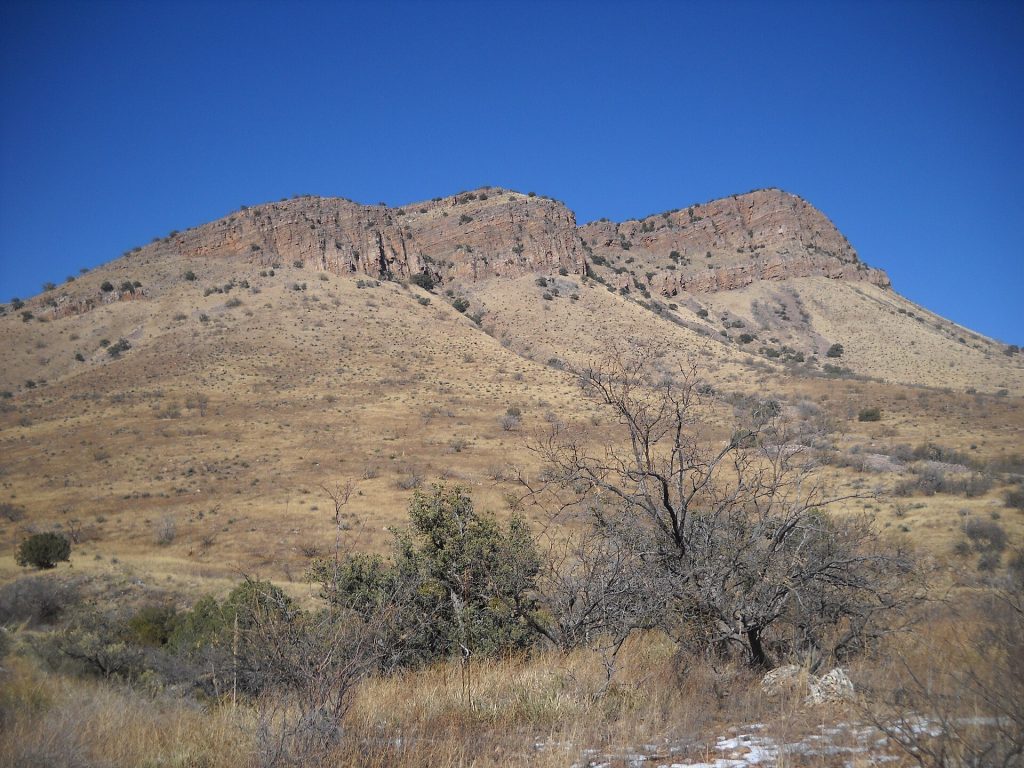
In the southwest foothills of Arizona’s Whetstone Mountains, the Turney Ranch Formation holds one of the youngest brachiosaurids yet found. Named Sonorasaurus thompsoni in 1998, this long-necked sauropod lived where the Early and Late Cretaceous meet—about 100 million years ago. Everything known about it comes from one partial skeleton, and since 2018 it has been Arizona’s state dinosaur.
In November 1994, amateur collectors spotted a fossil leg bone among crumbling petrified logs. Paleontologist Ronald Ratkevich of the Arizona-Sonora Desert Museum later helped lead the excavation and described the animal. Since then, researchers have moved the animal between several branches of the sauropod family tree. However, a 2016 restudy placed it within Brachiosauridae, and a 2017 analysis agreed. Its bones may even be among the last sauropod traces in North America before a roughly 30-million-year gap in their record.
Sonorasaurus Key Facts
| Keyword | Fact |
|---|---|
| Pronunciation | Not specified |
| Meaning of name | Sonora Lizard (popular rendering) |
| Group | Sauropoda (Brachiosauridae) |
| Type Species | Sonorasaurus thompsoni |
| Diet | Herbivore |
| When it Lived | Around 100 MYA |
| Period | Cretaceous |
| Epoch | Early to Late Cretaceous (late Albian to early Cenomanian stages) |
| Length | About 50 feet (15.2 meters), Ratkevich’s estimate |
| Height | About 12 feet (3.7 meters) at the shoulder, Ratkevich’s estimate |
| Weight | Nearly 35 tons (unit not stated), Ratkevich’s estimate |
| Mobility | Not specified |
| First Discovery | 1994 by Richard Thompson |
| Described by | 1998 by Ronald Ratkevich |
| Holotype | ASDM 500 |
| Location of first find | Turney Ranch Formation (Bisbee Group), southwest foothills of the Whetstone Mountains, Cochise County, Arizona, USA |
Sonorasaurus Origins, Taxonomy and Timeline
The genus name is generally taken to refer to the Sonoran Desert. A 1997 Discover report placed the find in the Sonoran Desert region and noted that Ratkevich had first considered the name “Chihuahuasaurus.” The Arizona Daily Star later called the animal the “Sonora lizard.” Meanwhile, the species name thompsoni carries the name of Richard Thompson, the student who first spotted the bones. Together, the name ties the animal both to its desert setting and to the person who found it.
Sonorasaurus was a sauropod—one of the long-necked plant-eaters—within the family Brachiosauridae. Ratkevich described it as a brachiosaurid from the start, and in 2012 paleontologist Michael D. D’Emic explained that this placement had rested on its elongate forelimb bones. A 2016 analysis recovered Giraffatitan as its closest relative, and a 2017 analysis found the same once the unstable Abydosaurus was removed. Sonorasaurus thompsoni is the type and only known species.
Its quarry rocks formed near the Albian–Cenomanian boundary—where the last stage of the Early Cretaceous gives way to the first of the Late. Later tables list its age as late Albian to early Cenomanian. Because the boundary itself dates to about 100.5 million years ago, Sonorasaurus lived roughly 100 million years ago. However, dating the quarry was not simple. Detrital zircons (mineral grains washed in from older rocks) gave only grains that the authors called Barremian or older. In fact, the youngest single grain from the quarry was about 129 ± 10 million years old. On the 2024 International Chronostratigraphic Chart, that grain would fall in the older Hauterivian stage, which ended 125.77 million years ago. Since such grains only set a maximum age, other radiometric and biostratigraphic data point to the boundary instead.
Discovery & Fossil Evidence
In November 1994, amateur fossil collectors made their way up a canyon in the Whetstone foothills. Among the ancient wood, they spotted a large, mahogany-colored section of leg bone. The Arizona Daily Star credits Thompson, who was searching for petrified wood, with first spotting the bones in 1994. However, a 1997 Discover report dates the find to Thanksgiving weekend in 1995. Further work exposed ribs, most of a shoulder blade, and the rounded surface of a limb joint—all cemented in sandstone.

Ratkevich shared the work with museum geologist Dave Thayer, and the two led the excavation together. The dig ran under the direction of the Arizona-Sonora Desert Museum until 2000, when the museum stopped digging. By then, the Arizona Daily Star reported, it had spent about $200,000 to collect roughly a quarter of the skeleton.
The holotype—the name-bearing specimen—is ASDM 500, held at the Arizona-Sonora Desert Museum in Tucson. In 2012, D’Emic called it a “somewhat fragmentary partial skeleton.” It includes presacral (in front of the hips) and caudal (tail) vertebrae and some limb bones. In 2023, Poropat and colleagues listed four right metatarsals (long foot bones) and six toe bones, two of them unguals (claw bones). In 2010, Chure and colleagues, citing Ratkevich’s description, noted that the humerus (upper arm bone) is incomplete. Then, in 2018, Maltese and colleagues added that no claw from the third toe has turned up. The holotype also stands alone—a 2016 study calls it “the only known exemplar” of the genus.
Sonorasaurus Size and Description
Reconstructing Sonorasaurus means working from about a quarter of one skeleton, so its portrait stays partial.
Short description of Sonorasaurus
Its vertebrae held pneumatic spaces—air-filled chambers inside the bone. In 2012, D’Emic described the pneumaticity of its presacral vertebrae as semicamellate, a variant of the honeycomb-like camellate pattern. In contrast, a 2017 comparison by Royo-Torres and colleagues refers to camellate pneumaticity in its neck and back vertebrae. Thus, the two studies characterize the feature differently.
Along the middle of the tail, each neural arch (the arch over the spinal cord) sat on the front half of its vertebra. Farther forward, through the front and middle of the tail, the transverse processes—the side projections—pointed backward. The first metacarpal (hand bone) ended in an undivided condyle (rounded joint surface) set square to the shaft. Chure and colleagues, citing D’Emic, also reported that its forelimb bones appear as gracile (slender) as those of Cedarosaurus.
With so little of the skeleton in hand, any picture of its skin or outward look is speculative—including the restoration at the top of this page.
Size and Weight of Type Species
Ratkevich offered his own figures in a Desert Museum booklet, Sonorasaurus: Dinosaur of the Desert—a popular publication rather than a scientific paper. There, he described an animal “about 50 feet long and 12 feet high at the shoulder”—roughly 15.2 by 3.7 meters.
He added that it “would have weighed nearly 35 tons,” or “as much as a small herd of elephants.” The kind of ton is not specified; if he meant US short tons, that is about 32 metric tonnes. A 1997 Discover article gave a similar figure: “51-foot-long, 35-ton.” Neither the booklet nor the Discover article explains how these numbers were reached.
Bone histology (the study of bone microstructure) offers a firmer clue. In 2016, D’Emic and colleagues found that this individual grew slowly and sporadically for a sauropod. They also found it was approaching its adult size. As a result, the skeleton likely belonged to an animal near full size, even though its exact dimensions remain uncertain.
The Dinosaur in Detail
What sets this dinosaur apart are its autapomorphies—traits unique to a single species. In 2016, D’Emic and colleagues said these traits make it valid. Other published features, by contrast, are shared with Giraffatitan. In 2018, for example, Maltese and colleagues noted that its metatarsal V (outer foot bone) flares widely at the upper end and tapers into a long, slender shaft, as in Giraffatitan. Its first toe bone also bears a projection those authors knew, among sauropods, only from Giraffatitan. Similarly, in 2026, Reutter and colleagues, citing the 2016 restudy, noted a “shoulder” between the joint processes of its front and middle tail vertebrae—as in Giraffatitan, Lusotitan, and some titanosaurs.
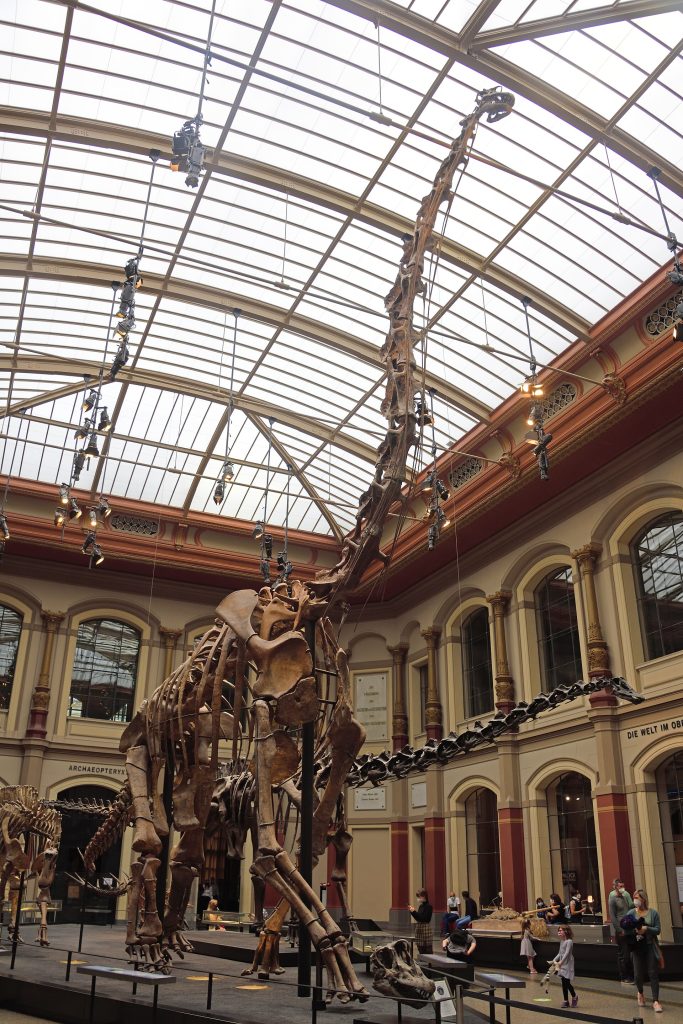

Even so, researchers have debated where it belongs. In 2009, Royo-Torres recovered it within Laurasiformes, a clade of basal macronarians outside the titanosauriforms (the group uniting brachiosaurids and titanosaurs). Three years later, D’Emic noted similarly long limb bones in Sauroposeidon and basal titanosaurs such as Andesaurus. He still placed it among titanosauriforms, with brachiosaurid affinities shown by metatarsal IV. “Further data are needed to firmly establish the affinities of Sonorasaurus,” he cautioned. In 2013, Mannion and colleagues recovered it as a brachiosaurid in two of three analyses and as a basal somphospondylan—a titanosauriform closer to titanosaurs—in the third.
Based on fieldwork and firsthand study, the 2016 restudy by D’Emic and colleagues placed it firmly within Brachiosauridae. In 2017, Mannion and colleagues based their scores on that restudy, but their full analysis left it unresolved among brachiosaurids. Once they removed the unstable Abydosaurus, Sonorasaurus came out as sister to Giraffatitan, in a clade with Lusotitan, Cedarosaurus, and Venenosaurus. However, they called the support values “generally low.” Overall, these studies make it one of several US brachiosaurids from the late Early to earliest Late Cretaceous, alongside Abydosaurus, Cedarosaurus, and Venenosaurus.
Interesting Points about Sonorasaurus
- Arizona’s legislature made Sonorasaurus the official state dinosaur in a law that the governor approved on April 10, 2018.
- Ronald Ratkevich and museum geologist Dave Thayer led the excavation of the fossil for the Arizona-Sonora Desert Museum.
- The Arizona-Sonora Desert Museum stopped digging in 2000 after spending about $200,000, with roughly a quarter of the skeleton collected.
- Its bones record slow, sporadic growth, which D’Emic and colleagues linked to a harsh inland woodland environment.
- It may be one of the last North American sauropods before a gap of roughly 30 million years in their fossil record.
Sonorasaurus in its Natural Habitat
The world Sonorasaurus roamed was a dry inland woodland, not the coast that earlier studies had pictured. From sediments and plant fossils, D’Emic and colleagues reconstructed a semiarid, low-relief evergreen woodland. Its rainfall was highly variable, perhaps seasonal. At the discovery site, petrified logs lay crumbling on the surface.
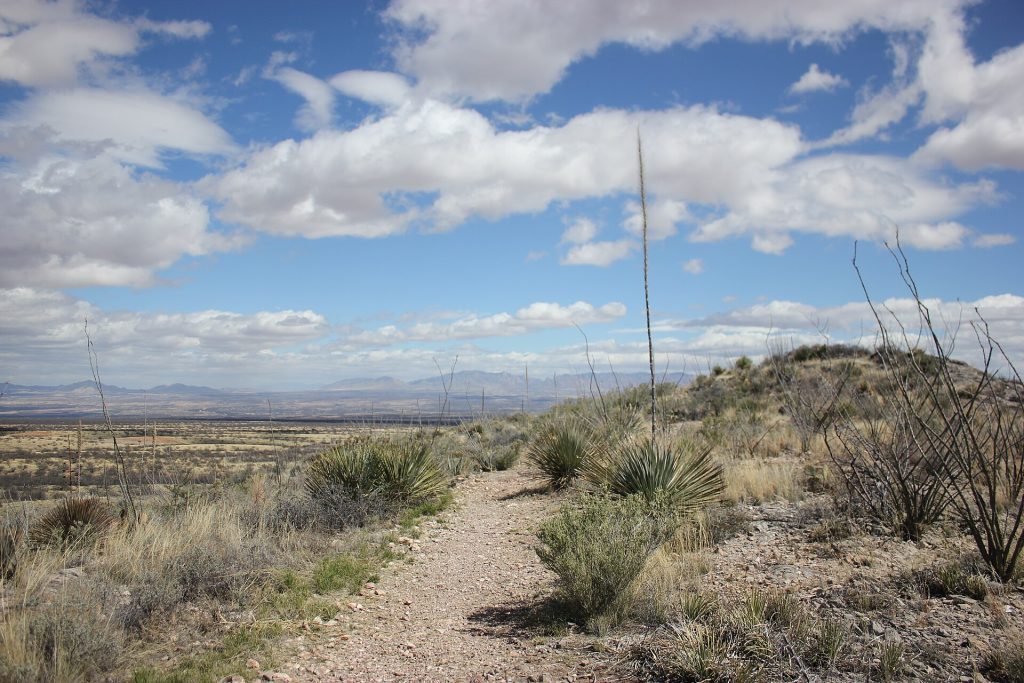

As a long-necked sauropod, Sonorasaurus was a herbivore. Plant fossils from the area show some of the vegetation growing nearby in that evergreen-dominated woodland. Life in this setting may have been demanding, since D’Emic and colleagues proposed that the harsh inland woodland limited its growth.
There is no direct evidence of whether Sonorasaurus lived alone or in herds, because the quarry has yielded only one individual. Its neighbors are just as patchy. For instance, a titanosauriform rib lay about 0.6 kilometers (0.4 miles) away. A theropod femur lay about 300 meters (980 feet) away. The formation has also yielded a fragment of a sauropod maxilla (upper jaw bone). In 2025, Oswald and colleagues found that a tooth from the quarry fits the carcharodontosaurians, a group of large meat-eating theropods. They suggested it may belong to Acrocanthosaurus. Overall, D’Emic and colleagues described the Bisbee Group fauna as poorly sampled but broadly similar to other North American faunas of the same age.
Frequently Asked Questions
The genus name is generally taken to refer to the Sonoran Desert, while thompsoni honors finder Richard Thompson. It is nicknamed the “Sonora lizard.”
It lived near the Albian–Cenomanian boundary, around 100 million years ago, where the Early and Late Cretaceous meet.
In a popular museum booklet, Ronald Ratkevich estimated about 50 feet (15.2 meters) long, 12 feet tall at the shoulder, and “nearly 35 tons,” without explaining how.
It was a herbivorous brachiosaurid sauropod, recovered as Giraffatitan‘s closest relative in a 2016 analysis and, once Abydosaurus was removed, in a 2017 one.
Collectors found it in 1994 in the Turney Ranch Formation, in the Whetstone Mountains of Cochise County, Arizona.
It is Arizona’s state dinosaur and one of the geologically youngest brachiosaurids, known from a single partial skeleton.
Sources
The information in this article is based on various sources, drawing on scientific research, fossil evidence, and expert analysis. The aim is to provide a comprehensive and accurate overview of Sonorasaurus. However, please be aware that our understanding of dinosaurs and their world is constantly evolving as new discoveries are made.
- Ratkevich, R. 1998. New Cretaceous brachiosaurid dinosaur, Sonorasaurus thompsoni gen. et sp. nov., from Arizona. Journal of the Arizona-Nevada Academy of Science 31(1): 71–82.
- https://paleobiodb.org/classic/basicTaxonInfo?taxon_no=68169
- https://doi.org/10.1017/jpa.2015.67
- https://doi.org/10.5061/dryad.51j0j
- https://doi.org/10.1111/j.1096-3642.2012.00853.x
- https://doi.org/10.7717/peerj.3217
- https://doi.org/10.1371/journal.pone.0125819
- https://doi.org/10.1098/rsos.221618
- https://doi.org/10.7717/peerj.5250
- https://doi.org/10.1007/s00114-010-0650-6
- https://doi.org/10.1038/s41598-017-14677-2
- https://doi.org/10.7717/peerj.3409
- https://doi.org/10.7717/peerj.20945
- https://doi.org/10.2181/036.050.0204
- https://rainbow.ldeo.columbia.edu/courses/s4021/ec98/sonorosaurus.html
- https://www.azleg.gov/legtext/53leg/2R/laws/0172.htm
- https://stratigraphy.org/ICSchart/ChronostratChart2024-12.pdf
- https://www.discovermagazine.com/planet-earth/sonorasaurus
- https://tucson.com/news/local/article_32821d68-38c5-55f4-abde-0cc2b8967f7e.html
- https://desertmuseum.org/center/sc_history.php
This article was last fact checked: TheDinosaurs Team, 18-11-2026
Featured Image Credit: Dmitry Bogdanov, CC BY 3.0, via Wikimedia Commons
