
In Utah’s Dinosaur National Monument, the Carnegie Quarry has yielded some of the Morrison Formation’s most complete sauropod skeletons. One of its quietest finds is a braincase—the bony case that held the brain—now the holotype of Athenar bermani. Named in 2025, this sauropod lived in the Late Jurassic, about 151 to 150 million years ago. Its describers place it in the family Dicraeosauridae, and they see it as evidence of the “historically underestimated sauropod diversity” of the Morrison.
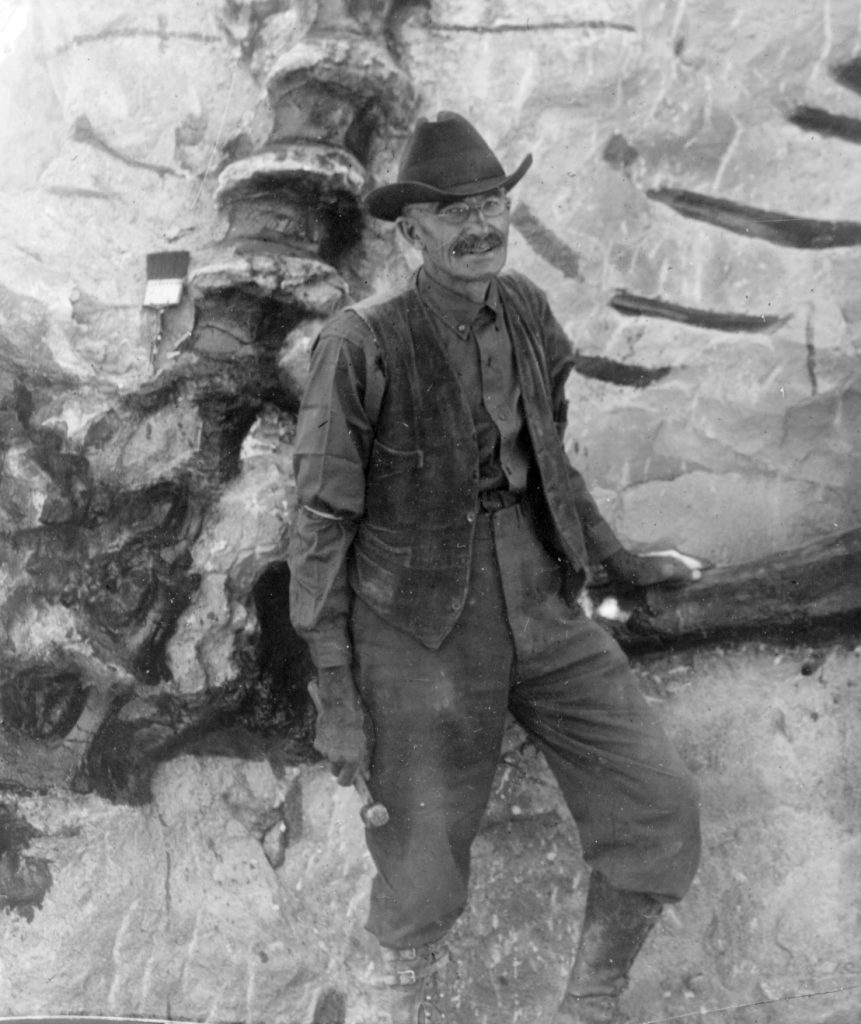
Paleontologist Earl Douglass collected the specimen in 1913, yet it sat undescribed for 65 years. In 1978, paleontologists David Berman and John McIntosh finally figured it and assigned it to Diplodocus. Nearly half a century later, a team led by paleontologist John A. Whitlock looked again and found a different animal. Its story shows that even a well-studied museum specimen can still hold surprises.
Athenar Key Facts
| Keyword | Fact |
|---|---|
| Pronunciation | Not specified |
| Meaning of name | Named After the Musician Athenar |
| Group | Sauropoda (Dicraeosauridae) |
| Type Species | Athenar bermani |
| Diet | Herbivore (inferred for sauropods) |
| When it Lived | 151 to 150 MYA |
| Period | Jurassic |
| Epoch | Late Jurassic (late Kimmeridgian stage) |
| Length | Not specified |
| Height | Not specified |
| Weight | Not specified |
| Mobility | Not specified |
| First Discovery | 1913 by Earl Douglass |
| Described by | 2025 by J.A. Whitlock, J.P. Garderes, P. Gallina, and M.C. Lamanna |
| Holotype | CM 26552 |
| Location of first find | Carnegie Quarry, Dinosaur National Monument, Morrison Formation, Uintah County, Utah, USA |
Athenar Origins, Taxonomy and Timeline
The name Athenar skips the usual Greek and Latin roots. It honors Athenar, a Cleveland musician and notable Pittsburgh Steelers fan whose music was the soundtrack to most of the work on the specimen. With dry humor, the authors add that “no better paleontological comparison exists than a broken skull.” The species name bermani honors David S. Berman, who did fundamental work on diplodocoid skulls with McIntosh at Carnegie Museum and first described the specimen. Together, the name links two eras—a modern soundtrack and a fossil collected more than a century ago.
Whitlock and colleagues place Athenar within Sauropoda, the long-necked dinosaurs, then Diplodocoidea (Diplodocus and its kin), Flagellicaudata, and finally Dicraeosauridae. In their view, it differs enough from Diplodocus and its family, Diplodocidae, to mark a new dicraeosaurid genus. Athenar bermani is the type and only known species.
The fossil comes from what the authors call an uppermost Jurassic stratum of the Morrison Formation. Following earlier dating work, they place it at about 151 to 150 million years ago and label that age Tithonian. On the 2024 international timescale, however, the Tithonian starts about 149.2 million years ago, which would put the same age in the late Kimmeridgian. A volcanic ash layer near the quarry dates to about 151 million years ago, although its exact link to the bone layer is unclear. Meanwhile, the Morrison itself built up over about 7 million years on floodplains, in river channels, and in small lakes.
Discovery & Fossil Evidence
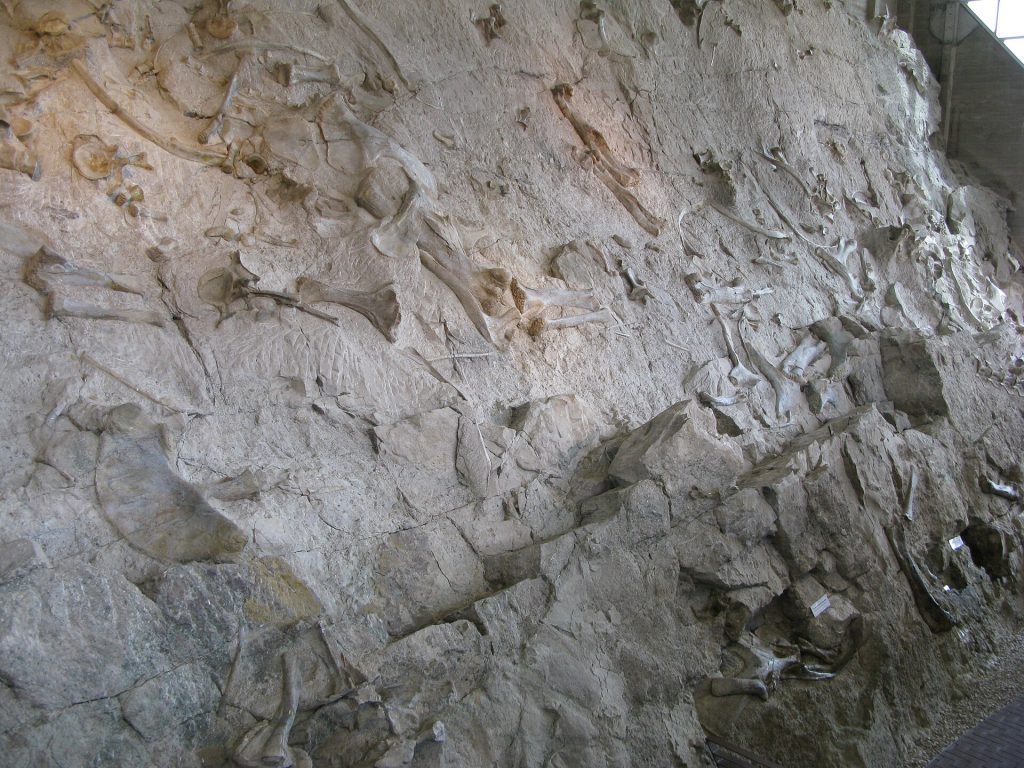
Douglass found the Carnegie Quarry on August 17, 1909, starting with eight connected tail bones of Apatosaurus. Crews working for Carnegie Museum then dug there into the 1920s and removed more than 300 tons of fossils. Douglass collected the braincase in 1913, in the middle of that work.
After that, the specimen simply waited until Berman and McIntosh’s 1978 treatise—a work the 2025 authors call “most famous for ‘recapitating’ Apatosaurus.” The pair linked it to Diplodocus because it shared characters with two Diplodocus skulls that a probable Apatosaurus skull lacks. In fact, CM 26552 became the main basis for their account of the Diplodocus braincase. The braincase was once cataloged as CM 1201, a number that had been given to two different specimens.
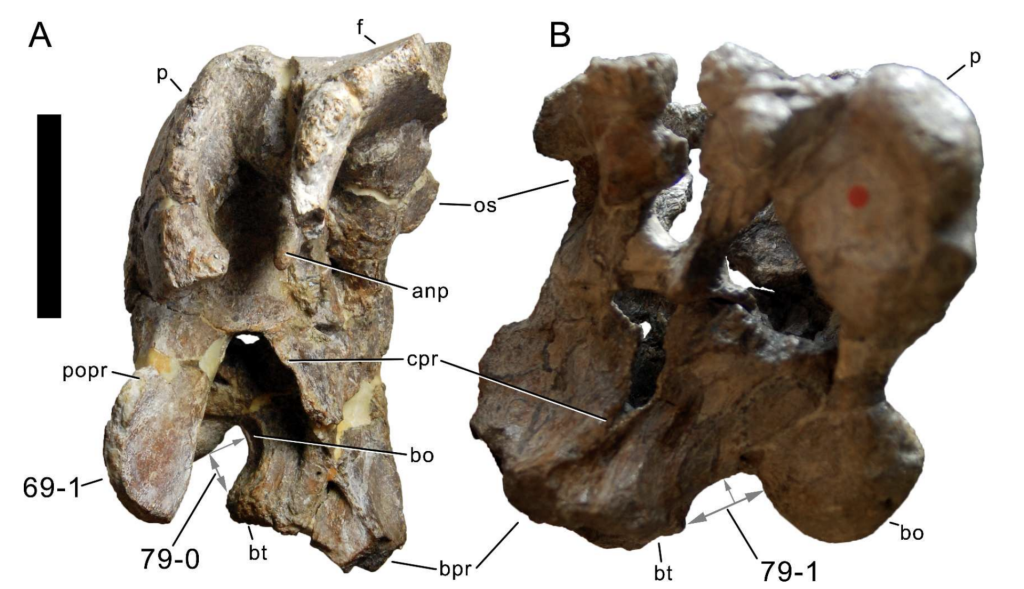
Today the holotype, CM 26552, belongs to the Carnegie Museum of Natural History in Pittsburgh. It consists of a braincase and partial skull roof—the bones that covered the top of the head. A loose fragment of the paroccipital process (a prong at the back of the braincase) was later attached with plaster. That join has since fractured, and the right “shoulder” of the occipital condyle has been missing since at least 1978. Slight shearing has also shifted the right half upward, and rock still fills the space where the brain sat.
No other bones have been confirmed as Athenar so far. The authors note that a braincase from Cactus Park Quarry in Colorado, cataloged BYU 17096, shows the same pair of extra skull-roof openings. In 2010, Balanoff and colleagues had referred it to Apatosaurus. In 2025, however, paleontologists Philip Mannion and Andrew Moore recovered it as an early dicraeosaurid that appears distinct from the previously named Morrison dicraeosaurids. Their study does not mention Athenar, and no one has yet compared the two directly.
Athenar Size and Description
Because only a braincase survives, any portrait of Athenar begins and ends at the back of the head.
Short description of Athenar
Seen from above, the frontals and parietals (forehead and skull-roof bones) meet around a large midline opening, the frontoparietal fenestra. Below, a bony expansion partly divides the opening for the olfactory nerve (the nerve of smell), which the authors say is unreported in other dicraeosaurids. To either side sit two elliptical supratemporal fenestrae, or skull-roof openings. The left one measures 25 by 34 millimeters, and the right an estimated 22 by 35 millimeters.
The right squamosal (a rear corner bone of the skull) bears a downward prong about 0.7 inches (17 millimeters) long, much like those of other dicraeosaurids. At the rear, the supraoccipital (the bone above the spinal-cord opening) is roughly trapezoidal, with a massive tubercle where a broad crest begins. Beneath it, the occipital condyle—the knob that joined the skull to the neck—measures 45 by 31 millimeters. Its basal tubera, paired bumps under the braincase, span about 61 millimeters. In shape, they resemble the “pendulous” tubera of Diplodocus more than the “globose” ones of Apatosaurus.
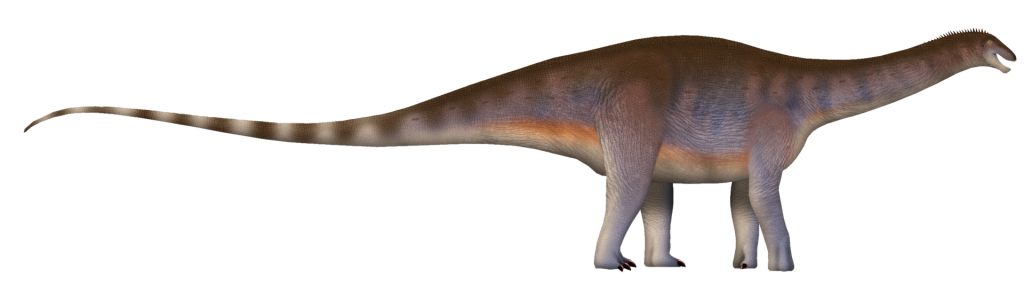
No one has found bones from the neck, body, or limbs, so its posture and skin remain unknown. Any full-body restoration borrows its body from relatives.
Size and Weight of Type Species
The paper’s main size measurement runs from the midline of the occipital condyle to the tip of one paroccipital process. It comes to 89.9 millimeters (about 3.5 inches)—roughly the width of an adult’s palm for just one side. The whole braincase was therefore about twice as wide. That beats both the “subadult” Diplodocus CM 3452 (81.0 millimeters) and the presumably mature CM 11161 (85.5 millimeters).
The authors describe the braincase as “quite large.” Even so, open and weakly interlocked sutures between many of its bones suggest the animal died while still a subadult. They also infer that Athenar most likely reached a greater size at maturity than its possible relative Suuwassea emilieae. Indeed, size at maturity is one of three diagnostic traits they use to tell the two apart.
Nobody has yet published a body length, height, or weight, and without a skeleton any such number would be guesswork.


The Dinosaur in Detail
What sets this dinosaur apart is a small “tooth” of bone. About 35 millimeters out from the supraoccipital crest, a triangular expansion of the parietal slots into the neighboring exoccipital-opisthotic bone. This single autapomorphy—a trait unique to one taxon—separates it from all other dicraeosaurids. A weaker version of this wavy suture appears in some Diplodocus and probable Apatosaurus skulls. Its closest match is in the dicraeosaurid Smitanosaurus, the authors add, but only Athenar has the distinct “tooth.”
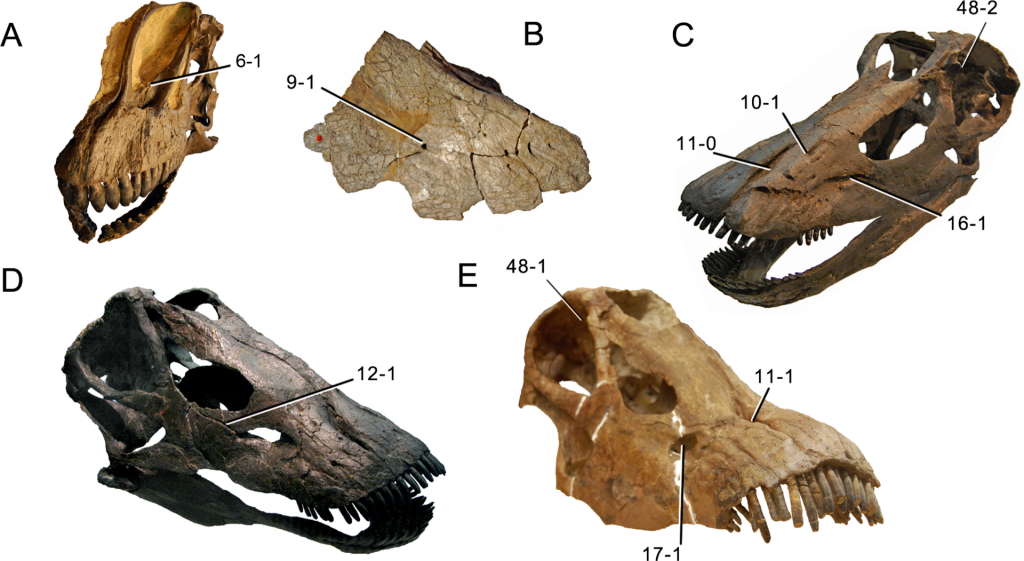
It also carries eight traits the authors link to dicraeosaurids, far outnumbering its diplodocid-like ones. These include two extra skull-roof openings, the squamosal prong, and a shelf above the opening for the trigeminal nerve (the face’s main sensory nerve). Broader features place it in larger groups—a downturned face marks a diplodocoid, and widely spaced supratemporal fenestrae a flagellicaudatan.
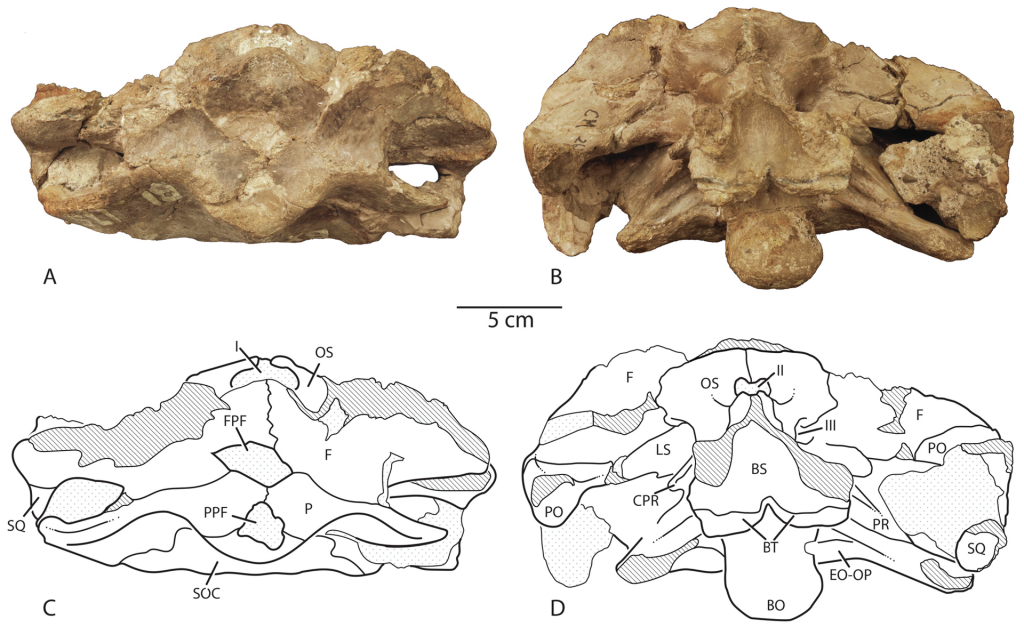

Not every trait points the same way. Like several “subadult” Morrison diplodocoid skulls, Athenar mixes diplodocid and dicraeosaurid features—its broad supraoccipital crest and wide basal tubera hint at diplodocid affinity. Some researchers see the skull-roof openings as juvenile traits. Whitlock and colleagues disagree, since the openings are absent in very small diplodocids but present in mature dicraeosaurids.
Unlike its North American relative Suuwassea, it has a single opening for the abducens nerve, which moves the eye. In contrast to Kaatedocus—placed in different families by different studies—it has a frontoparietal fenestra, and a broad supraoccipital crest separates it from Smitanosaurus. It also differs in several braincase traits from South America’s Bajadasaurus and Amargasaurus.
However, the phylogenetic analysis of Athenar that the authors promised has not yet appeared. Still, Athenar and Suuwassea share a frontal bordering the supratemporal fenestra, which the authors say “may indicate close phylogenetic affinity.” The braincase reveals a dicraeosaurid that hid in plain sight—its exact branch still untested.
Interesting Points about Athenar
- Athenar honors a Cleveland musician whose music, its describers say, accompanied most of their work on the fossil.
- Douglass collected the braincase in 1913, but it waited 112 years before receiving a name of its own.
- In 1978, CM 26552 became the main basis for the published description of the Diplodocus braincase.
- A small triangular “tooth” of bone in the parietal–opisthotic suture sets Athenar apart from all other dicraeosaurids.
- A partial divider in its olfactory nerve opening has not been reported in other dicraeosaurids, according to the 2025 paper.
Dinosaurs from the Same Formation
Also known from the Morrison Formation at the Carnegie Quarry (exact level relative to the Athenar braincase not known): Apatosaurus, Diplodocus, Camarasaurus, Allosaurus, Barosaurus, and Stegosaurus. In 2019, Maidment and Muxworthy estimated that the Morrison Formation was laid down over about 7 million years. Even within the quarry, the bones were buried in various states of decay. According to the National Park Service, this suggests the animals died at different times rather than all at once. As a result, these animals may not all have lived at the same time.
Athenar in its Natural Habitat
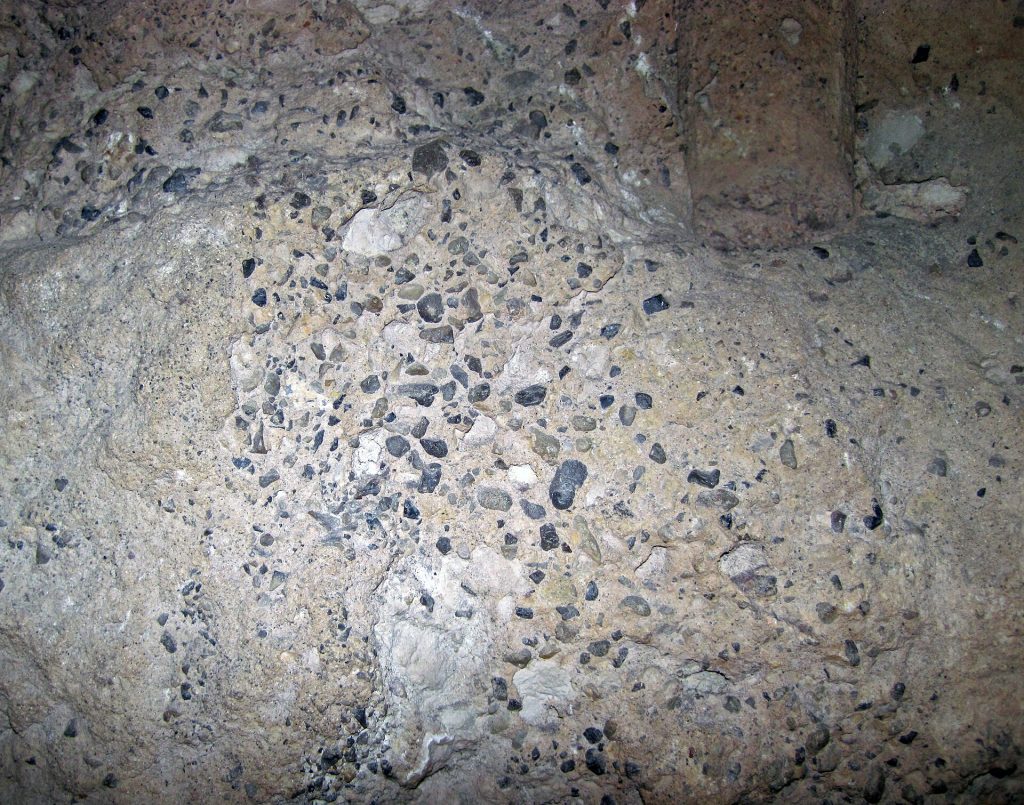
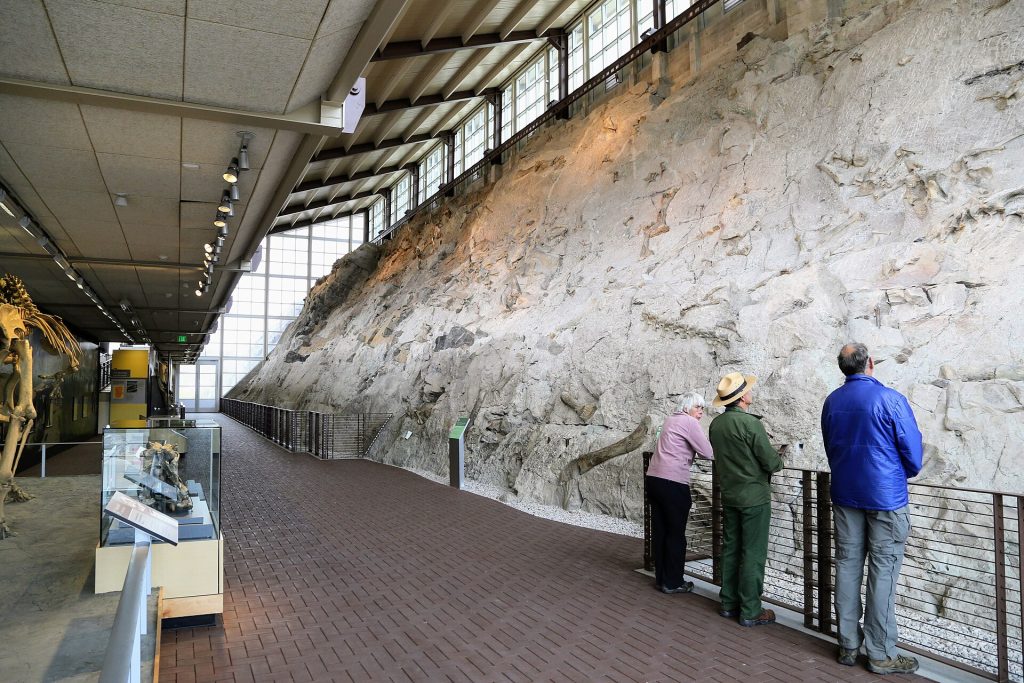
The world Athenar roamed was one of floodplains, river channels, and small lakes. The Carnegie Quarry sandstone itself was once the sandy bottom of a river channel. Researchers still debate the climate, however—older work pictured a lush, wet floodplain. Others argued for a dry or seasonally wet, savanna-like setting with ferns as ground cover. Still others proposed a mosaic of forest and open habitats.

Fossil plants from across the formation include conifers, podocarps, cheirolepidiaceans, ferns, ginkgophytes, and horsetails. While there is no direct evidence of what Athenar ate, researchers treat sauropods as large herbivores, so it most likely fed on plants as well. With no teeth, jaws, or neck known, its feeding height and favored plants remain open questions.
Across the Morrison, researchers recognize a “core” fauna of large diplodocids, Stegosaurus, and Allosaurus. Athenar adds a less familiar sauropod to that broader picture—one of several dicraeosaurids its describers now count in the Morrison. The holotype animal died as a subadult, but nothing yet reveals whether it lived alone or in groups.
Athenar Gallery
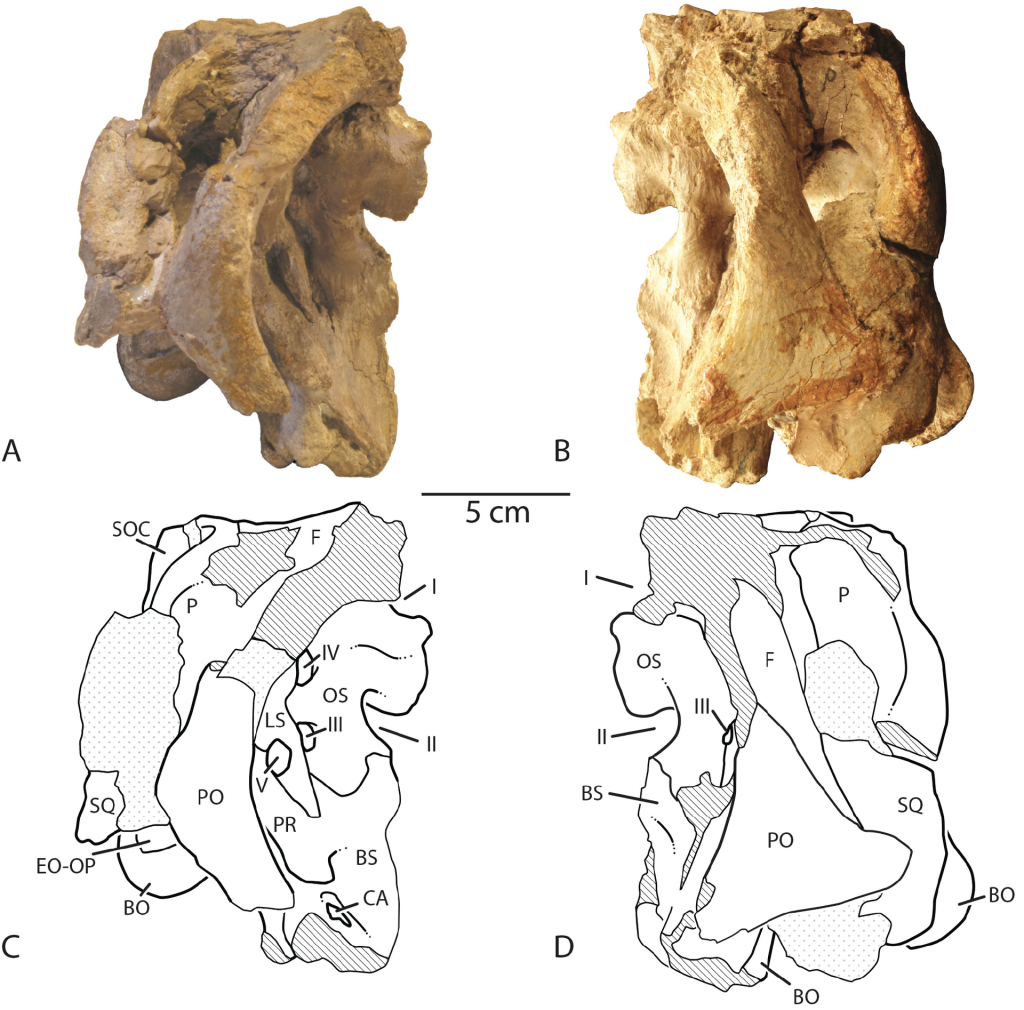
These images show the holotype from other angles, its relatives, and the quarry where it was found.







Frequently Asked Questions
It honors Athenar, a Cleveland musician, while the species name bermani honors paleontologist David S. Berman.
It lived in the Late Jurassic, about 151 to 150 million years ago, an age its describers call Tithonian. On the current timescale, that age falls in the late Kimmeridgian.
No body size estimate exists. Measured from the midline to one side, its subadult braincase spans 89.9 millimeters (about 3.5 inches), more than in two Diplodocus skulls.
It was a dicraeosaurid sauropod, although that placement rests on anatomical comparison rather than a published phylogenetic analysis.
It was found at the Carnegie Quarry in Dinosaur National Monument, Uintah County, Utah, in the Morrison Formation.
A small triangular “tooth” of bone in a skull suture sets it apart from all other dicraeosaurids.
Sources
The information in this article is based on various sources, drawing on scientific research, fossil evidence, and expert analysis. The aim is to provide a comprehensive and accurate overview of Athenar. However, please be aware that our understanding of dinosaurs and their world is constantly evolving as new discoveries are made.
- https://doi.org/10.26879/1550
- https://palaeo-electronica.org/content/2025/5682-athenar-bermani-new-dicraeosaurid-sauropod
- https://doi.org/10.5962/p.228587
- https://archive.org/details/bulletinof71319781979carn
- https://doi.org/10.5962/p.228597
- https://archive.org/details/bulletino142219791983carn
- https://hdl.handle.net/10141/622707
- https://giw.utahgeology.org/index.php/GIW/article/view/6
- https://doi.org/10.31711/giw.v5.pp9-22
- https://stratigraphy.org/ICSchart/ChronostratChart2024-12.pdf
- https://www.nps.gov/dino/learn/nature/morrison-formation.htm
- https://www.nps.gov/dino/learn/historyculture/carnegie_quarry.htm
- https://doi.org/10.1080/14772019.2025.2550760
This article was last fact checked: TheDinosaurs Team, 25-11-2026
Featured Image Credit: J. A. Whitlock, J. P. Garderes, P. Gallina and M. C. Lamanna, CC BY 4.0, via Wikimedia Commons
