
Along the crumbling southwest coast of the Isle of Wight, the Wessex Formation holds the remains of an ornithopod called Valdosaurus. Its type species, Valdosaurus canaliculatus, lived during the Barremian stage of the Early Cretaceous—a stage that spans roughly 126 to 121 million years ago. This two-legged plant-eater belonged to the Dryosauridae, a family of ornithopods. Yet for over a century, researchers knew it from little more than two thigh bones.
The story began on a museum shelf. By 1888, the two thigh bones sat in the British Museum, where Lydekker listed them under the better-known Hypsilophodon foxii. In 1975, paleontologist Peter Galton named them as a new species, Dryosaurus (?) canaliculatus. Later literature credits him with the genus Valdosaurus in 1977. Since 2011, partial skeletons from the island have filled in its hips, tail, and legs. Its story shows how scraps can grow into a fuller animal—even if the front half is still missing.
Valdosaurus Key Facts
| Keyword | Fact |
|---|---|
| Pronunciation | val-doh-sore-us |
| Meaning of name | Wealden Lizard |
| Group | Ornithopoda (Dryosauridae) |
| Type Species | Valdosaurus canaliculatus |
| Diet | Herbivore |
| When it Lived | About 126 to 121 MYA (Barremian) |
| Period | Cretaceous |
| Epoch | Early Cretaceous (Barremian stage) |
| Length | About 4.2 feet (1.27 meters) for the holotype and about 9.8 feet (3 meters) for a larger referred individual, both estimated by Galton in 1975 |
| Height | Not specified |
| Weight | Not specified |
| Mobility | Moved on two legs (bipedal) |
| First Discovery | Year not specified, but the holotype was in the British Museum by 1888 |
| Described by | 1975 by P.M. Galton, as Dryosaurus (?) canaliculatus, with the genus Valdosaurus credited to Galton in 1977 |
| Holotype | BM R184 and R185, now NHMUK PV R184 and R185 |
| Location of first find | Wealden of the Isle of Wight, Wessex Formation, England, United Kingdom |
Valdosaurus Origins, Taxonomy and Timeline
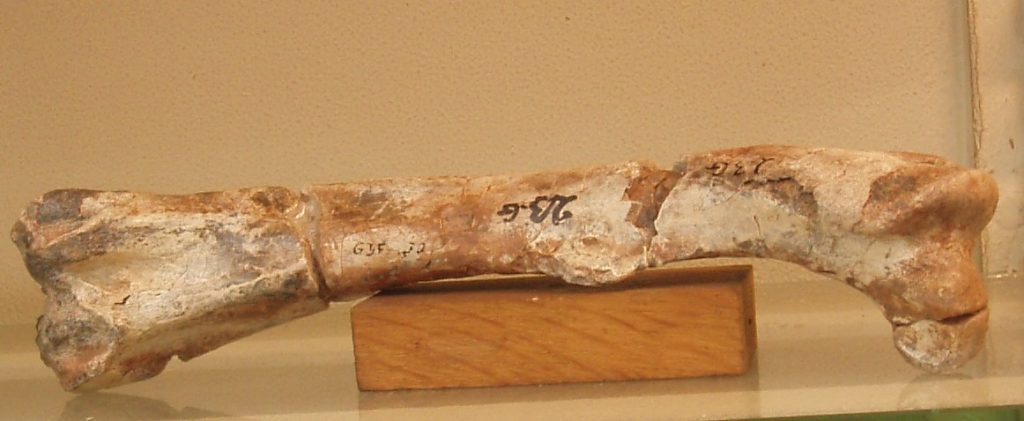
The Natural History Museum translates Valdosaurus as “Wealden lizard”—fitting, since the holotype came from “the Wealden of the Isle of Wight.” The species name comes from the Latin for “a channel or conduit,” after the deep anterior intercondylar groove of the femur. That groove, at the front of the knee end, remains one of the animal’s hallmarks. The name thus ties the dinosaur to its rocks and to one telling feature of its thigh.
At first, Galton placed the species in the family Hypsilophodontidae and only “tentatively referred” it to Dryosaurus. He even noted that the femora may represent a new genus but held back, given such limited material. Today, Valdosaurus sits in the Dryosauridae, though Dryosaurus is not its closest relative. In 2011, paleontologist Paul Barrett and colleagues found it forms a clade—a group with one common ancestor—with Elrhazosaurus and Dysalotosaurus. A year later, McDonald recovered the same grouping, with Valdosaurus and Elrhazosaurus as closest relatives. In 1982, Galton and Taquet named a second species from Niger, V. nigeriensis, which is now Elrhazosaurus. That leaves Valdosaurus canaliculatus as the type and only species.

The Isle of Wight fossils date to the Barremian, although the formation’s lowest beds may be a little older. In 2023, Jacobs and colleagues obtained the formation’s first radiometric date—127.3 ± 2.7 million years. It came from calcite in a loose turtle fossil from the lower beds at Brook Bay, which they placed near the Hauterivian–Barremian boundary. Barrett’s 2011 team also referred bones from the Grinstead Clay of West Sussex, of middle to late Valanginian age. If they belong here, the genus would reach back into that stage, roughly 137 to 133 million years ago. In 2016, however, Barrett wrote only that some mainland dryosaurid bones may be referable to Valdosaurus, leaving several as indeterminate.
Discovery & Fossil Evidence
Galton’s 1975 paper names no collector or date, giving the holotype’s origin only as “the Wealden of the Isle of Wight.” Barrett and colleagues later placed this material in the Wessex Formation. Its museum history began with a mix-up, as Lydekker listed the femora under Hypsilophodon foxii in 1888. Then, in 1891, he referred a small tibia (shin bone) apparently found with them to the coelurosaur Calamosaurus.
The holotype, BM R184 and R185, is an associated right and left femur (thigh bone). The Natural History Museum, London, now catalogs them as NHMUK PV R184 and R185. Galton’s diagnosis rested entirely on the femur. He described a hanging fourth trochanter—a bony flange for thigh muscles—set high on the shaft. A deep cleft also separated the rod-like lesser trochanter from the greater trochanter. He also referred isolated femur ends from the Isle of Wight and Sussex, including parts of a large pair from Heathfield.
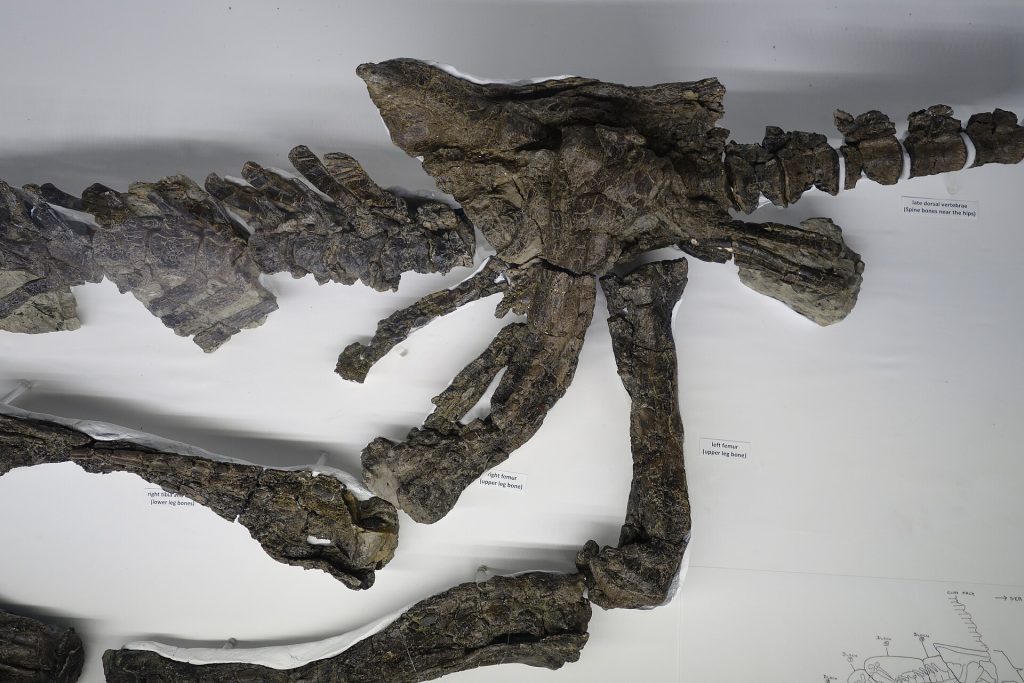

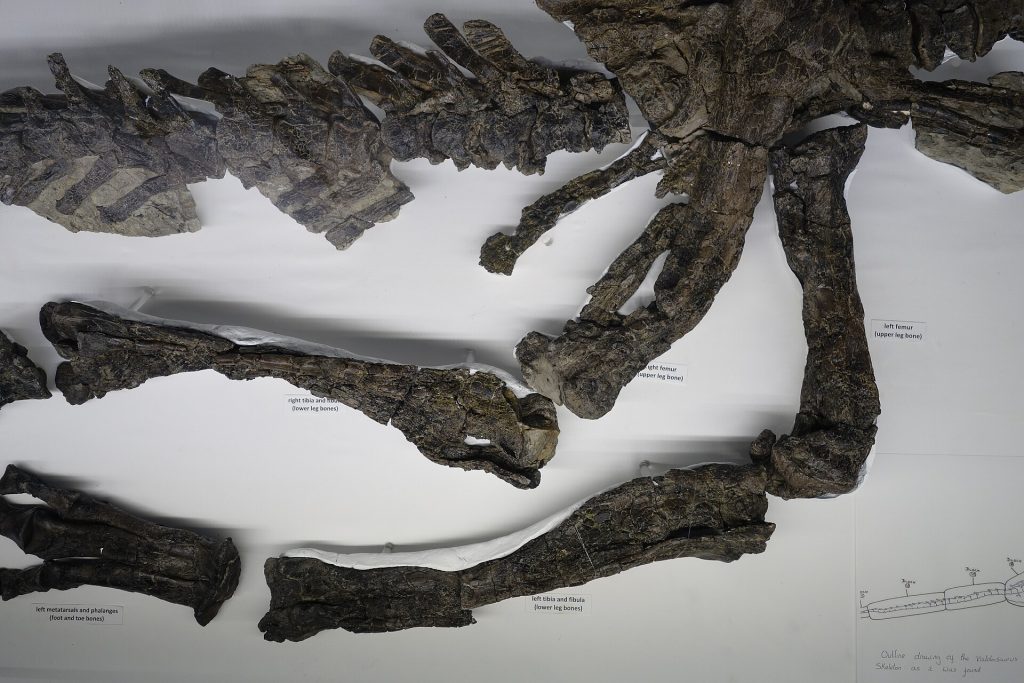
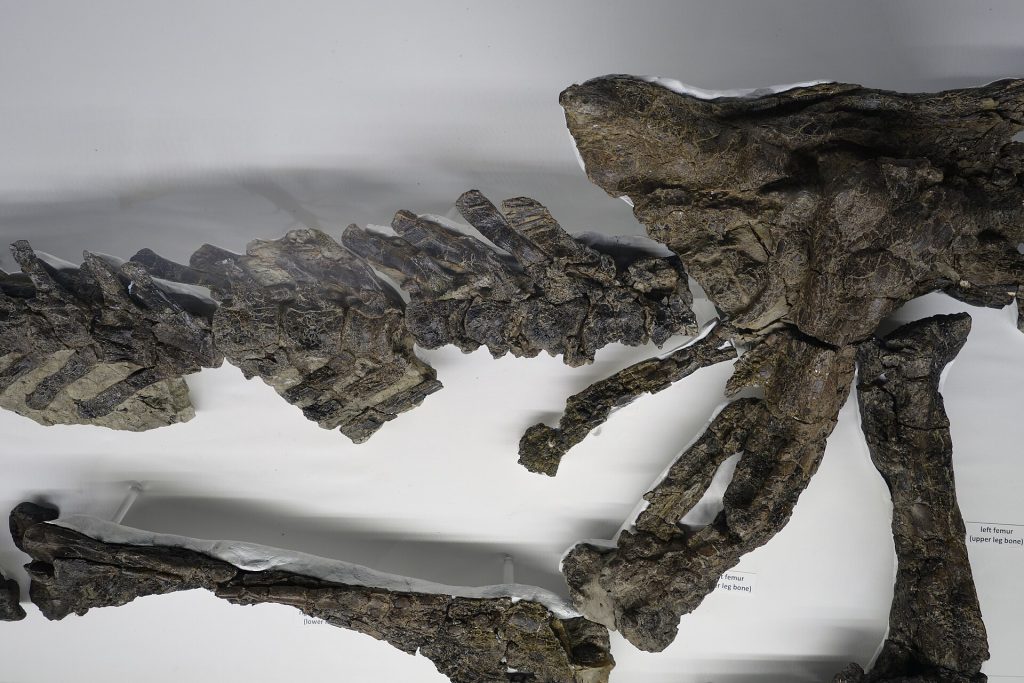
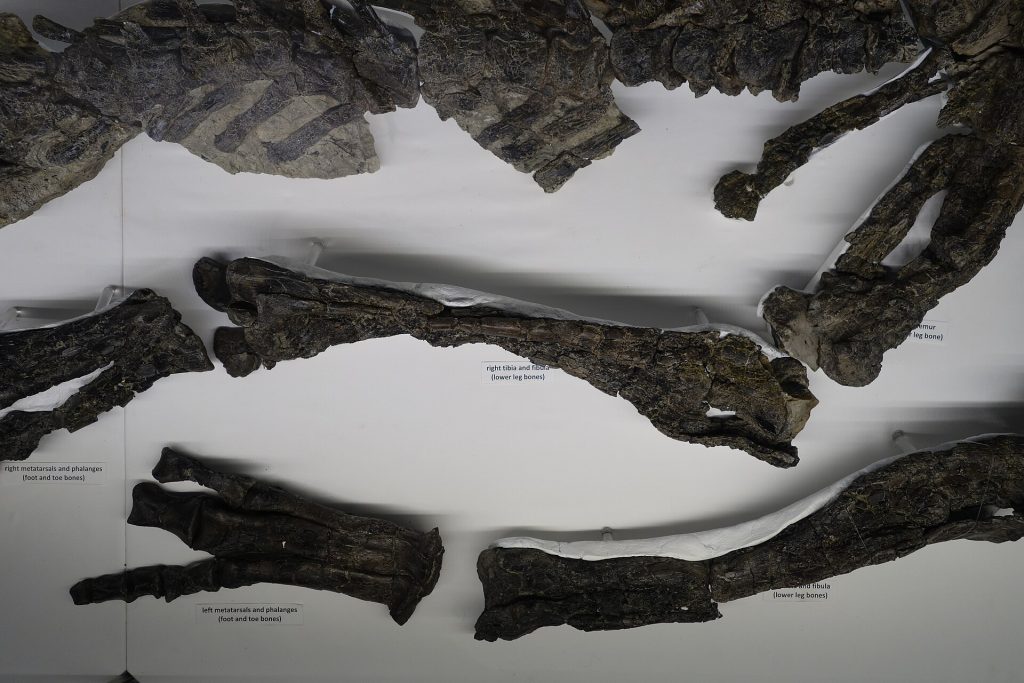
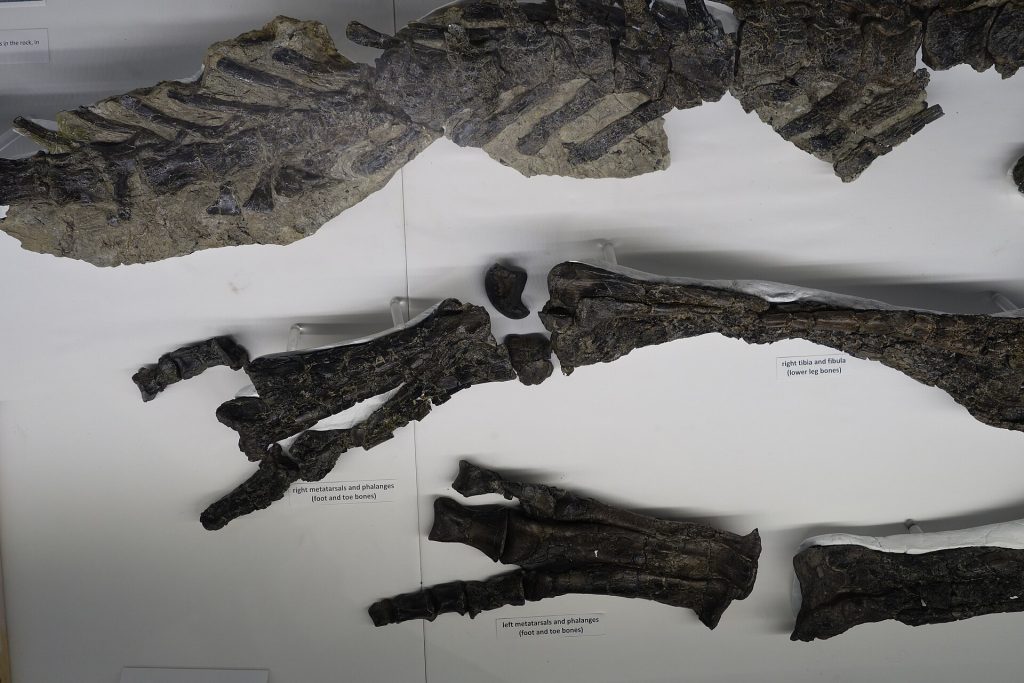
Things changed in 2011, when Barrett’s team described four associated specimens from the island. Between them, they include almost complete hind limbs plus hip and backbone elements. These gave the first definite links between the telltale femora and the rest of the skeleton. In October 2012, Nick Chase found a skeleton in a plant debris bed at Compton Bay, on National Trust land. Cataloged as IWCMS 2013.175, the skeleton was found largely in articulation. It includes six back vertebrae, the sacrum (fused hip vertebrae), 45 tail vertebrae, both hips, and both hind limbs. Barrett called it “the most complete individual of Valdosaurus canaliculatus yet found,” and it is now displayed at Dinosaur Isle. Even so, every individual confidently referred to the genus preserves its hindquarters only.
Valdosaurus Size and Description
With no skull, neck, or arm confidently referred to it, any portrait of Valdosaurus is a portrait of its back half.
Short description of Valdosaurus
Its backbone looked generally similar to those of Dryosaurus, Dysalotosaurus, and other dryosaurids. At the hips, the ilium (upper hip bone) was long and low, with an only slightly sinuous upper edge. The pubis (a lower hip bone) had an open obturator notch—a gap that Dryosaurus and Dysalotosaurus close off. Ossified tendons also ran lengthwise along the backbone rather than forming a basket-like lattice.
The tail was long. The Compton Bay skeleton preserves 45 tail vertebrae, and Barrett estimated a total of no more than 46 to 50. In the middle of the tail, elongate spines leaned steeply backward and reached over more than one following vertebra. Each foot had three main metatarsals (long foot bones), with no trace of a first or fifth.
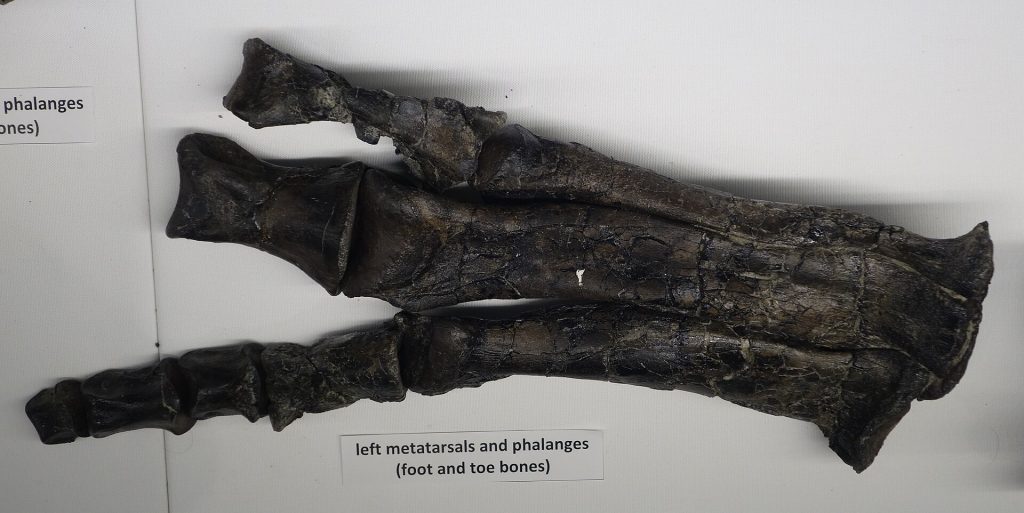

Galton described the family he placed it in as fast-running, with a tibia longer than the femur. The Compton Bay skeleton shows exactly that proportion, and as in other dryosaurids, its fibula was shorter than the tibia. Since the studies cited here say nothing of its skin or coloring, any picture of its outer covering is speculative.
Size and Weight of Type Species
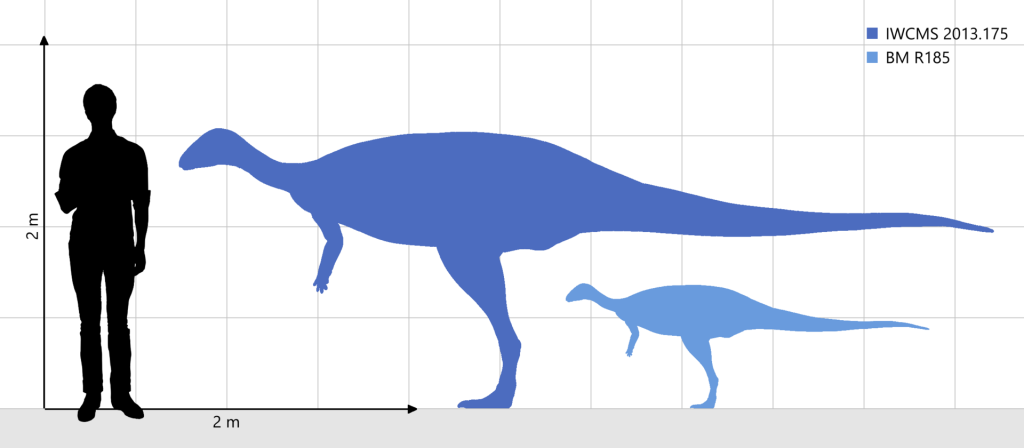
The holotype femur is only 5.5 inches (140 millimeters) long. From it, Galton estimated an animal about 4.2 feet (1.27 meters) in length—shorter than an average adult human is tall. He scaled the femur against a Hypsilophodon specimen, so the figure is an indirect, proportional estimate. The Heathfield femora suggested a larger individual of about 9.8 feet (3 meters), matching the Natural History Museum’s figure.
Later skeletons show how much bigger individuals could get. The Compton Bay femora measure about 18 to 20 inches (460 to 499 millimeters), though both are damaged or deformed. That makes them roughly 3.3 to 3.6 times as long as the holotype femur. Even so, no study has published a body length for this skeleton.

No usable published weight estimate is known for the English material. Without a more complete skeleton, any mass for Valdosaurus would have to come from careful comparisons with its relatives.
The Dinosaur in Detail
What sets this dinosaur apart lies mostly in its thigh bone. Galton separated it from Hypsilophodon by a deep cleft between two trochanters and a deep anterior intercondylar groove. Compared with Dryosaurus and Dysalotosaurus, its lesser trochanter was more slender, its fourth trochanter sat higher, and its groove ran deeper. In 2016, Barrett noted that a high fourth trochanter plus a deep groove is unique among known UK Wealden ornithopods.
Following the 2011 study, Barrett listed four diagnostic femoral features. They include a U-shaped, deeply incised groove and a muscle scar near the base of the fourth trochanter. Beyond the thigh, the Compton Bay skeleton confirmed the open obturator notch as a defining trait. Barrett also proposed a possible new one—the elongate spines in the middle of the tail.
In contrast, several features of its ilium scored identically to those of Dryosaurus and Dysalotosaurus in Barrett’s comparisons. Its estimated tail count matched many ornithopods but fell far below Leaellynasaura (over 70) and Tenontosaurus (60 to 65). These traits suggest a fairly typical dryosaurid with a few unmistakable signatures—most of them in the thigh.
Interesting Points about Valdosaurus
- Galton’s 1975 paper prints the Latin root as “caniculatus,” a slip in the very paper that coined canaliculatus.
- In 1891, Lydekker assigned a small tibia apparently found with the holotype femora to the coelurosaur Calamosaurus—a different kind of dinosaur entirely.
- The Compton Bay skeleton turned up in October 2012, and the National Trust later donated it to Dinosaur Isle.
- Every individual confidently referred to Valdosaurus preserves only its hindquarters, so its skull, neck, and arms are still unknown.
- Its closest relative in some analyses is Elrhazosaurus from Niger, which was itself once named as a species of Valdosaurus.
Dinosaurs from the Same Formation
Also known from the Wessex Formation (exact level relative to Valdosaurus not known): Eotyrannus, Comptonatus, Hypsilophodon, Mantellisaurus, Iguanodon cf. bernissartensis, Neovenator and Polacanthus. The tyrannosauroid Eotyrannus, known from a single, probably subadult individual about 14.8 feet (4.5 meters) long, came from the L11 plant debris bed at Grange Chine. Bones and teeth of a dryosaurid lie jumbled among its remains, but their identification as Valdosaurus is only an assumption. No study reports bite marks or any interaction between the two. Hypsilophodon, for its part, comes mainly from the Hypsilophodon Bed at the top of the formation. Meanwhile, Comptonatus came from a plant debris bed only about 164 feet (50 meters) from the Compton Bay Valdosaurus. Even so, the sources do not say it was the same bed. The formation spans several million years, so these animals may not all have lived at the same time.
Valdosaurus in its Natural Habitat
The world Valdosaurus roamed was a seasonally arid floodplain—crossed by rivers, dotted with lakes, and swept by seasonal wildfires. A moderately sized, highly winding river flowed from west to east, leaving sandstones, colorful mudstones, and plant debris beds behind. This near-coastal floodplain had a warm to very hot climate, in which hot, dry spells gave way to heavy rain and storm-driven floods.
While there is no direct evidence of its diet, Galton grouped it with herbivorous relatives, so it likely ate plants. The Compton Bay plant debris bed that yielded Comptonatus is about 10 feet (3 meters) deep. It often produces trunks of large conifers, usually attributed to Pseudofrenelopsis parceramosa. That site has also given up ganoid fish scales and a crocodilian tooth. By contrast with Hypsilophodon, Mantellisaurus and Iguanodon, which are known from complete or near-complete skeletons, Valdosaurus has long been relatively poorly known.
Even so, Barrett concluded in 2016 that Valdosaurus was a more common part of the Wessex fauna than usually thought. Little has been published on its social life or growth. In 2016, Dieudonné and colleagues cited its kinship with Elrhazosaurus as evidence of faunal links between Africa and western Europe. That makes this modest plant-eater one small piece in a much wider puzzle.
Valdosaurus Gallery
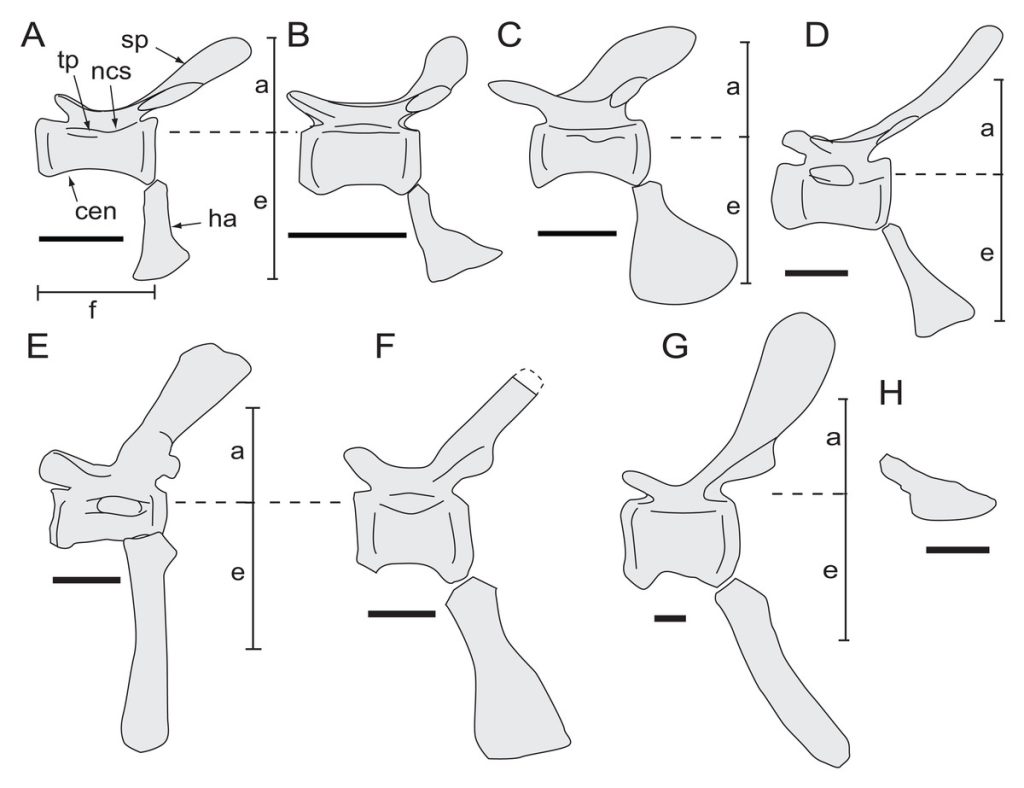
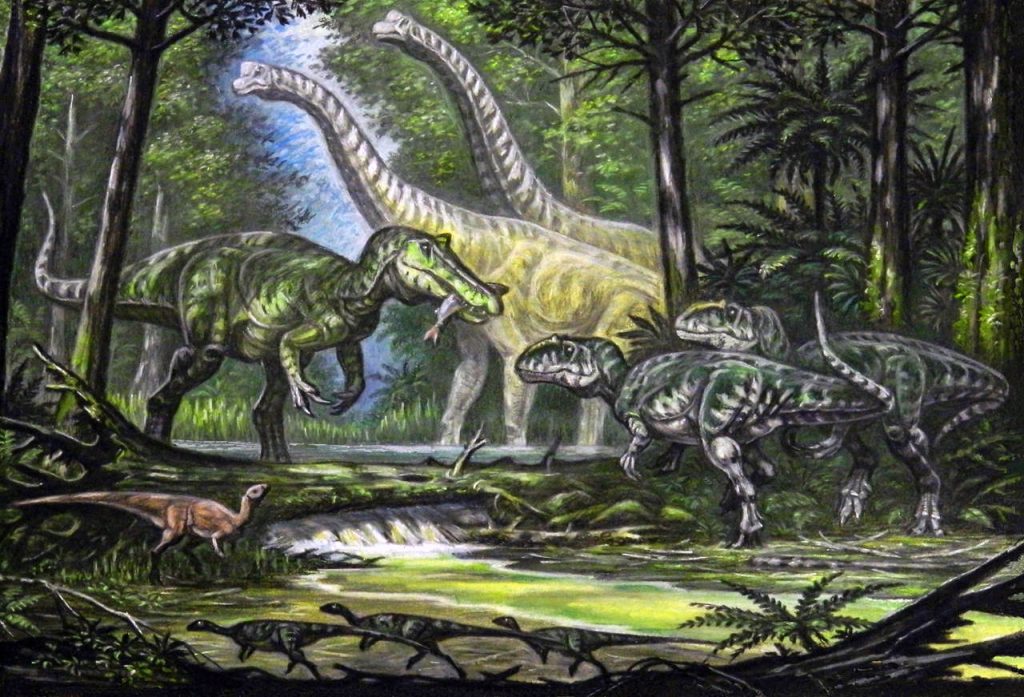
These photographs show an assigned Valdosaurus skeleton at Dinosaur Isle, with a scientific figure and an artist’s restoration.






Frequently Asked Questions
The Natural History Museum translates it as “Wealden lizard,” while canaliculatus comes from the Latin for a channel.
It lived in the Barremian stage of the Early Cretaceous, which spans roughly 126 to 121 million years ago.
Galton estimated the holotype at about 4.2 feet (1.27 meters) and a larger individual at about 9.8 feet (3 meters). Its weight has not been reliably estimated.
It was a two-legged herbivore in the Dryosauridae, a family of ornithopods.
Its holotype came from the Wealden rocks of the Isle of Wight, now assigned to the Wessex Formation of England.
Its femur pairs a high fourth trochanter with a deep knee-end groove, and its pubis has an open obturator notch.
Sources
The information in this article is based on various sources, drawing on scientific research, fossil evidence, and expert analysis. The aim is to provide a comprehensive and accurate overview of Valdosaurus. However, please be aware that our understanding of dinosaurs and their world is constantly evolving as new discoveries are made.
- https://biostor.org/reference/165192
- https://palass.org/publications/palaeontology-journal/archive/18/4/article_pp741-752
- https://www.palass.org/node/3747
- https://doi.org/10.24199/j.mmv.2016.74.04
- https://doi.org/10.7717/peerj.12362
- https://doi.org/10.1371/journal.pone.0036745
- https://doi.org/10.7717/peerj.1523
- https://doi.org/10.1126/science.282.5392.1298
- http://app.pan.pl/acta53/app53-015.pdf
- https://doi.org/10.1371/journal.pone.0156251
- https://doi.org/10.7717/peerj.4113
- https://doi.org/10.1080/14772019.2021.1978005
- https://doi.org/10.1080/14772019.2024.2346573
- https://doi.org/10.7717/peerj.12727
- https://doi.org/10.1144/jgs2024-046
- https://doi.org/10.1016/j.cretres.2023.105590
- https://doi.org/10.1038/s41598-021-97870-8
- https://www.biodiversitylibrary.org/part/173868
- https://palass.org/publications/palaeontology-journal/archive/30/3/article_pp557-580
- https://doi.org/10.1111/gto.12182
- https://www.nhm.ac.uk/discover/dino-directory/valdosaurus.html
- https://stratigraphy.org/ICSchart/ChronostratChart2024-12.pdf
- https://paleobiodb.org/data1.2/taxa/list.json?name=Valdosaurus&rel=all_children&show=attr,ref
This article was last fact checked: TheDinosaurs Team, 25-11-2026
Featured Image Credit: DaCaTaraptor, CC BY-SA 4.0, via Wikimedia Commons
