
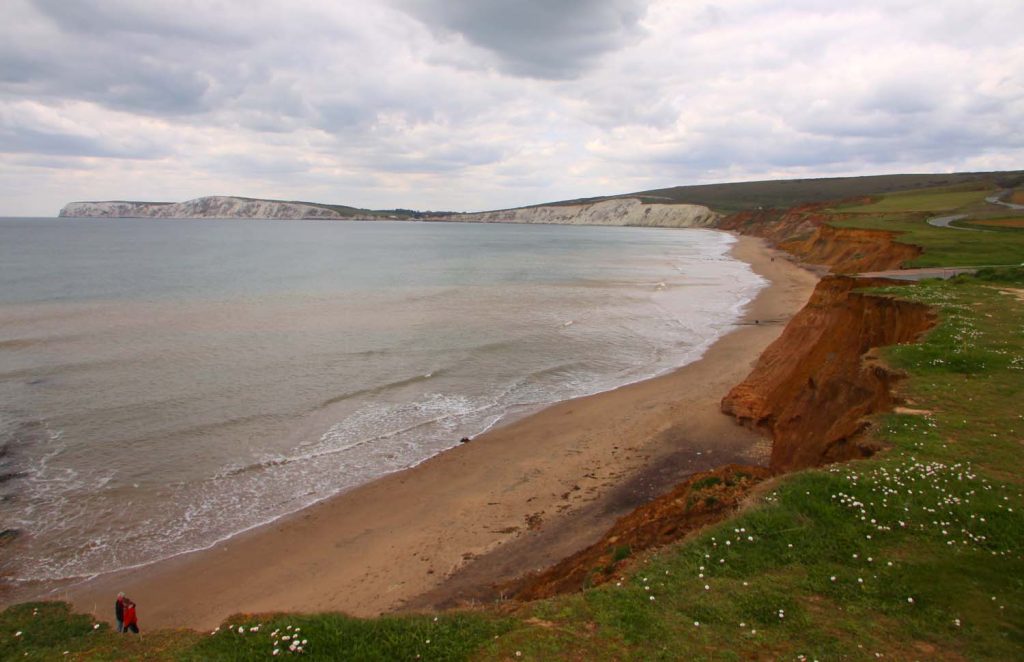
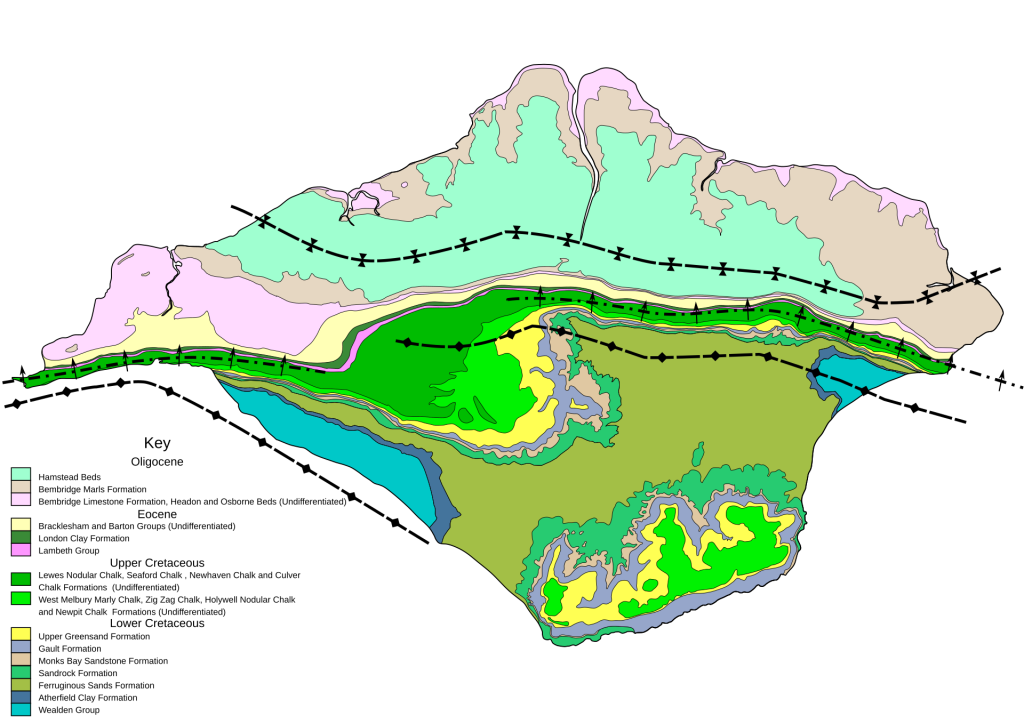
On the Isle of Wight, the cliffs of Compton Bay expose the Wessex Formation—mudstones and sandstones laid down by rivers and lakes on a seasonally arid floodplain. From these cliffs came Comptonatus chasei, an iguanodontian dinosaur named in 2024. Iguanodontians were a lineage of plant-eating ornithopods that includes the famous Iguanodon. Its describers place Comptonatus in the Barremian stage of the Early Cretaceous. The University of Portsmouth puts its age at around 125 million years. According to the original paper, it is the most complete iguanodontian skeleton discovered in the Wealden Group for a century.
Fossil collector Nick Chase found the skeleton in 2013, and Jeremy Lockwood, David Martill and Susannah Maidment described it 11 years later. Their study showed that bones first taken for a familiar species belonged to something new. As a result, it adds to the known iguanodontian diversity of England’s Barremian to early Aptian rocks—diversity long hidden under one name.
Comptonatus Key Facts
| Keyword | Fact |
|---|---|
| Pronunciation | Not specified |
| Meaning of name | Compton Thunderer |
| Group | Ornithopoda (Iguanodontia) |
| Type Species | Comptonatus chasei |
| Diet | Herbivore |
| When it Lived | Around 125 MYA |
| Period | Cretaceous |
| Epoch | Early Cretaceous (Barremian stage) |
| Length | Not specified |
| Height | Not specified |
| Weight | About 2,200 pounds (press-release estimate of “around a ton”) |
| Mobility | Not specified |
| First Discovery | 2013 by Nick Chase |
| Described by | 2024 by J.A.F. Lockwood, D.M. Martill, and S.C.R. Maidment |
| Holotype | IWCMS 2014.80 |
| Location of first find | Compton Bay, Wessex Formation, Isle of Wight, England, UK |
Comptonatus Origins, Taxonomy and Timeline
The genus name joins “Compton,” for Compton Bay where the skeleton came to light, with “tonatus,” which the describers call the Latin for “thundered.” They translate the whole name as “the Compton thunderer” and say it reflects both the place of discovery and the animal’s large size. The University of Portsmouth’s press release renders “tonatus” as “thunderous” instead. Meanwhile, the species name chasei honors the late Nick Chase, and Comptonatus is the first dinosaur named after him. Together, the name ties a big animal to its coastline and to the man who found it.
Comptonatus sits within Ornithopoda, and its describers named it as a new iguanodontian. Later analyses agree that it belongs to Styracosterna—the advanced iguanodontians whose later members include the duck-billed hadrosaurs. According to Maidment, Brighstoneus and Mantellisaurus are two iguanodontians closely related to it. Comptonatus chasei is the type and only known species.
Comptonatus comes from Barremian rocks of the Wessex Formation. On the current international timescale, that stage ran from roughly 125.8 to 121.4 million years ago. Paleontologist Chris Barker and colleagues described the Wessex Formation as entirely Barremian in 2021. However, in 2023, Megan Jacobs and colleagues dated calcite filling a turtle shell found ex situ (out of place). That gave the formation’s first radiometric date, 127.3 ± 2.7 million years, and their title labels the unit Hauterivian–Barremian.
Discovery & Fossil Evidence
Chase spotted the skeleton in the cliffs of Compton Bay in 2013, and the excavation followed that September and October. He died of cancer before its naming, and the describers note his Mary Anning Award from the Palaeontological Association. Lockwood—a retired GP who went on to study it as a University of Portsmouth PhD student—helped with the dig. At first, the specimen seemed to be Mantellisaurus. According to Lockwood’s 2024 thesis, the Isle of Wight produced one of England’s most complete dinosaur skeletons, Mantellisaurus, in 1914. Since then, all medium to large iguanodontian material of this age from the Wealden Group had gone to that species.

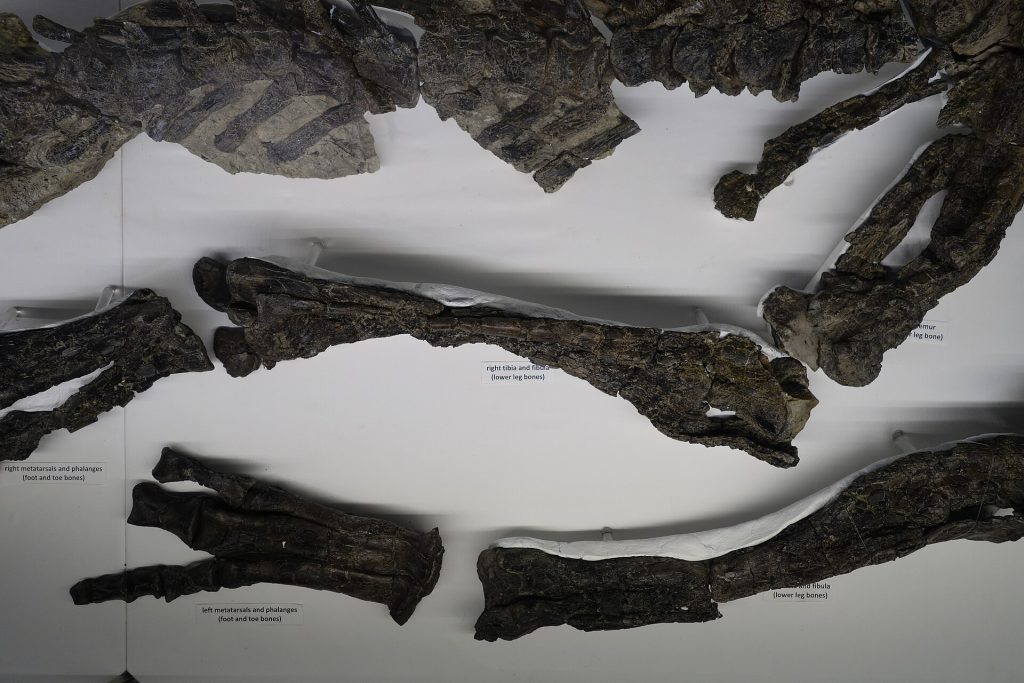
The holotype, IWCMS 2014.80, now sits in the Dinosaur Isle Museum collections in Sandown. Press releases counted 149 bones and called it the most complete dinosaur found in the UK in 100 years—a broader claim than the paper makes. From the skull come the braincase (neurocranium), both quadrates (jaw-joint bones), the right maxilla (upper tooth-bearing bone) and the right dentary (lower jaw bone). Behind it follow neck and back vertebrae, a sacrum (fused hip vertebrae) and tail vertebrae numbered 1 to 40. In addition, the limbs include both shoulder girdles, a right arm with pollex (thumb) bones, the pelvis, a left femur, both shins and many toe bones. Still, the authors caution that some vertebra positions may not be definitive.
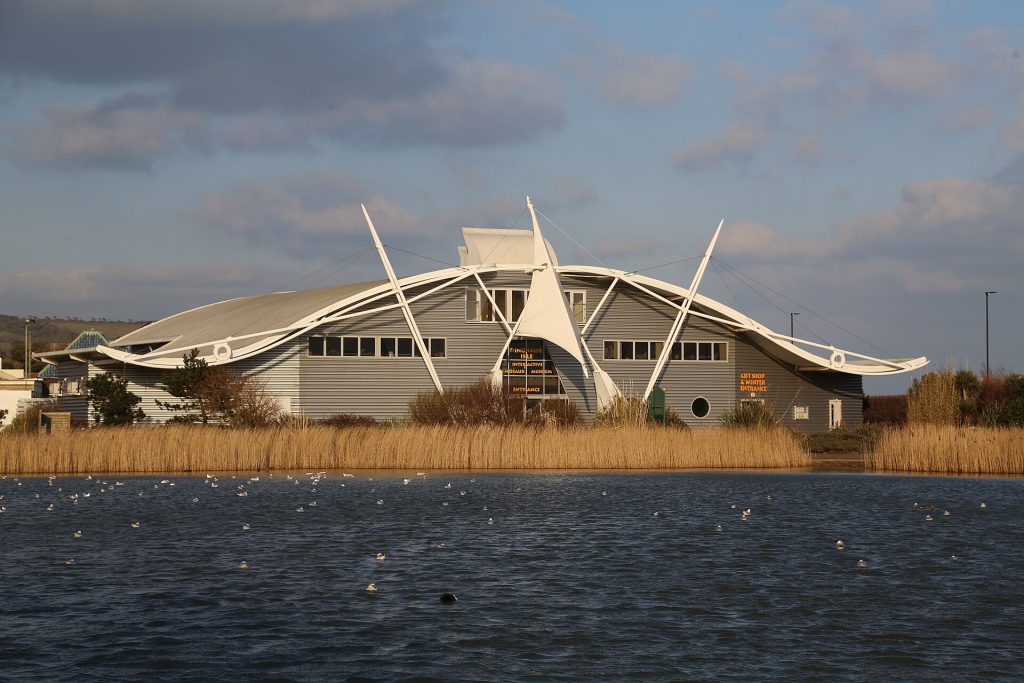

The supplementary information also describes an isolated dentary, IWCMS 1996.4, which Steve Hutt found west of Grange Chine in 1996. The supplement does not refer the jaw to Comptonatus. For now, the holotype from Compton Bay carries the whole story.
Comptonatus Size and Description
A skeleton this complete can be described bone by bone—even though no one has published its overall length.
Short description of Comptonatus
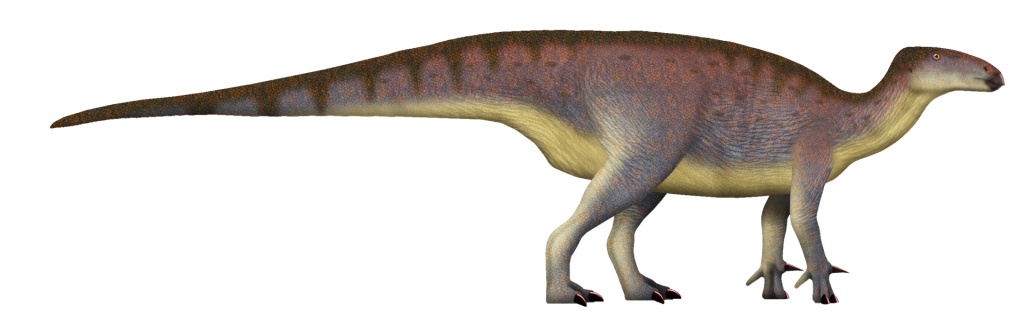
Starting at the head, the lower jaw had a straight bottom edge, whereas most iguanodontians have a jaw that curves downward. As preserved, the right dentary alone measures 366 millimeters (14.4 inches). Distinctive traits in the braincase and teeth also help set it apart. In 2026, Weilesi Guo and colleagues noted that its tooth row bows inward more than in an unnamed hadrosauroid from China. The back of the skull even shows what the authors labeled possible pathological bone growth—a tentative sign of injury or disease.
Behind the head ran a neck, a back and a tail of at least 40 vertebrae. According to the diagnosis, spines on the first tail vertebrae stood over three times as tall as their vertebral bodies. The arm also preserves carpals (wrist bones), metacarpals (palm bones) and the thumb bones. Meanwhile, the hips held an unusually large pubic bone—”like a dinner plate,” in Lockwood’s words. The sources reviewed here do not settle whether it moved mainly on two legs or four. Because only bones are listed among the remains, any discussion of its skin is speculative.
Size and Weight of Type Species
Fortunately, the bones themselves offer hard numbers. The left femur, or thigh bone, is 735 millimeters (2 feet 5 inches) long. Each ischium, a rear hip bone, reaches 760 millimeters (2 feet 6 inches), and the tibiae (shin bones) measure 680 and 689 millimeters. In the arm, the right humerus is 436 millimeters (17.2 inches) long.
Still, turning those bones into a body length is another matter. No published length or hip-height estimate appears in the sources reviewed for this profile. In the 2024 press releases, Lockwood put its weight at “around a ton,” about as big as a large male American bison. Since he gave no method for that figure—roughly 2,200 pounds—it is best read as a rough guide.
The Dinosaur in Detail
What sets this dinosaur apart is a pairing of features named in the original abstract. One is a dentary with a straight ventral (lower) border. The other is a markedly expanded prepubic blade—the forward-pointing part of the pubis. These traits separate it from Mantellisaurus atherfieldensis, Brighstoneus simmondsi and Iguanodon cf. bernissartensis, which its authors call sympatric—found in the same area. In all, the diagnosis lists 12 autapomorphies (unique traits), including features of the neurocranium, teeth and coracoid, a bone of the shoulder girdle.
The function of that giant pubis remains open, though Lockwood suggested it was probably for muscle attachment. He also floated a different gait, gut support and breathing, but called all these ideas “somewhat speculative.”
Its exact place in the family tree is still debated. For their analysis, Lockwood and colleagues added Comptonatus to a revised version of their 2021 data set. In 2025, Filippo Bertozzo and colleagues recovered Cariocecus from Portugal as an early hadrosauroid in a clade with Comptonatus and Brighstoneus. Hadrosauroids, in turn, are the lineage that later produced the duck-billed dinosaurs. Guo’s 2026 study, built on Bertozzo’s data set, also placed it among early hadrosauroids—and cut Iguanodontidae down to Mantellisaurus and Iguanodon. However, Guo’s team noted conflicts with Lockwood’s 2024 and 2025 analyses and with a 2026 study by Sacamoto and colleagues. They traced such differences to poor support for these branches.
Comptonatus points to a time of rapid change. Maidment suggested that it, Brighstoneus and Mantellisaurus demonstrate fast rates of evolution in iguanodontians during this period.
Interesting Points about Comptonatus
- Lockwood compared the dinosaur’s enormous pubic bone to a dinner plate, saying it was much bigger than in other similar dinosaurs.
- Nick Chase also found what Lockwood called the most complete Iguanodon skull ever found in Britain, and Lockwood described him as a modern-day Mary Anning.
- Comptonatus is one of three iguanodontian genera from Lockwood’s doctoral research that were carved out of Wealden material once assigned to Mantellisaurus.
- Lockwood is a retired GP, and Comptonatus was the second new dinosaur genus he described as lead author, after Brighstoneus.
Dinosaurs from the Same Formation
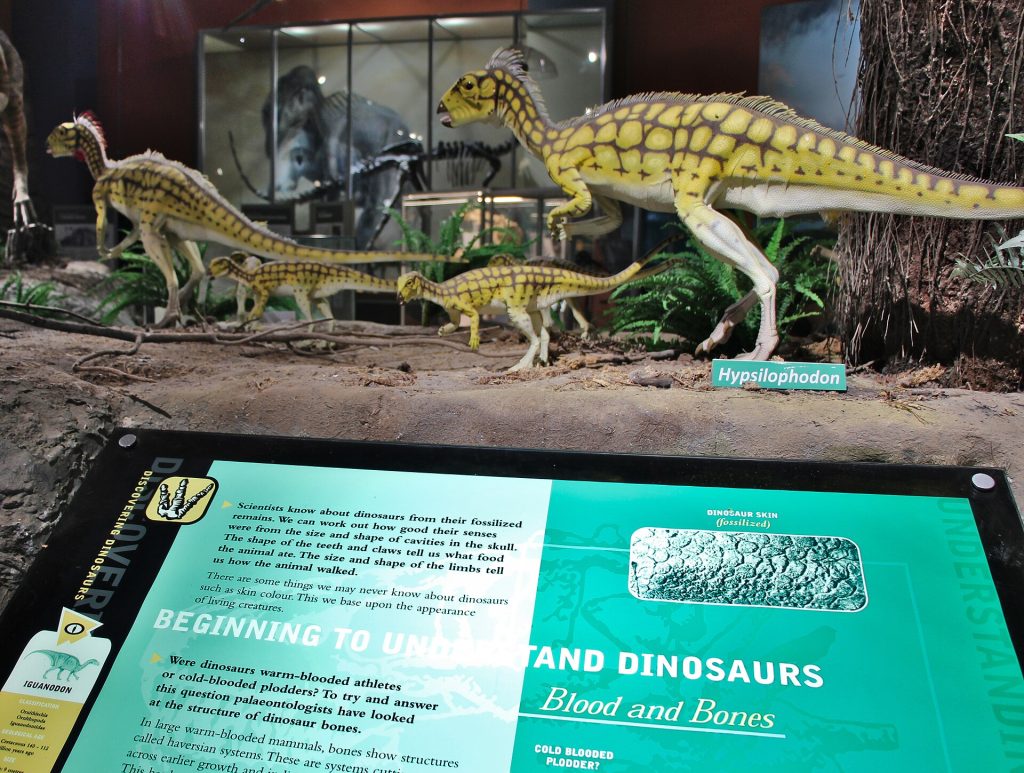
Also known from the Wessex Formation (exact level relative to Comptonatus not known): Valdosaurus, Iguanodon, and the predators Neovenator, Eotyrannus and Riparovenator. Riparovenator comes from between the Chilton Chine and Brighstone Sandstones, and two more can be placed roughly. Hypsilophodon is best known from the Hypsilophodon Bed at the top of the formation, while Brighstoneus comes from older beds, according to Maidment. Valdosaurus turned up nearest. In October 2012, Nick Chase found its skeleton in a Compton Bay plant debris bed about 50 meters (165 feet) from the Comptonatus site. Still, no source places the two in the same bed. Barker and colleagues treat the formation as entirely Barremian, a stage about four million years long. In 2026, however, Cassius Morrison and colleagues wrote that it spans 15 million years. Either way, these animals may not all have lived at the same time.

Comptonatus in its Natural Habitat
Imagine a semi-arid floodplain crossed by a moderately sized, winding river that flowed from west to east. Calcrete nodules in the rock point to a dry climate, and so do its plants—drought-tolerant ferns and the conifers Pseudofrenelopsis and Watsoniocladus. In the dry season, wildfires swept the land and left charcoal behind. Flash floods then filled low spots such as oxbow lakes with wood—forming the plant debris beds that hold most of the formation’s vertebrate fossils.
Two later studies, one built on the other’s data, suggest it was an early hadrosauroid. Guo and colleagues call that group one of the most diverse herbivorous dinosaur clades of the Cretaceous. Even so, no one has published a study of its diet. While there is no direct evidence of which plants it ate, it may have browsed on the ferns and conifers that grew across the floodplain.
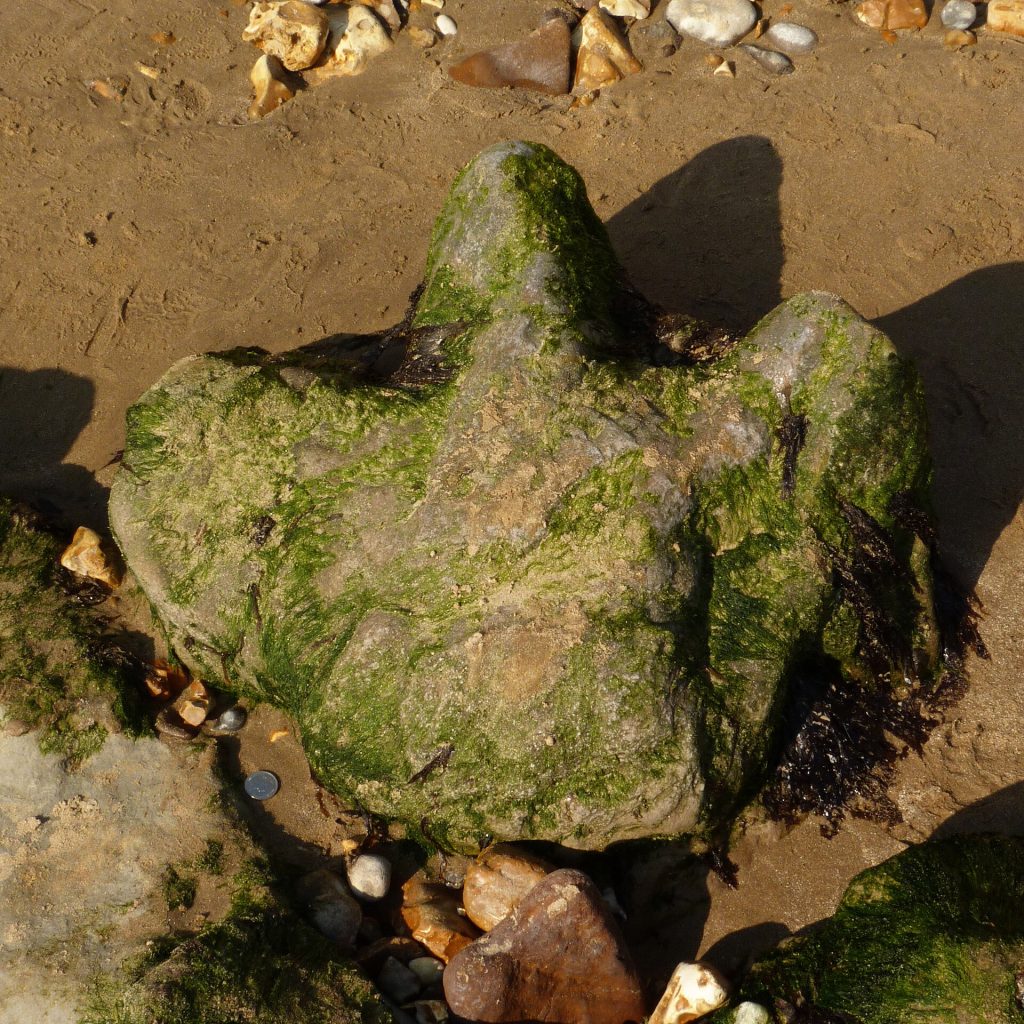

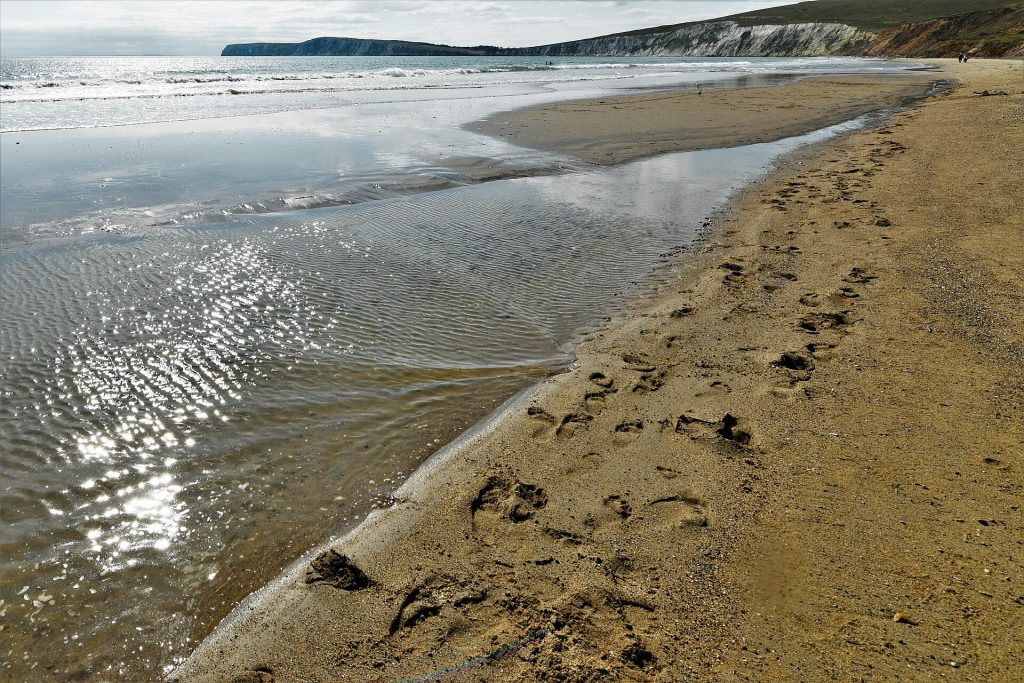
Footprints found nearby led Lockwood to suggest that Comptonatus was likely a herding animal. He pictured herds that “may have been thundering around if spooked by predators.” However, the press release cites no footprint study behind the idea. Its two close relatives probably lived at different times, even though the describers call them sympatric. According to Maidment, Comptonatus was younger than Brighstoneus but older than Mantellisaurus. Lockwood added that recent research shows Wessex was one of the world’s most diverse ecosystems.
Comptonatus Gallery
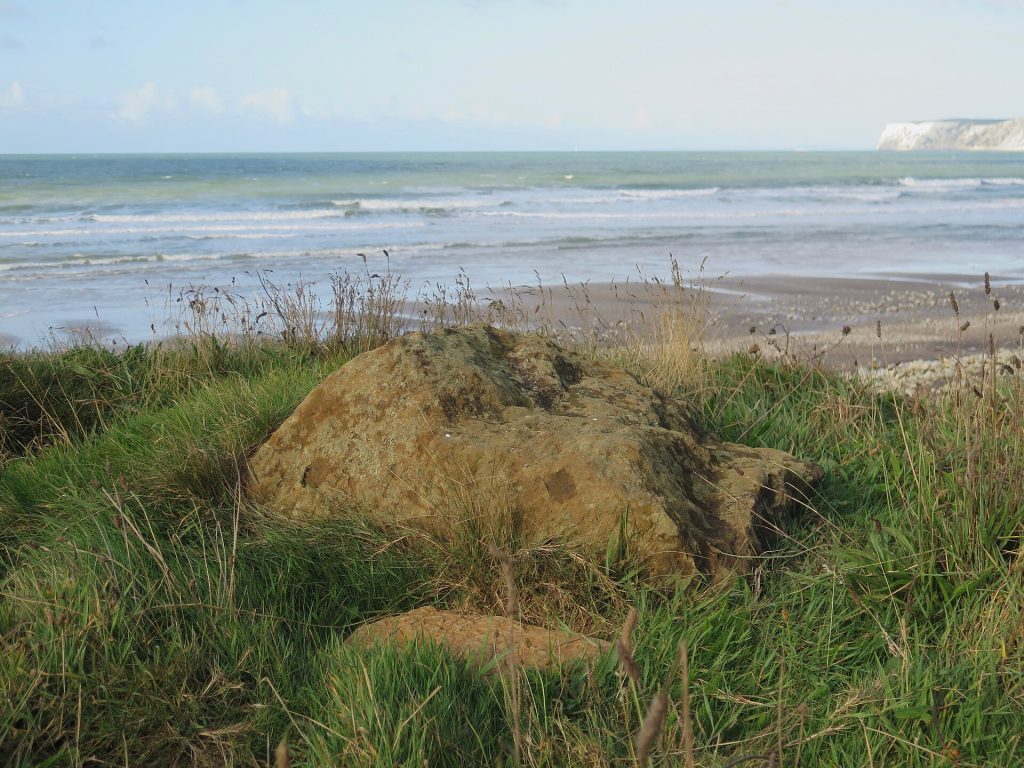
These images show Comptonatus restored in life and the coastline, rocks and museum displays of its island.





Frequently Asked Questions
It means “the Compton thunderer,” from Compton Bay and the Latin “tonatus,” while chasei honors collector Nick Chase.
It lived in the Barremian stage of the Early Cretaceous, around 125 million years ago according to the University of Portsmouth.
Lead author Jeremy Lockwood estimated around a ton, about 2,200 pounds. Its thigh bone alone is 2 feet 5 inches long.
It was a herbivorous iguanodontian, and two later studies sharing a data set place it among early hadrosauroids, though other analyses disagree.
Nick Chase found it in 2013 in the cliffs of Compton Bay, in the Wessex Formation of the Isle of Wight.
Its lower jaw has a straight bottom edge, and its pubic hip bone is unusually large, “like a dinner plate.”
Sources
The information in this article is based on various sources, drawing on scientific research, fossil evidence, and expert analysis. The aim is to provide a comprehensive and accurate overview of Comptonatus. However, please be aware that our understanding of dinosaurs and their world is constantly evolving as new discoveries are made.
- https://doi.org/10.1080/14772019.2024.2346573
- https://doi.org/10.6084/m9.figshare.26228427.v1
- https://researchportal.port.ac.uk/en/publications/icomptonatus-chaseii-a-new-iguanodontian-dinosaur-from-the-lower-/
- https://www.port.ac.uk/news-events-and-blogs/news/research-reveals-the-most-complete-dinosaur-discovered-in-the-uk-in-a-century
- https://www.nhm.ac.uk/press-office/research-reveals-the-most-complete-dinosaur-discovered-in-the-uk.html
- https://doi.org/10.24199/j.mmv.2016.74.04
- https://doi.org/10.1038/s41598-021-97870-8
- https://doi.org/10.1098/rsos.260937
- https://doi.org/10.3897/fr.29.208273
- https://doi.org/10.1080/14772019.2025.2536347
- https://doi.org/10.1016/j.cretres.2023.105590
- https://doi.org/10.1144/jgs2024-046
- https://doi.org/10.1080/14772019.2021.1978005
- https://stratigraphy.org/ICSchart/ChronostratChart2024-12.pdf
- https://researchportal.port.ac.uk/en/studentTheses/evidence-for-diversity-and-variation-in-the-early-cretaceous-igua/
This article was last fact checked: TheDinosaurs Team, 25-11-2026
Featured Image Credit: Ddinodan, CC BY 4.0, via Wikimedia Commons
