
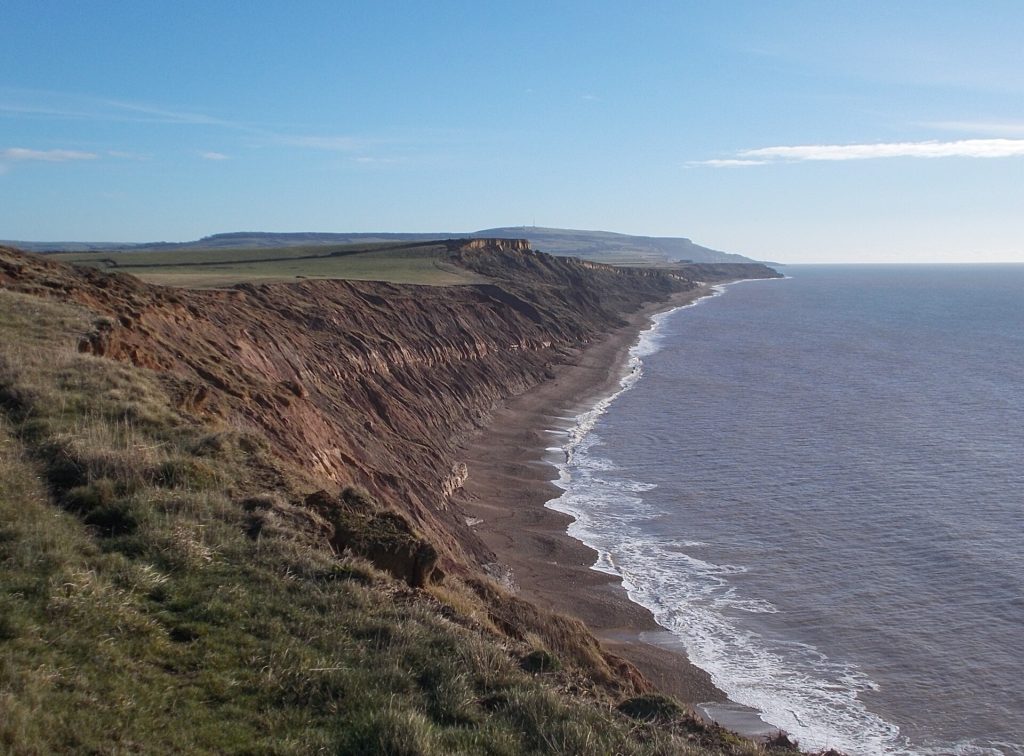
Along the southwest coast of the Isle of Wight, the sea keeps eroding fossils out of the Wessex Formation cliffs. Near Sudmoor Point, at the very base of the exposed formation, those cliffs yielded a small plant-eating dinosaur named Vectidromeus insularis. It lived roughly 125 to 127 million years ago, around the boundary between the Hauterivian and Barremian stages of the Early Cretaceous. Its describers placed it in the same family as Hypsilophodon—a link that later research has challenged.
Four separate pieces of the skeleton weathered out of the rocks, and different people collected them. In September 2023, paleontologist Nicholas R. Longrich and five colleagues named the species in a paper published online, with the journal volume dated 2024. As with many Isle of Wight dinosaurs, its story owes as much to sharp-eyed amateurs as to the restless sea.
Vectidromeus Key Facts
| Keyword | Fact |
|---|---|
| Pronunciation | Not specified |
| Meaning of name | Not specified |
| Group | Ornithischia (described as a hypsilophodontid, placement disputed) |
| Type Species | Vectidromeus insularis |
| Diet | Herbivore |
| When it Lived | Around 127 to 125 MYA (approximate) |
| Period | Cretaceous |
| Epoch | Early Cretaceous (late Hauterivian or early Barremian stage) |
| Length | Not specified |
| Height | Not specified |
| Weight | Not specified |
| Mobility | Moved on two legs (bipedal) |
| First Discovery | Year not specified, by an unnamed amateur collector |
| Described by | 2023 (online), journal volume 2024, by N.R. Longrich, D.M. Martill, M. Munt, M. Green, M. Penn, and S. Smith |
| Holotype | IWCMS 2023.102 |
| Location of first find | Base of the exposed Wessex Formation near Sudmoor Point, Isle of Wight, England, UK |
Vectidromeus Origins, Taxonomy and Timeline
Vectidromeus is an ornithischian (bird-hipped dinosaur), and Longrich and colleagues described it as a hypsilophodontid—a member of the family Hypsilophodontidae. With other putative members now assigned to other families, their abstract says the family comprises just Hypsilophodon and Vectidromeus. On that basis, the describers concluded that hypsilophodontids appear endemic to—found only in—Early Cretaceous Europe. As the Bath press release put it, Europe had its own family of small herbivores. Vectidromeus insularis is the type and only known species.
In 2024, however, Fonseca and colleagues published a broad phylogenetic analysis of early ornithischian evolution. They kept Vectidromeus as a valid genus but argued that it was not a hypsilophodontid. Instead, they placed it within Euiguanodontia, an advanced subgroup of ornithopods, and possibly within the family Dryosauridae. Their verdict rested on anatomical traits alone, because the species was published after they had finished collecting data. No later analysis we found has settled the question, and a 2025 museum report still calls it a hypsilophodontid.
Longrich’s blog places Vectidromeus about 125 million years ago, and the paper’s keywords list the Barremian stage. However, the first radiometric date for the formation—127.3 ± 2.7 million years, from calcite inside a turtle found loose at Brook Bay—points slightly older. In 2023, Jacobs and colleagues, who produced that date, cited paleomagnetic data placing the Hauterivian–Barremian boundary just above the Sudmoor Point Sandstone. That is close to where Vectidromeus was found. They judged the formation late Hauterivian to early Barremian, and Longrich himself notes that its base may reach into the Hauterivian. In 2021, by contrast, Lockwood and colleagues treated the exposed formation as entirely Barremian, with the stage’s base west of Sudmoor Point. Either way, Vectidromeus is older than Hypsilophodon, which comes from beds about 150 meters (490 feet) higher.
Discovery & Fossil Evidence
The bones weathered out of the cliffs near Sudmoor Point, along the island’s south coast. An unnamed amateur collector picked up the specimen when another amateur noticed it and thought it worth further study. Longrich’s blog names that second collector as Sean Smith—presumably the paper’s co-author Shaun Smith, though the published accounts do not confirm it. Neither the press coverage nor Longrich’s blog gives the date of the find. At first, Longrich recalls, the team thought it might be a small theropod—a meat-eating dinosaur. That guess came from the ilium, which did not look right for Hypsilophodon. However, preparation by Mick Green, one of the six describers, showed it to be an ornithischian instead.
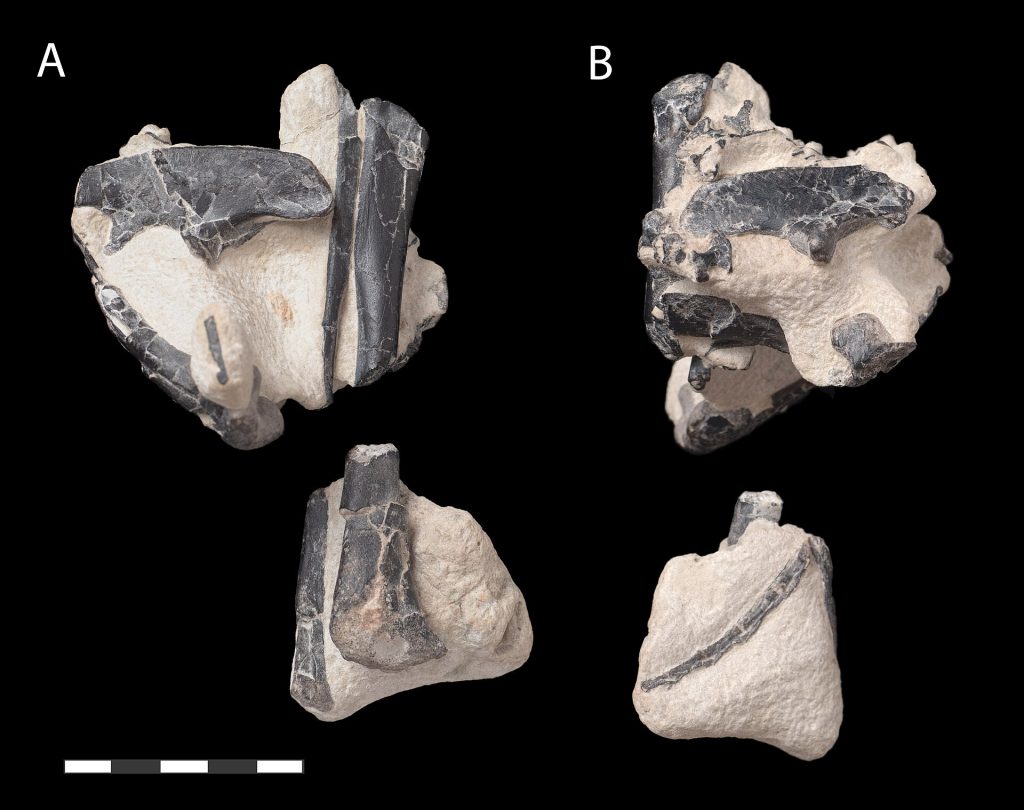

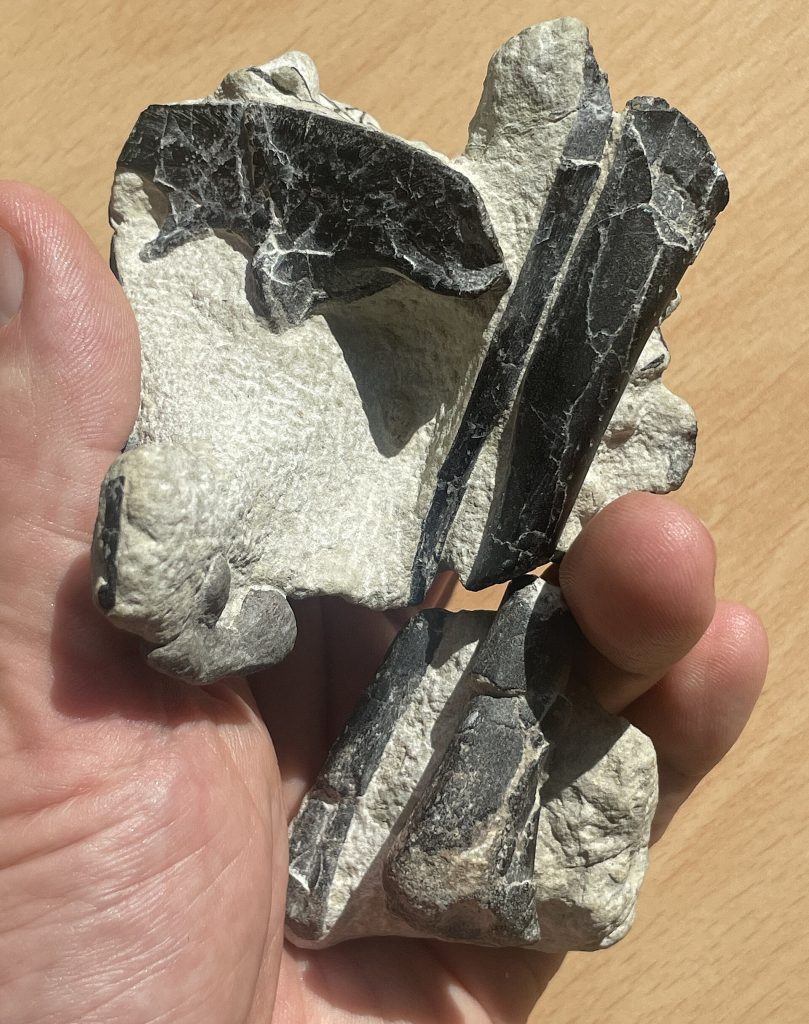
The holotype, IWCMS 2023.102, is held at the Dinosaur Isle Museum in Sandown, according to a 2025 museum report. The describers list associated parts of the dorsal vertebrae (back vertebrae), pelvis, hindlimbs, and tail. On his blog, Longrich names the ilium, ischium, and pubis—the three hip bones. He adds the tibia and fibula (shin bones), part of a femur (thigh bone), and a surf-worn piece of the foot.
Because the four pieces come from the same place, match in size, and repeat no bones, the team treats them as one skeleton. Two blocks even join up through the tibia and fibula—”although not a clean fit,” Longrich notes, since the bones are damaged. According to the describers, hypsilophodontids are the most common small dinosaurs in the Wessex Formation, and until now all were referred to Hypsilophodon foxii. The museum still holds numerous indeterminate “Hypsilophodon” remains from various horizons. Without overlapping bones, it says, they cannot be definitively assigned to either Hypsilophodon or Vectidromeus.
Vectidromeus Size and Description
Short description of Vectidromeus
What survives comes mostly from the middle and rear of the body—parts of the back, the hips, the hind legs, and the tail. No skull has been reported, so its head and teeth remain unknown. Longrich describes the ilium, the main hip blade, as rounded off rather than rectangular. He adds that the ilium, pubis, and ischium all differ from those of Hypsilophodon.
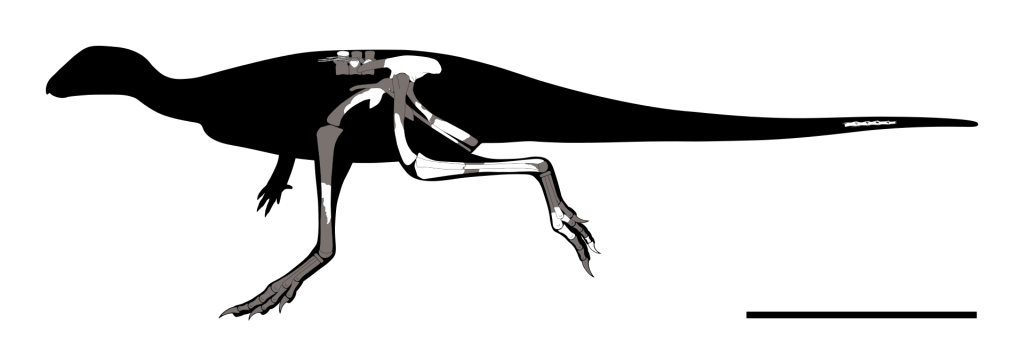

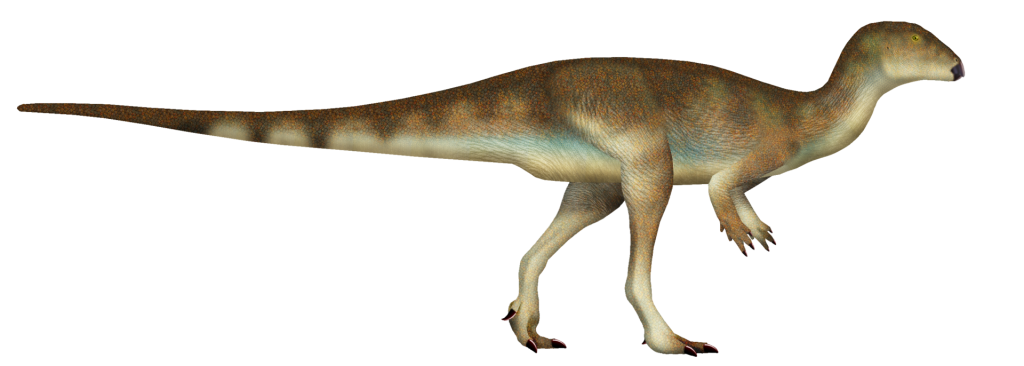
The Bath press release calls hypsilophodonts nimble, bipedal herbivores with bird-like hindlimbs. Vectidromeus likely walked on two legs as well, judging from the group as a whole. With only part of the skeleton known, any picture of its full body, skin, or coloring is speculative.
Size and Weight of Type Species
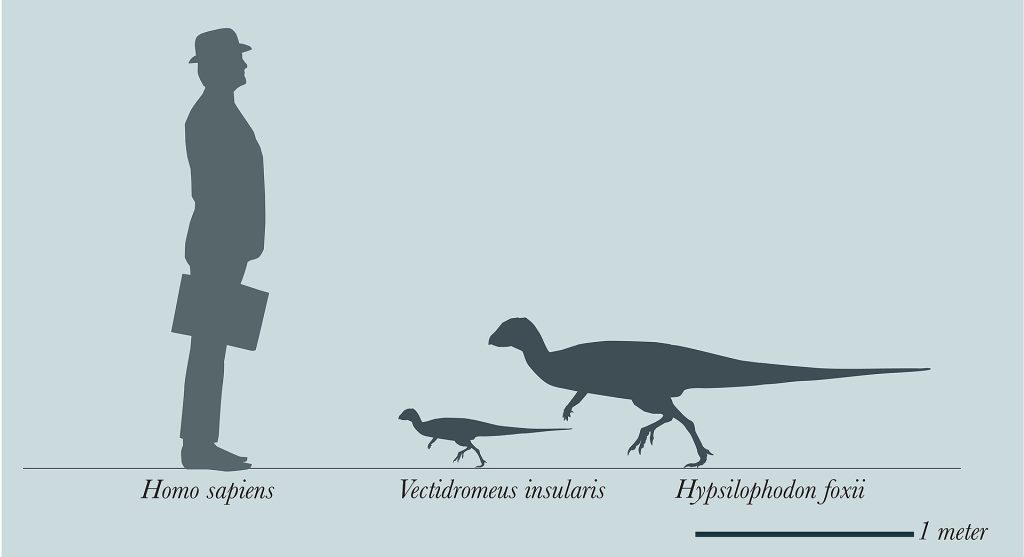
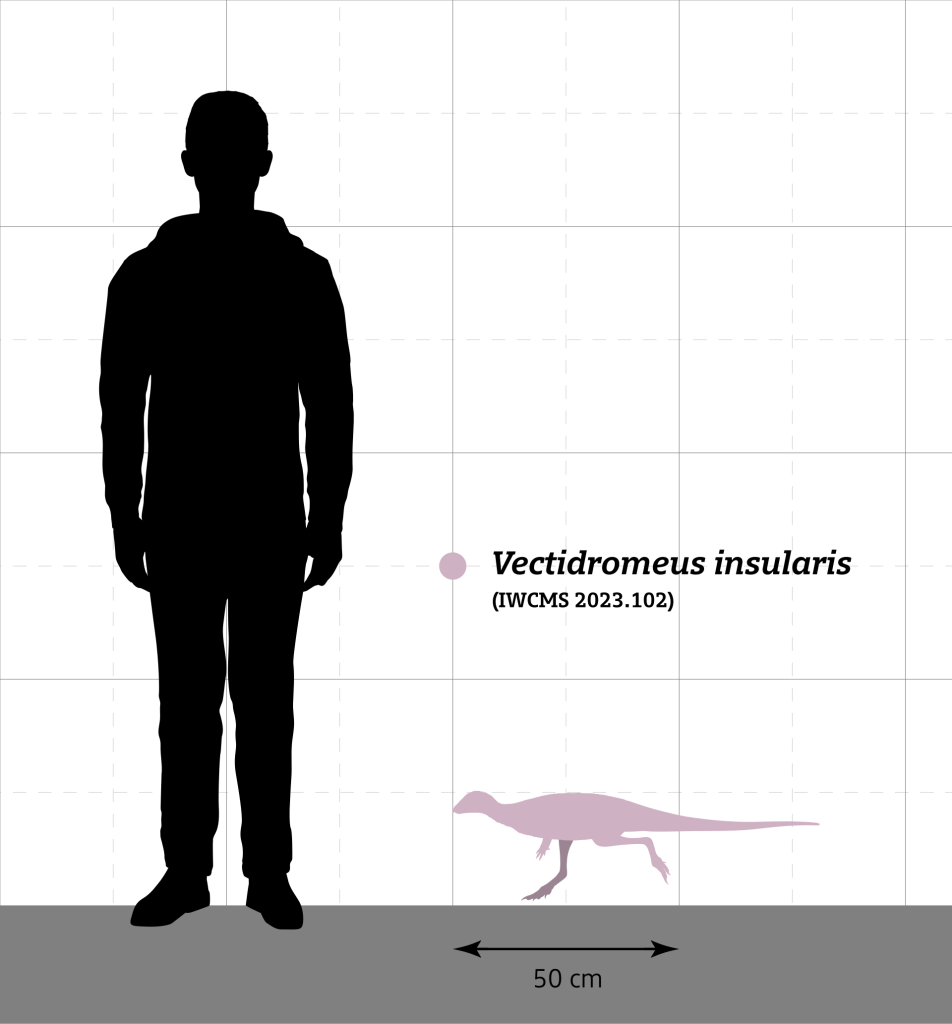
The holotype was about the size of a chicken, according to the University of Bath’s press release. However, it was a juvenile—and the same release notes that the species may have grown much larger.
How much larger is guesswork, although Longrich’s blog suggests an adult maybe 2 to 3 meters (about 6.5 to 10 feet) long. He puts its weight at perhaps 40 or 50 pounds (about 18 to 23 kilograms). He gives no method, so these are informed guesses rather than formal estimates. No hip-height estimate appears in the press coverage or on Longrich’s blog.
For scale, Longrich’s own figure sets the type specimen beside Hypsilophodon foxii and a human.

The Dinosaur in Detail
What sets this dinosaur apart from Hypsilophodon foxii lies mostly in the hips. According to the describers, the rear blade of its ilium was short and deep. It also had a short pubic peduncle—the stub of the ilium that meets the pubis. Its brevis fossa (a groove under the rear of the hip blade) was exposed to the side, and its ischia were rectangular. A large fourth trochanter, a muscle-attachment ridge on the thigh bone, completes the list.
Because the holotype is a juvenile, one might wonder whether it is simply a young Hypsilophodon. However, the describers say it differs from both adult and juvenile H. foxii. In addition, Longrich notes that the museum’s small juvenile Hypsilophodon specimens “look like little Hypsilophodon.” Juveniles, he insists, “can be diagnostic.”
In contrast, Fonseca and colleagues read the same bones as pointing elsewhere. For example, they cited a broad brevis shelf (the ledge bordering that groove), expanded spines on the back vertebrae, and long joint processes on the tail vertebrae. These, they argued, link it to Euiguanodontia and possibly Dryosauridae. They described this mix of features as a “breadth of character conflict”—and took it as evidence that Vectidromeus is not a hypsilophodontid.
Complicating matters further, Longrich writes that recent trees suggest Hypsilophodon itself may lie outside Ornithopoda entirely. Fonseca and colleagues, by contrast, kept Hypsilophodontidae as a valid family within a narrower Ornithopoda. Their version holds only two European Barremian members, though, and Vectidromeus is not one of them. Vectidromeus sits at the center of a wider puzzle—where Europe’s small Early Cretaceous herbivores belong on the family tree.
Interesting Points about Vectidromeus
- In the 2023 press release, paleontologist David M. Martill called it the island’s seventh new dinosaur species in four years.
- Defending a species named from a juvenile, Longrich points out that kittens look like cats and puppies look like dogs.
- The Universities of Bath and Portsmouth, the Dinosaur Isle Museum, and local fossil collectors all worked together on the discovery.
- In 2023, Dinosaur Isle Museum curator Martin Munt said he expected the new dinosaur to go on display for the October school holidays.
Dinosaurs from the Same Formation
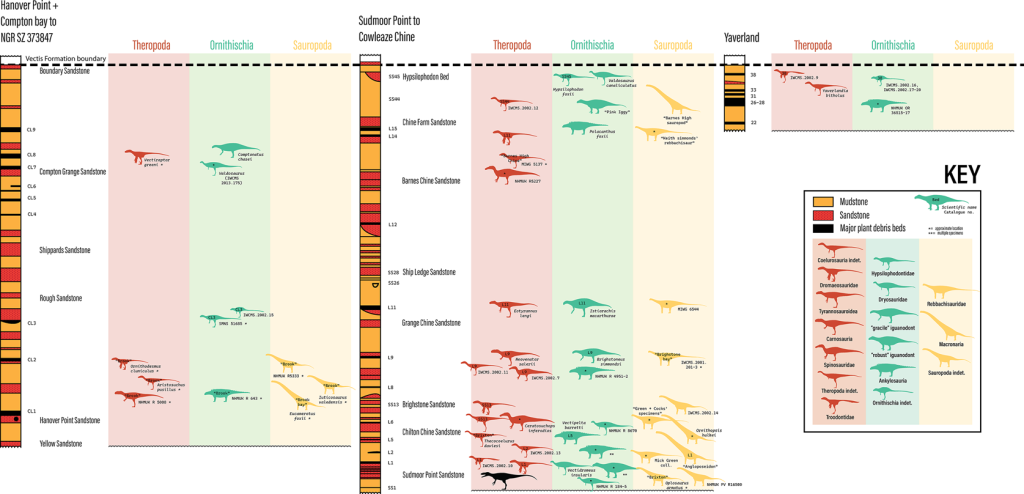
Also known from the Wessex Formation, mostly from higher levels than Vectidromeus: Invictibellatrix, Vectipelta, Ceratosuchops, Riparovenator, Neovenator, and Brighstoneus. Invictibellatrix, a megaraptoran theropod known from a partial braincase, also comes from Sudmoor Point, but its exact bed is unknown. A 2026 chart of the formation’s dinosaurs places the ankylosaurian (armored dinosaur) Vectipelta in plant debris bed L5, a little higher in the sequence. The baryonychine spinosaurids Ceratosuchops and Riparovenator both come from Chilton Chine. The first is known from loose foreshore blocks of uncertain level, the second from between the Chilton Chine and Brighstone sandstones. Higher still, the allosauroid Neovenator and the iguanodontian Brighstoneus come from bed L9, west of Grange Chine. Published estimates of how much time the Wessex Formation represents range from a few million years to as many as 15 million. As a result, these animals may not all have lived at the same time.
Vectidromeus in its Natural Habitat
The world Vectidromeus knew was a floodplain within a narrow valley, now preserved as purple-red mudstones with sandstones between them. Rivers wound across alluvial meander plains dotted with seasonally ephemeral lakes and ponds, under a variable “Mediterranean” climate. Calcrete nodules, xerophytic (drought-adapted) ferns, and conifers such as Pseudofrenelopsis point to semi-arid conditions. Flash floods swept plant debris into hollows such as oxbow lakes, and charcoal in those beds records periodic wildfires. The lower beds, numbered L1 to L8, represent lowland or coastal habitats.

The press release describes Vectidromeus as a small plant-eating dinosaur. While there is no direct evidence of how it fed, the museum report calls hypsilophodonts low-level browsers. Their limb proportions, it adds—a relatively short femur with long shins and feet—indicate a cursorial (running) lifestyle. That picture may not apply, however, if Fonseca and colleagues are right about its family.
On the island, the formation is about 180 meters (590 feet) thick. Confirmed fossils of its proposed relative Hypsilophodon foxii come from near the top, perhaps a few million years later. The two were therefore likely not contemporaries. Longrich argues that the Wessex beds span enough time for species to turn over, so “we may be underestimating diversity in the Wessex.” He also notes that modern small herbivores often coexist, as Thomson’s and Grant’s gazelles do on the Serengeti. Since the sea keeps eroding new fossils out of the cliffs, more of this world may yet come to light.
Vectidromeus Gallery
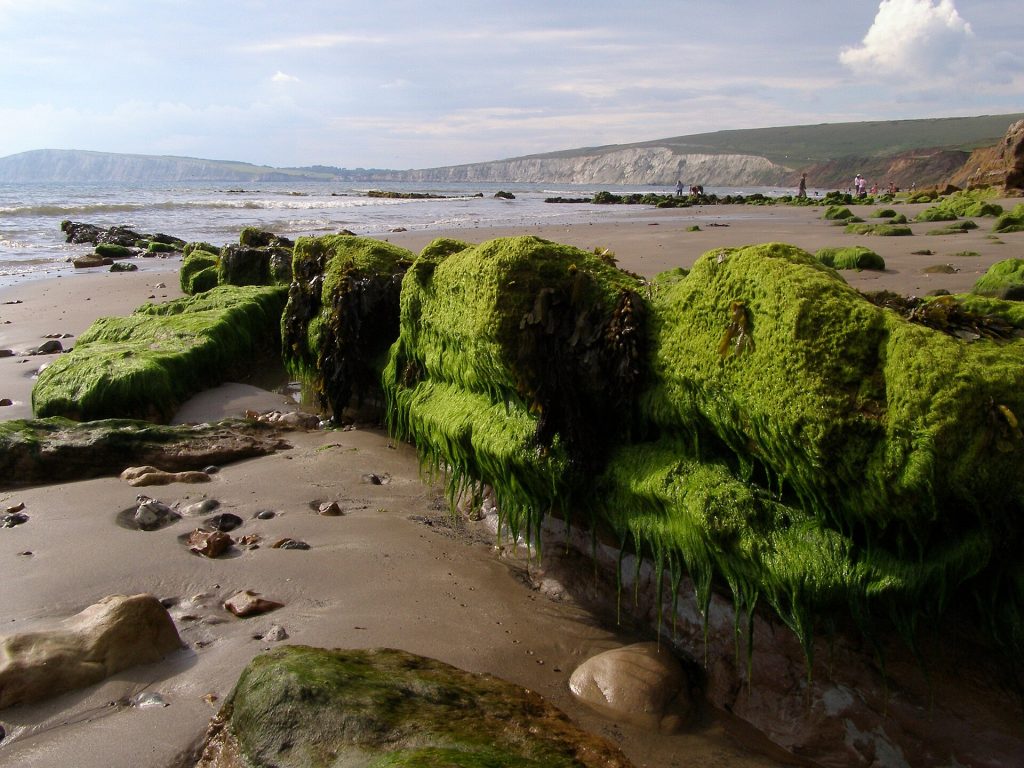
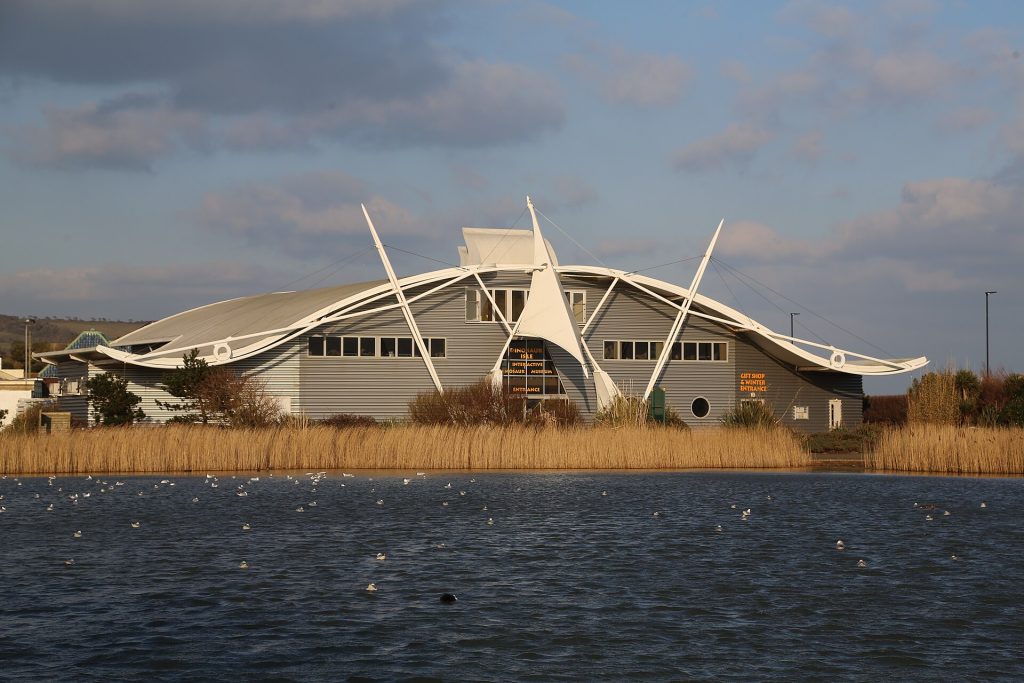
These further images show the animal, its fossils, the island’s coast, and the museum that holds the holotype.






Frequently Asked Questions
It was a small ornithischian herbivore described as a hypsilophodontid, though a 2024 study placed it in Euiguanodontia, possibly Dryosauridae.
It lived roughly 125 to 127 million years ago, near the boundary between the Hauterivian and Barremian stages of the Early Cretaceous.
The only known specimen, a juvenile, was about the size of a chicken, but the species may have grown much larger.
It was a herbivore, and hypsilophodonts as a group are thought to have been low-level browsers.
Its bones weathered out of Wessex Formation cliffs near Sudmoor Point, on the Isle of Wight’s southwest coast.
Its describers distinguished it from Hypsilophodon by its hips, including a short, deep rear iliac blade and rectangular ischia.
Sources
The information in this article is based on various sources, drawing on scientific research, fossil evidence, and expert analysis. The aim is to provide a comprehensive and accurate overview of Vectidromeus. However, please be aware that our understanding of dinosaurs and their world is constantly evolving as new discoveries are made.
- https://doi.org/10.1016/j.cretres.2023.105707
- https://researchportal.bath.ac.uk/en/publications/ivectidromeus-insularisi-a-new-hypsilophodontid-dinosaur-from-the/
- https://www.nicklongrich.com/blog
- https://www.bath.ac.uk/announcements/isle-of-wight-fossil-shows-europe-had-different-herbivorous-dinosaurs-to-asia-and-america/
- https://www.port.ac.uk/news-events-and-blogs/news/new-fossil-shows-europe-had-different-herbivorous-dinosaurs-to-asia-and-america
- https://iwnhas.org/wp-content/uploads/2026/07/Peaker-Dinosaur-Museum-Isle-of-Wight-Wight-Studies-Vol-39-2025.pdf
- https://doi.org/10.1080/14772019.2024.2346577
- https://doi.org/10.6084/m9.figshare.26076646.v2
- https://doi.org/10.1098/rsos.260937
- https://doi.org/10.1080/14772019.2021.1978005
- https://doi.org/10.1016/j.cretres.2023.105590
- https://doi.org/10.1038/s41598-021-97870-8
- https://doi.org/10.1038/s41598-017-03671-3
- https://doi.org/10.1080/14772019.2023.2210577
- https://zenodo.org/records/8250332
This article was last fact checked: TheDinosaurs Team, 25-11-2026
Featured Image Credit: Ddinodan, CC BY 4.0, via Wikimedia Commons
