
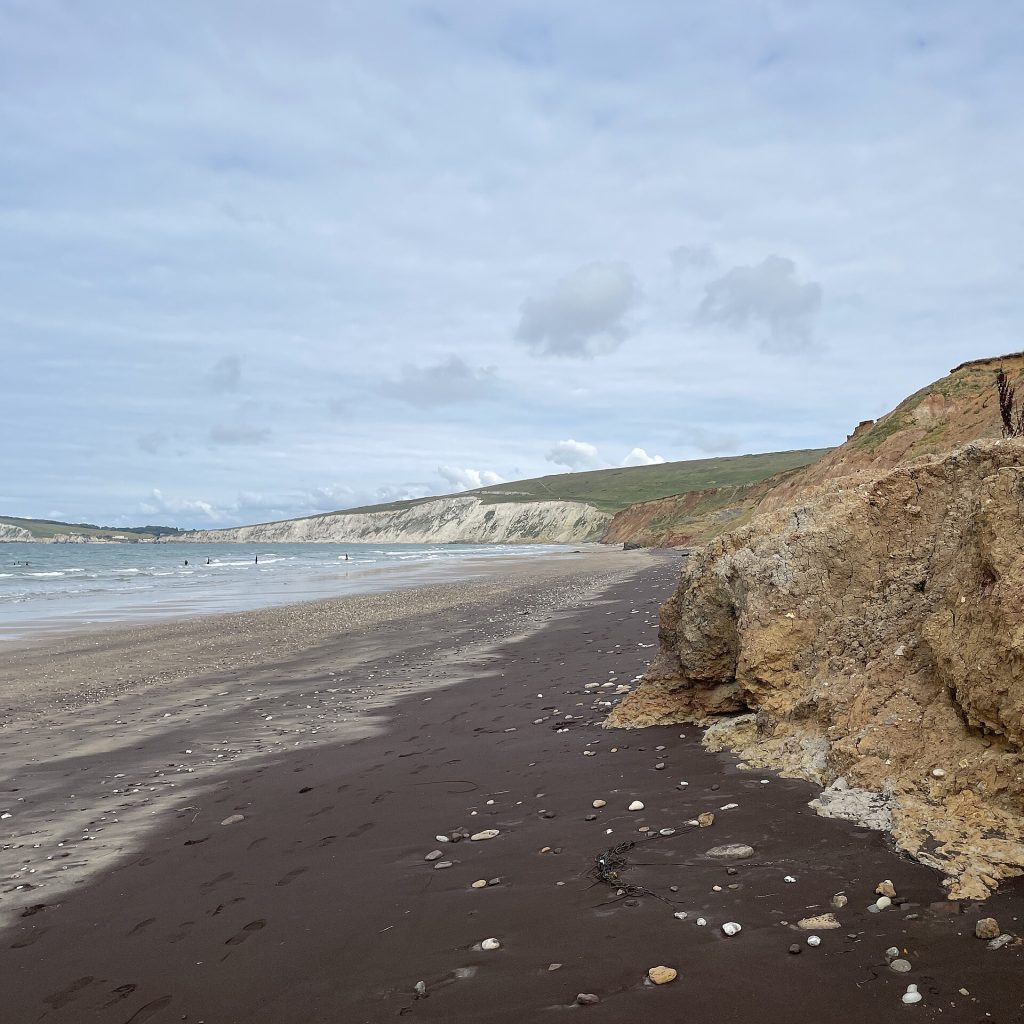
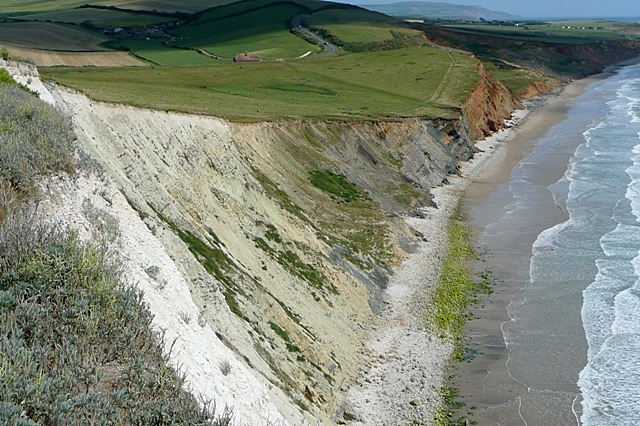
On the foreshore of Compton Bay, on England’s Isle of Wight, the upper Wessex Formation meets the younger Vectis Formation along a small fault. Below that boundary, the bones of Vectiraptor greeni washed out onto the foreshore. The rock still clinging to them points to a plant debris bed exposed nearby. Vectiraptor was a dromaeosaurid—one of the birdlike, predatory theropods popularly called raptors. It lived during the Barremian stage of the Early Cretaceous, roughly 125.8 to 121.4 million years ago. Its describers estimated a length of 2.5 to 3 meters (8.2 to 9.8 feet). Meanwhile, a University of Bath press release hailed it as the first large raptor found in England.
Local collector Mick Green found two of the bones in 2004, after storms and waves had eroded the rocks around them. Years later, he showed them to paleontologists Megan L. Jacobs and Nicholas R. Longrich while chatting over a beer. Longrich, David M. Martill, and Jacobs then named the animal in Cretaceous Research, online in December 2021. Although only three bones are known, they hint at a link between the dinosaurs of Europe and North America.
Vectiraptor Key Facts
| Keyword | Fact |
|---|---|
| Pronunciation | Not specified |
| Meaning of name | Isle of Wight Thief |
| Group | Theropoda |
| Type Species | Vectiraptor greeni |
| Diet | Carnivore |
| When it Lived | 125.8 to 121.4 MYA |
| Period | Cretaceous |
| Epoch | Early Cretaceous (Barremian stage) |
| Length | 8.2 to 9.8 feet (2.5 to 3 meters), authors’ estimate |
| Height | Not specified |
| Weight | Not specified |
| Mobility | Not specified |
| First Discovery | 2004 by Mick Green |
| Described by | 2022 (online December 2021) by N.R. Longrich, D.M. Martill, and M.L. Jacobs |
| Holotype | IWCMS 2021.31.1–3 |
| Location of first find | Foreshore at Compton Bay (probably from a plant debris bed, upper Wessex Formation), Isle of Wight, England, United Kingdom |
Vectiraptor Origins, Taxonomy and Timeline
The genus name joins Vectis, the Latin name for the Isle of Wight, with raptor, meaning “thief.” The species name greeni honors Mick Green of Brighstone, Isle of Wight, who discovered and prepared the type material. Together, the name ties the animal to its island and to the collector who freed its bones from the rock.
Within Theropoda, Vectiraptor belongs to Dromaeosauridae and is placed, tentatively, in Eudromaeosauria (the “true dromaeosaurs”). Its describers suggested it sat near the base of that group, “perhaps as a primitive member of the group or sister to it.” However, they ran no phylogenetic analysis, so the placement rests on comparisons of anatomy alone. Vectiraptor greeni is the type and only known species. Later, in 2026, Morrison and colleagues listed it among the Wessex Formation theropods currently considered valid—alongside Ornithodesmus, the formation’s other named dromaeosaurid.
The type horizon belongs to the Barremian stage, roughly 125.8 to 121.4 million years ago on the current international timescale. In contrast, news releases rounded this to about 125 million years. Within the formation, the bones came from the upper part—below the Wessex–Vectis boundary. At the time, the paper notes, seas isolated Europe for much of the Early Cretaceous—the North Atlantic, the Turgai Strait, and the Tethys. Even so, land bridges may have linked it to other landmasses from time to time.
Discovery & Fossil Evidence
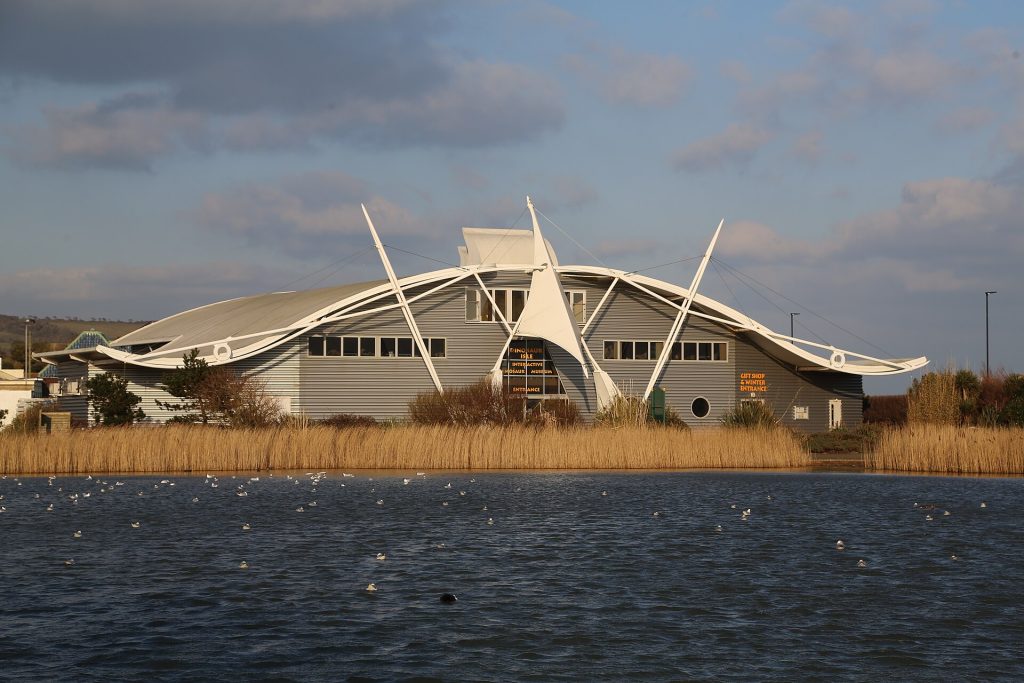
Collectors picked up the bones on the foreshore at Compton Bay. However, the rock still attached to them indicates that they came from a pyrite-rich plant debris bed exposed there. Green collected two of them in 2004, and the late Nick Chase found the third, in a year the paper does not give. According to the University of Bath, Green did not appreciate their importance until ill health stopped his collecting in 2012. The fossils were eventually donated to the Dinosaur Isle Museum in Sandown.

The holotype, IWCMS 2021.31.1–3, belongs to the Isle of Wight County Museum Service. It comprises two dorsal vertebrae (back vertebrae), one from near the shoulders and one from farther back. The third bone is a partial sacrum—the fused vertebrae of the hip—with parts of three sacral vertebrae. Its bone is dark, encrusted, and infilled with pyrite, and weathering in the surf has rounded some edges.
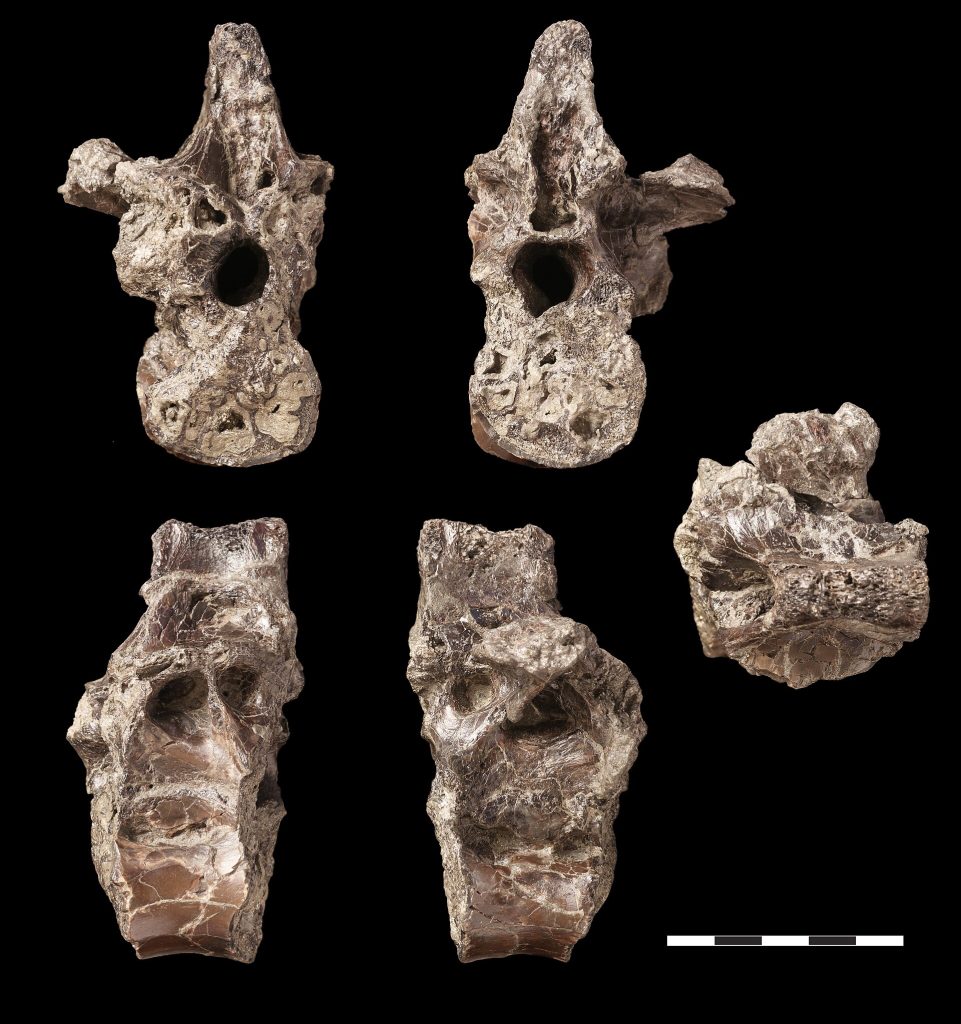

The authors treated the three bones as one animal because they were collected over a short period, within several meters of each other. They also share the same preservation, matrix, and consistent size, as well as enlarged neural canals. In addition, the two back vertebrae share the same air-filled internal chambers. Large isolated teeth from the formation are, in the authors’ words, “likely to pertain to Vectiraptor.” Described by Sweetman in 2004, these teeth measure 6.5 to 10 millimeters long at the base. Even so, the authors urged caution, since tyrannosauroids show similar features. No additional specimens have been formally referred to Vectiraptor.
Vectiraptor Size and Description
With only three bones known, any picture of Vectiraptor leans heavily on its better-known relatives.
Short description of Vectiraptor
No skull, limb, or tail bones are known, so a head-to-tail description is not yet possible. Instead, the back and hip bones carry the evidence. Their parapophyses—the knobs where the ribs attached—sit on stalks, and the rear dorsal centrum (vertebral body) appears to have been wider than tall. The rear back vertebra also bears large pleurocoels, openings into hollow spaces inside the bone. Together with short centra, tall spines, and broad ligament scars, the authors argued, only dromaeosaurs combine all of these traits.
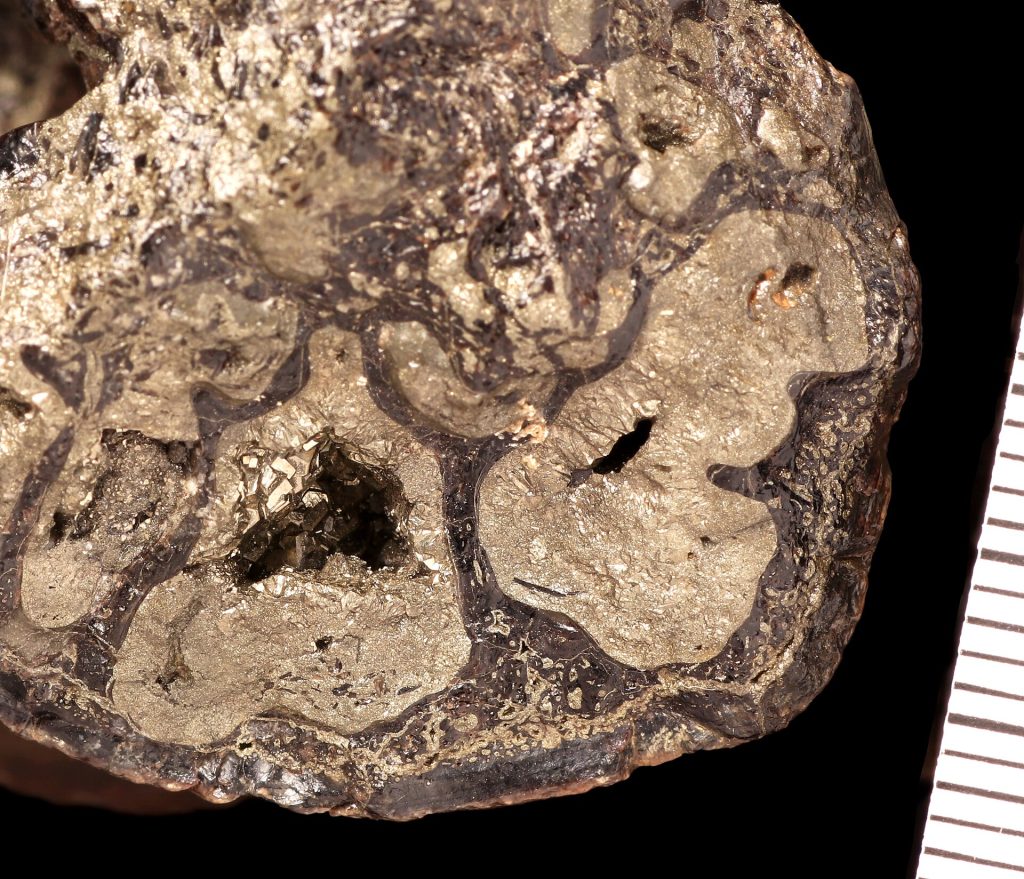
Inside, thin bony sheets divide the centra of both back vertebrae into air-filled chambers called camellae. Yet the outer walls reach 2 millimeters and the partitions 1 millimeter—relatively thick for such an airy bone. Despite this hollow interior, Longrich described “a large, and very heavily constructed animal,” with thick-walled, massive bones.
Feathers and sickle claws are a familiar part of the raptor image, and the Bath release describes raptors as covered in long feathers. Still, no feathers or claws of Vectiraptor itself are known. Restorations therefore borrow any such features from its relatives rather than from its own fossils.
Size and Weight of Type Species
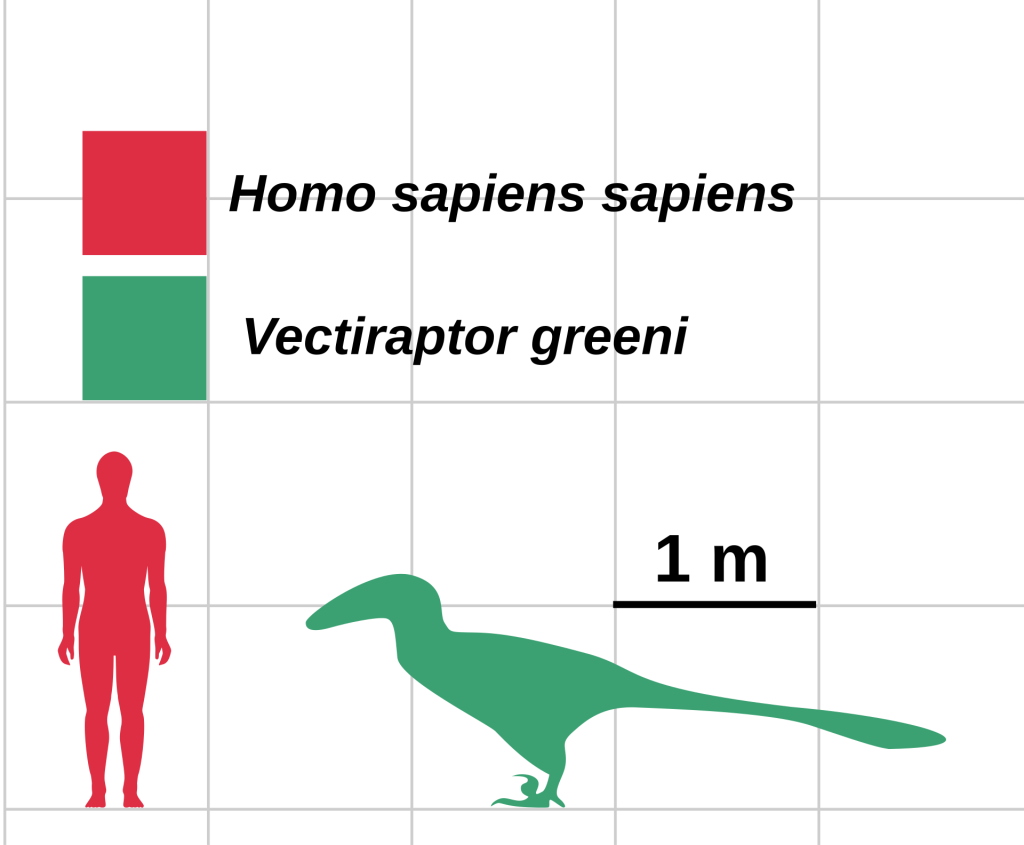
In their diagnosis, Longrich and colleagues called Vectiraptor a “large dromaeosaur” of 8.2 to 9.8 feet (2.5 to 3 meters). However, the paper does not state how this estimate was reached. The university release rounded it to around 3 meters (10 feet) from nose to tail.
No height at the hips or body mass has been published. Instead, the release offered a modern comparison—about the size of a wolf. In the paper, the authors judged it “similar to Deinonychus in size,” a famous North American relative.

Growth lines in the rear back vertebra add an unusual detail. The authors counted at least six, perhaps eight, lines of arrested growth (growth rings) in just 2 millimeters of outer bone. Assuming these marked seasonal growth, they read them as seven to nine years of life. If those years were roughly the final third of its life, the animal may have died at “around 20-30 years of age.” Based on the bone texture and fused elements, it was probably fully grown—”a mature or even old individual.”
The Dinosaur in Detail
What sets this dinosaur apart is the sculpting of its back vertebrae. In the front dorsals, an extra bony ridge, or accessory lamina, divides the deep triangular hollows beneath the rib joints. The authors treated that ridge as unique to Vectiraptor, along with the massive neural spines and their broad ligament scars. The neural spine is “very wide mediolaterally for such a small theropod,” they wrote, “to a degree not seen in other dromaeosaurids.”
Direct measurements give a sense of scale. The anterior dorsal has a centrum 45 millimeters long, with a front face 33 by 31 millimeters as preserved. Meanwhile, the broken posterior dorsal measures 36 millimeters long, 35 millimeters wide, and 30 millimeters tall. Its camellate interior resembles that of unenlagiines, a group of southern dromaeosaurids, and even some sauropods.

The sacrum has its own diagnostic quirks. Its ventral groove stops short of the full length of the bone, and its centra lack the air chambers of the back vertebrae. It also holds a “massive neural canal,” up to 20 millimeters across at the front and 25 millimeters farther back. In the authors’ view, it likely contained a large air-sac system. Unlike Ornithodesmus, it lacks pleurocoels in the sacral centra. Since Ornithodesmus is also perhaps a little more than half its size, the authors concluded that “this argues against synonymy.”
The stalked parapophyses and pleurocoels also helped rule out tyrannosaurids, ornithomimosaurs, oviraptorosaurs, and troodontids. According to the describers, Vectiraptor resembles Early Cretaceous eudromaeosaurs from North America, suggesting a faunal exchange between the two continents. They called Europe “a biotic crossroads” but cautioned that such dispersal scenarios “are therefore speculative.” These bones suggest a robust, air-filled predator whose exact branch on the family tree awaits more complete material.
Interesting Points about Vectiraptor
- The University of Bath announced Vectiraptor as the first large raptor found in England. However, Sweetman had already reported large raptor-like teeth from the same rocks in 2004.
- By the authors’ estimate, growth lines in one vertebra suggest the animal may have died at around 20 to 30 years of age.
- According to the University of Bath, its finder grasped their importance only when ill health ended his collecting in 2012, eight years later.
- Its back vertebrae are honeycombed inside with air-filled chambers, a pattern the authors compare with unenlagiine dromaeosaurids and some sauropods.
- Although the authors placed it near the base of Eudromaeosauria, no phylogenetic analysis has yet tested where it fits.
Dinosaurs from the Same Formation
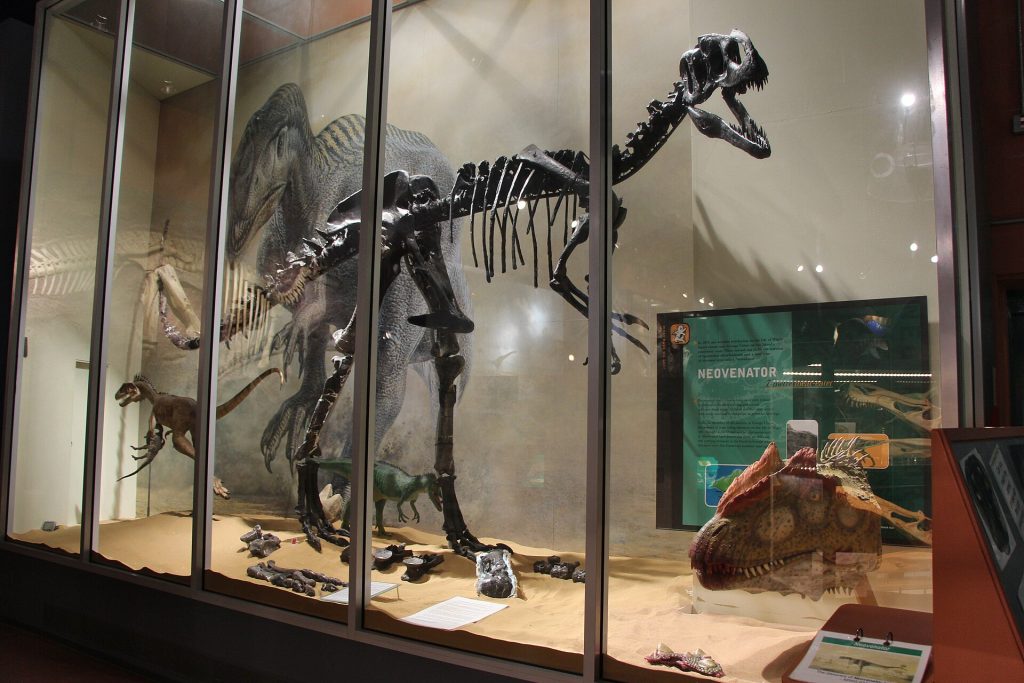
Also known from the Wessex Formation (exact level relative to Vectiraptor not known): Comptonatus, Neovenator, Eotyrannus, Ceratosuchops, Riparovenator, and Hypsilophodon. Comptonatus is an iguanodontian plant-eater that also comes from the cliffs of Compton Bay, though no source ties it to the same bed. Neovenator was a carcharodontosaurian allosauroid from bed L9, a plant debris bed west of Grange Chine. Lockwood and colleagues placed that bed in the early Barremian, lower in the formation than Vectiraptor‘s site. Eotyrannus was an early tyrannosauroid. Ceratosuchops and Riparovenator were baryonychine spinosaurids from Chilton Chine, while the small ornithopod Hypsilophodon comes from the uppermost Wessex Formation near Cowleaze Chine. The exposed formation is entirely Barremian in age, a stage that lasted roughly 4 to 5 million years. These animals, then, may not all have lived at the same time.
Vectiraptor in its Natural Habitat
The world Vectiraptor roamed was a floodplain of rivers and riparian seasonal wetlands, recorded in mudstones that sometimes became long-lived soils. Morrison and colleagues describe a semi-arid floodplain within a narrow valley, with xerophytic (drought-adapted) ferns and the conifers Pseudofrenelopsis and Watsoniocladus. Charcoal points to seasonal wildfires. Similarly, Lockwood and colleagues described a variable “Mediterranean” climate in 2021, alternating between hot, drier and cool, wetter seasons. Sweetman and Insole (2010) read the plant debris beds as locally generated debris flows. In contrast, Wright and colleagues (2000) saw them as stagnant ponds serving as drought refuges. Either way, rapid burial in these beds favored preservation.
Beyond dinosaurs, the formation has yielded sharks, freshwater fish, early mammals, lizards, crocodyliforms, turtles, and pterosaurs. Footprints add to the record. In 2021, the describers counted around 20 dinosaur species from the formation, and researchers have named several more since. One isolated tooth, IWCMS.2002.2, may belong to another dromaeosaurid, perhaps Ornithodesmus.
As a dromaeosaurid, Vectiraptor was probably a predator, although the specimen preserves no teeth or gut contents. Longrich argued that “it clearly didn’t hunt small prey, but animals as large or larger than itself.” The Bath release went further, proposing that it relied less on speed and more on strength—and perhaps ambush. The same release suggested it may have climbed trees like modern leopards, an idea absent from the paper. After all, no arm or claw bones are known. The release also cast it as a threat to smaller dinosaurs and to juveniles of large dinosaurs.
No direct evidence shows whether Vectiraptor hunted alone or in groups. Still, Longrich read its heavy build as the mark of a powerful hunter. To its describers, it also signals a faunal exchange with North America—perhaps via a Greenland land bridge, or by swimming and rafting.
Vectiraptor Gallery
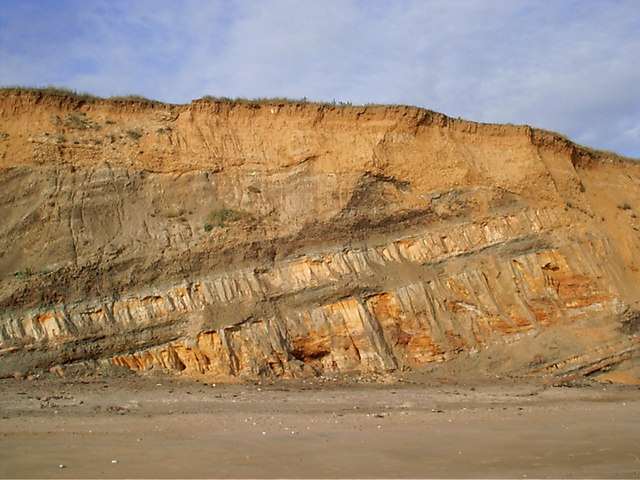
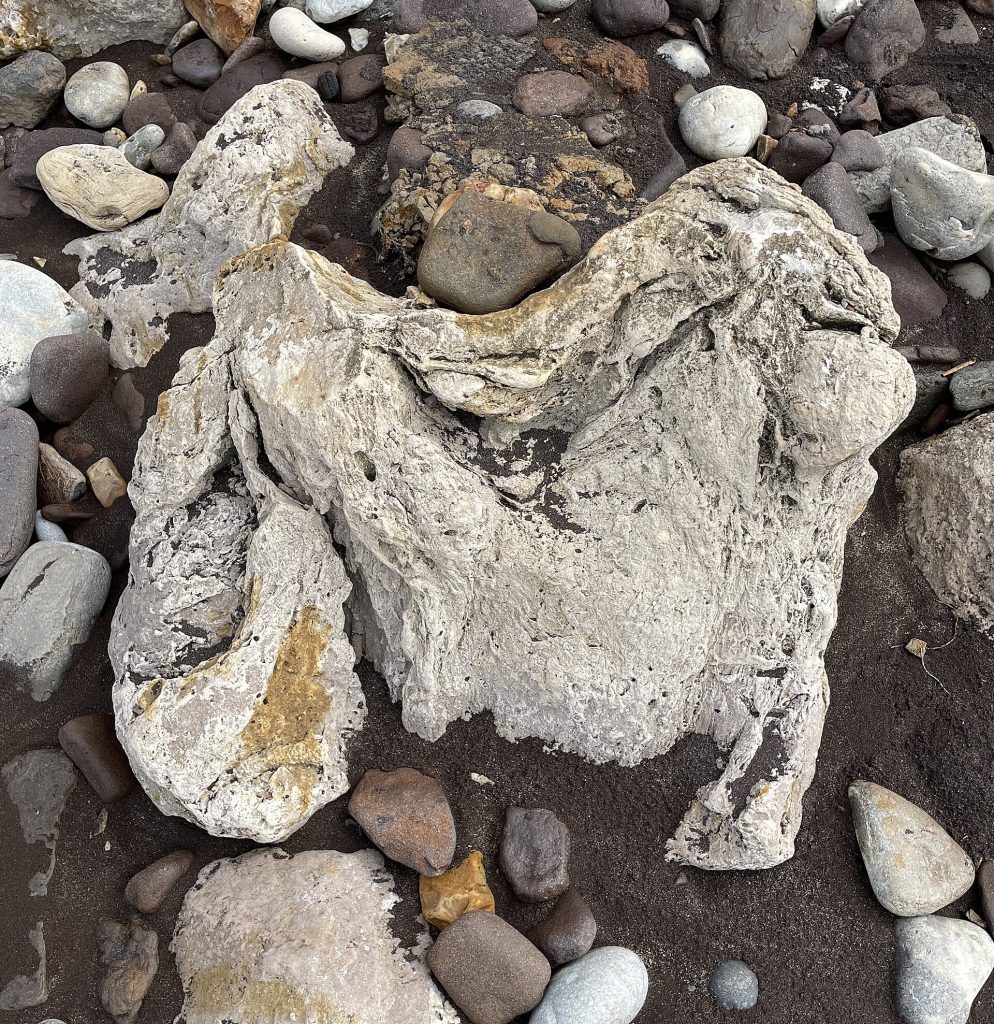
The coast of Compton Bay, a footprint cast, and the museum that holds the holotype offer further views of the world of Vectiraptor.





Frequently Asked Questions
It means “Isle of Wight thief,” and the species name greeni honors its finder, Mick Green.
It lived in the Barremian stage of the Early Cretaceous, roughly 125.8 to 121.4 million years ago.
Its describers estimated a length of 8.2 to 9.8 feet. The scientific description gives no height or weight estimate.
It was a dromaeosaurid theropod, possibly an early member of Eudromaeosauria or a close relative of that group.
Its bones turned up on the foreshore at Compton Bay, Isle of Wight, England. They probably came from a plant debris bed in the upper Wessex Formation.
Its back vertebrae combine unusually broad neural spines and ligament scars with an extra bony ridge in the front ones.
Sources
The information in this article is based on various sources, drawing on scientific research, fossil evidence, and expert analysis. The aim is to provide a comprehensive and accurate overview of Vectiraptor. However, please be aware that our understanding of dinosaurs and their world is constantly evolving as new discoveries are made.
- https://researchportal.port.ac.uk/files/72719374/A_new_dromaeosaurid_dinosaur.pdf
- https://doi.org/10.1016/j.cretres.2021.105123
- https://researchportal.bath.ac.uk/en/publications/a-new-dromaeosaurid-dinosaur-from-the-wessex-formation-lower-cret/
- https://researchportal.port.ac.uk/en/publications/a-new-dromaeosaurid-dinosaur-from-the-wessex-formation-lower-cret/
- https://www.bath.ac.uk/announcements/an-ancient-relative-of-velociraptor-is-unearthed-in-great-britain
- https://www.port.ac.uk/news-events-and-blogs/news/an-ancient-relative-of-velociraptor-is-unearthed-in-great-britain
- https://doi.org/10.1098/rsos.260937
- https://doi.org/10.1080/14772019.2021.1978005
- https://doi.org/10.1080/14772019.2024.2346573
- https://www.nhm.ac.uk/press-office/research-reveals-the-most-complete-dinosaur-discovered-in-the-uk.html
- https://doi.org/10.1038/s41598-021-97870-8
- https://researchportal.bath.ac.uk/en/publications/ivectidromeus-insularisi-a-new-hypsilophodontid-dinosaur-from-the/
- https://stratigraphy.org/ICSchart/ChronostratChart2024-12.pdf
This article was last fact checked: TheDinosaurs Team, 25-11-2026
Featured Image Credit: TotalDino, CC BY 4.0, via Wikimedia Commons
