
In the Wiehengebirge hills near Minden, in northwestern Germany, the dark marine sediments of the Ornatenton Formation hold a giant Jurassic predator. Named Wiehenvenator albati in 2016, this theropod lived in the middle Callovian—part of a stage spanning roughly 165 to 161.5 million years ago. According to its describers, it ranks among the largest theropods found so far in Europe.
In October 1998, geologist Friedrich Albat spotted pieces of a theropod’s upper jaw in a disused quarry. He was prospecting for the LWL Museum of Natural History in Münster. In 2016, paleontologists Oliver Rauhut, Tom Hübner, and Klaus-Peter Lanser described the animal and placed it as the sister of the Late Jurassic giant Torvosaurus. It was also the first diagnostic dinosaur—one identifiable from its own traits—from the Middle Jurassic of Germany. In 2020, Rauhut and colleagues concluded that big megalosaurines were already among the largest land predators of the late Middle Jurassic.
Wiehenvenator Key Facts
| Keyword | Fact |
|---|---|
| Pronunciation | Not specified |
| Meaning of name | Wiehen Hunter |
| Group | Theropoda |
| Type Species | Wiehenvenator albati |
| Diet | Carnivore |
| When it Lived | 165 to 161.5 MYA (span of the Callovian stage) |
| Period | Jurassic |
| Epoch | Middle Jurassic (Callovian stage) |
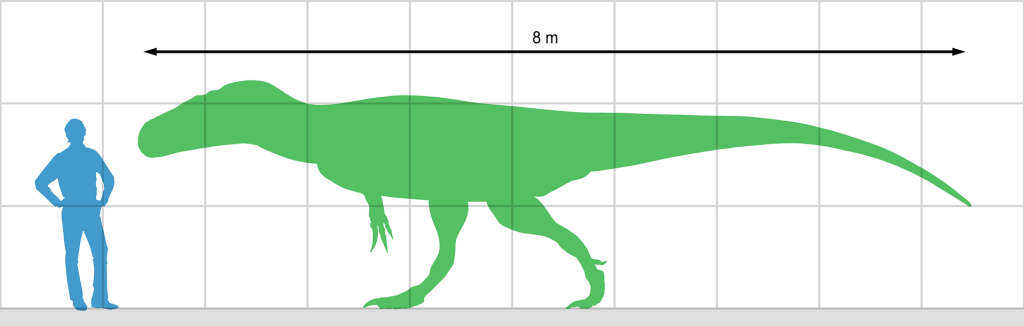
| Length | About 30 to 33 feet (9 to 10 meters), 2026 estimate based on 2016 bone comparisons |
| Height | Not specified |
| Weight | More than 2.2 tons (2 metric tons), 2016 press-release figure only |
| Mobility | Moved on two legs (bipedal), inferred from its group, the theropods |
| First Discovery | 1998 by Friedrich Albat |
| Described by | 2016 by O.W.M. Rauhut, T.R. Hübner, and K.-P. Lanser |
| Holotype | Bones of one individual, cataloged within WMN P27454–P27504 |
| Location of first find | Former Pott quarry, Lutternsche Egge, Wiehengebirge, near Minden, North Rhine-Westphalia, Germany (Ornatenton Formation) |
Wiehenvenator Origins, Taxonomy and Timeline
The name Wiehenvenator is rooted firmly in its landscape. “Wiehen” refers to the Wiehengebirge, the hills south of Minden where the bones were found, while venator is Latin for “hunter.” The species name albati honors Friedrich Albat, the geologist who found the holotype. Together, the name ties the animal to its hills and to its finder.
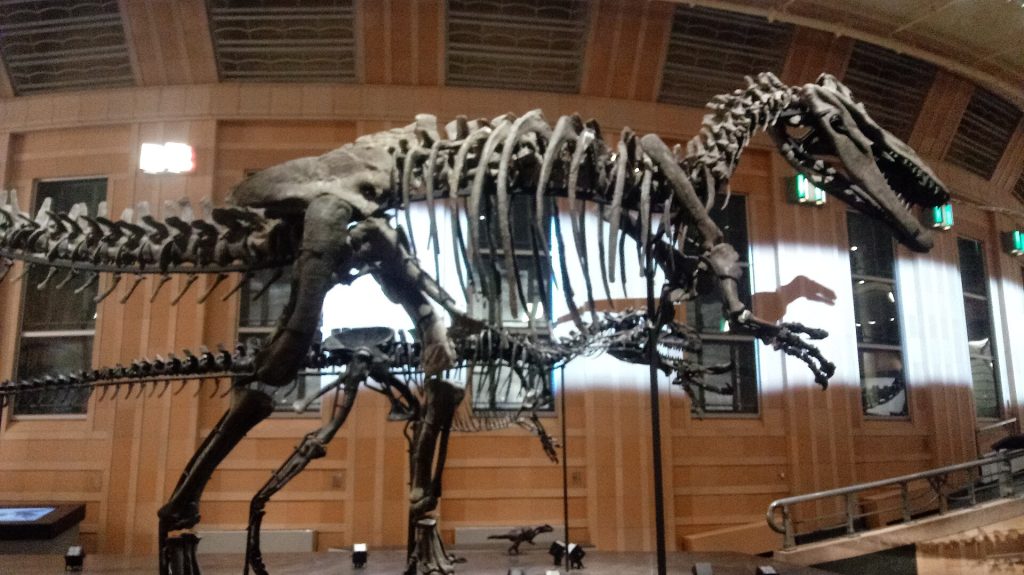
Within Theropoda, Wiehenvenator belongs to Megalosauroidea and, more narrowly, to the family Megalosauridae and its subfamily Megalosaurinae. In 2016, Rauhut and colleagues found it to be the sister of Torvosaurus, with Megalosaurus and Duriavenator branching off successively earlier. However, a 2024 study by paleontologist Andrea Cau reached a different result, as reported by paleontologist Christophe Hendrickx in 2026. Two of Cau’s trees placed it inside an expanded Spinosauridae—the family named after Spinosaurus—alongside the Cretaceous spinosaurids. Wiehenvenator albati is the type and only known species.
The bones come from the Erymnoceras coronatum ammonite zone of the middle Callovian. The Callovian as a whole ran from roughly 165 to 161.5 million years ago. At that time, most of Europe lay under shallow seas dotted with islands. Its describers also noted that the megalosaurines line up neatly in time. Duriavenator came in the Bajocian and Megalosaurus in the Bathonian—then Wiehenvenator in the Callovian and Torvosaurus in the Kimmeridgian to Tithonian.
Discovery & Fossil Evidence
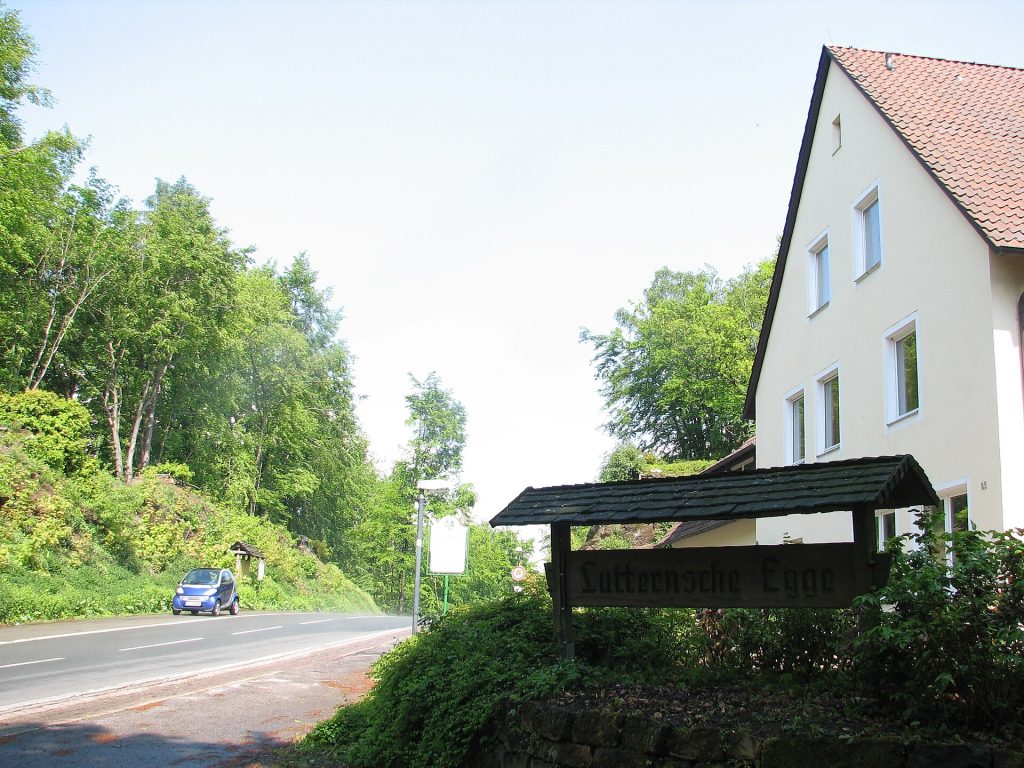
The site, the former Pott quarry on the Lutternsche Egge, lies inside Minden in northeastern North Rhine-Westphalia. The quarry was about 2,130 feet (650 meters) long, with Ornatenton beds tilted at roughly 40 degrees. After Albat’s find, the LWL Museum excavated until October 2001, recovering bones alongside marine invertebrates and fossil wood. Some ten years earlier, the Bragado family had found a broken theropod vertebra 33 feet (10 meters) to the east.

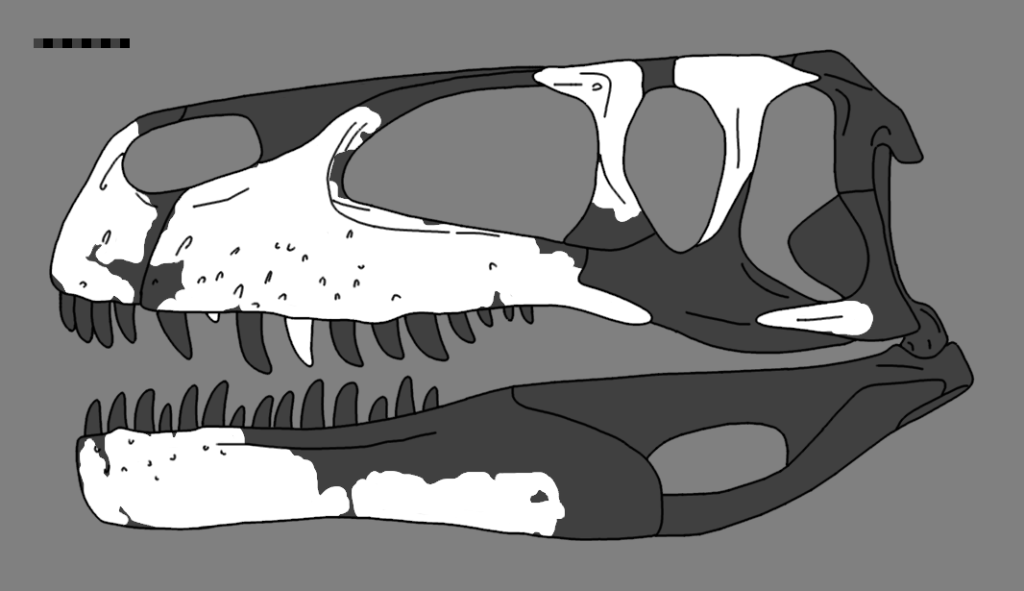
The holotype belongs to a single individual and resides at the LWL-Museum für Naturkunde in Münster. From the right side of the skull come the premaxilla (front upper jaw bone), maxilla (main upper jaw bone), lacrimal, and postorbital (bones in front of and behind the eye). A possible quadratojugal (cheek bone) fragment, part of the right dentary (lower jaw), and six loose teeth complete the skull material. The body yielded three caudal (tail) vertebrae, five dorsal ribs, fused gastralia (belly ribs), and a finger bone. Both fibulae (slender lower leg bones) and two ankle bones round out the list. Two more tail vertebrae, found loose at the site, probably belong to the same animal.
Most bones had weathered out of the rock. Although well preserved and largely undistorted, they were riddled with cracks, so crews lifted them in protective jackets. Oysters, tube worms, and brachiopods had grown over some of them—a sign they lay exposed on the seafloor before burial. In mid-October 1999, remains of a second theropod turned up about 94 feet (28.5 meters) to the northwest. In 2020, Rauhut and colleagues identified those bones as Torvosaurus and judged it “rather unlikely” that they belong to Wiehenvenator. A loose toe bone probably belongs to that Torvosaurus, though the authors could not rule out Wiehenvenator. To date, the holotype remains the only known specimen of Wiehenvenator.
Wiehenvenator Size and Description
Short description of Wiehenvenator
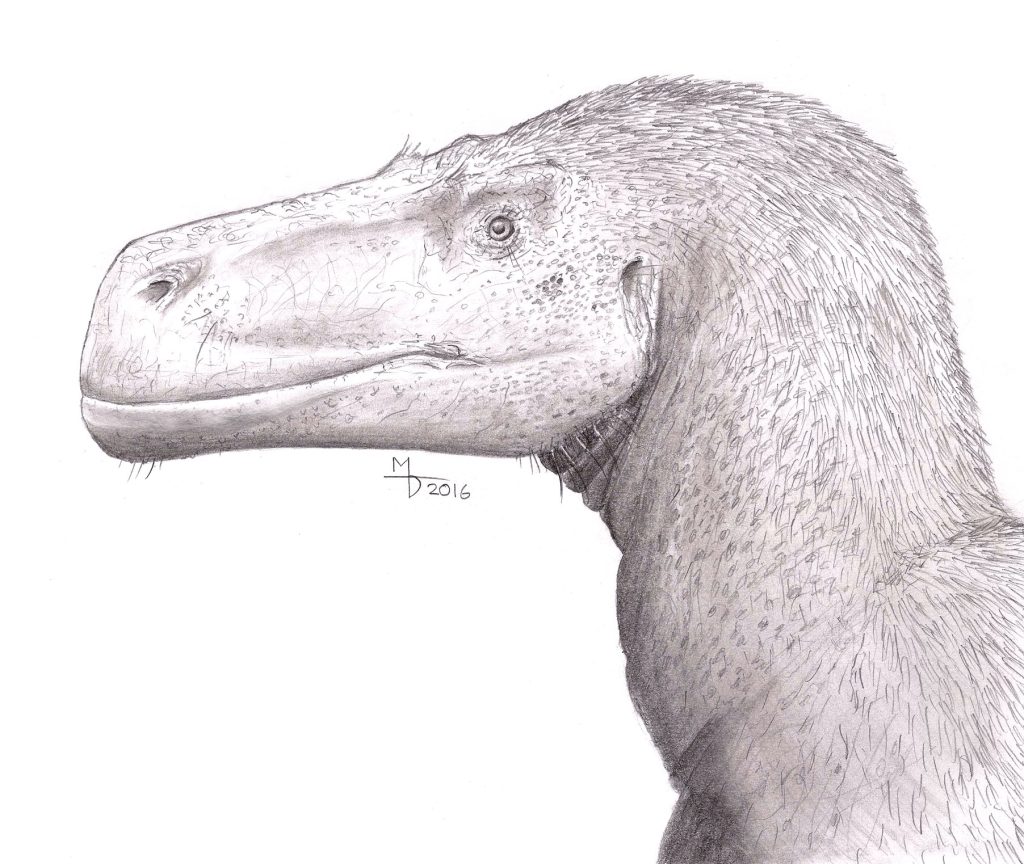
Like most megalosauroids, Wiehenvenator had a low, long skull. A large, elongated nostril sat ahead of a low antorbital fenestra—the opening in front of the eye socket. The eye socket itself was probably a tall oval rather than keyhole-shaped. Its maxilla measured about 20 inches (50 centimeters) long, with 13 tooth positions. The one working tooth preserved there had a crown about 3.1 inches (8 centimeters) tall. Hendrickx’s 2026 tooth table lists four premaxillary, 13 maxillary, and more than nine dentary teeth on each side.
Above the eye, the postorbital formed a well-developed brow, while the lacrimal carried only a small rounded bump instead of a horn. Farther back, the tail vertebrae bore large hollows on their sides—a feature that may unite megalosaurines. The left fibula, about 29 inches (73 centimeters) long, is robust for a theropod.
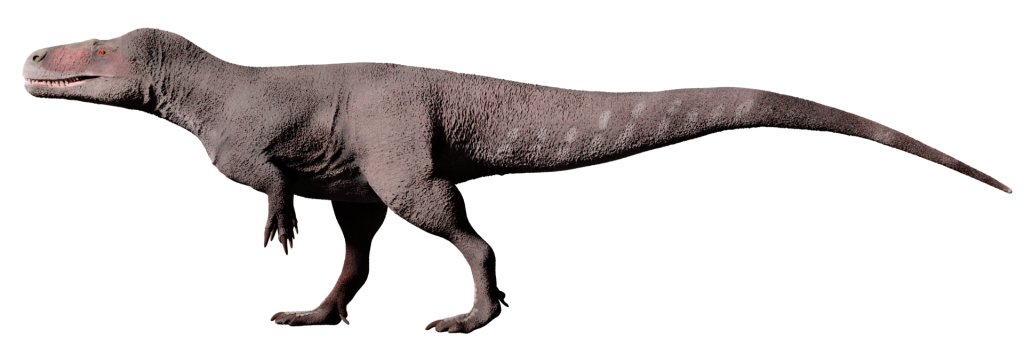
Like other theropods, it probably walked on two legs. However, the holotype includes no hip or thigh bones and no skin, so any account of its stance or body covering is speculative.

Size and Weight of Type Species
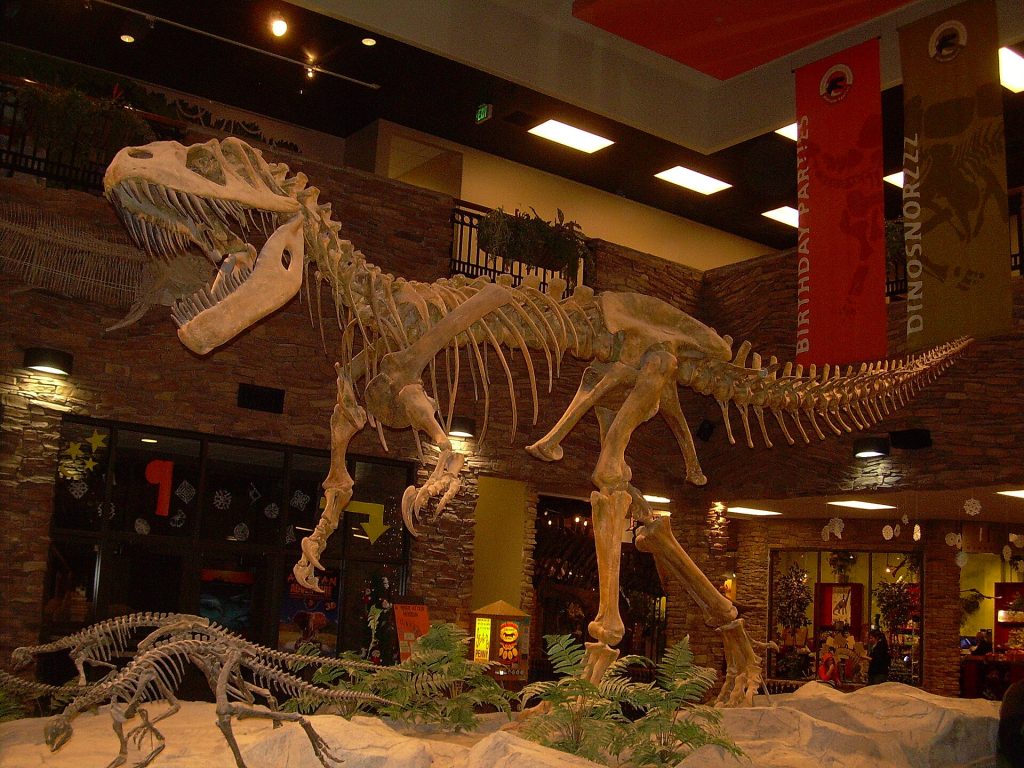
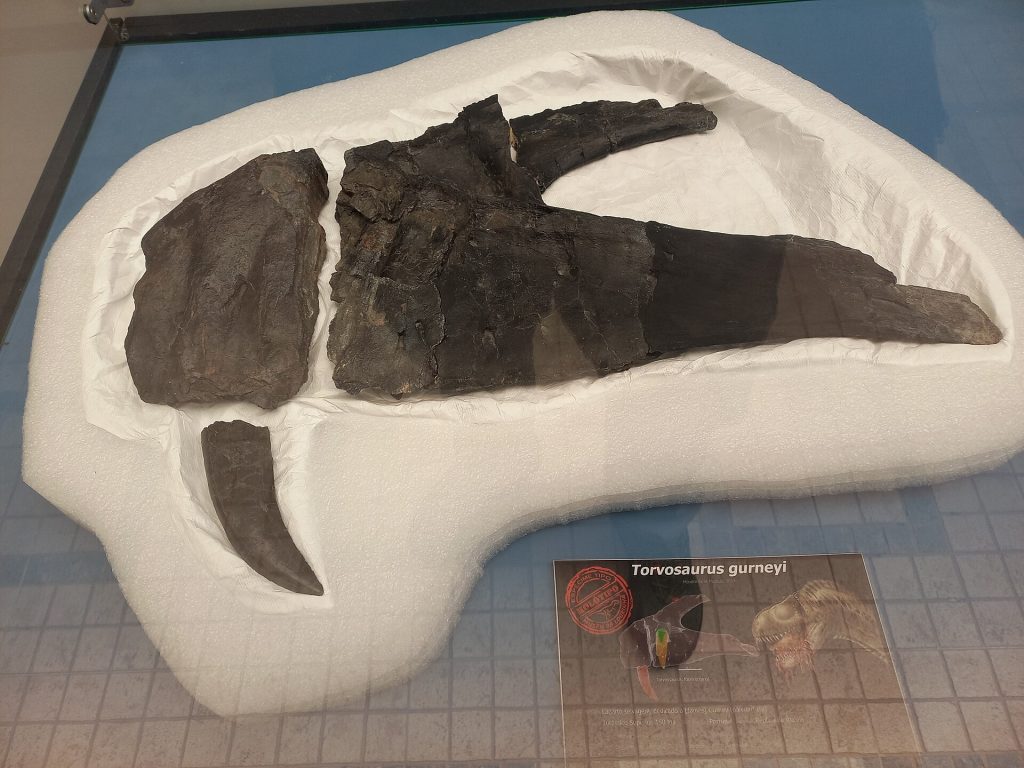
Without a complete skeleton, Rauhut and colleagues sized Wiehenvenator through comparisons rather than direct measurement. Its maxilla is about 82 percent of the size of that of Torvosaurus gurneyi, an animal estimated at about 33 feet (10 meters). Its fibulae are also slightly longer than those referred to Torvosaurus tanneri, estimated at about 30 feet (9 meters). They concluded it was perhaps only slightly smaller than T. gurneyi.
In 2026, Hendrickx’s dataset listed a length of about 30 to 33 feet (9 to 10 meters), crediting that figure to the 2016 paper. The same dataset gives a skull length of about 3.3 to 3.4 feet (1.0 to 1.05 meters). The 2016 university press release offered 26 to 33 feet (8 to 10 meters) and more than 2.2 tons (2 metric tons). None of the studies used here gives a body mass or hip height.
Inside the fibula, histology showed four to seven lines of arrested growth—yearly pauses in bone growth—plus an outer line. The animal was therefore at least in its ninth year, and possibly well over ten, when it died. Even so, it was a large subadult that was still growing, though its growth had already slowed.
The Dinosaur in Detail
A handful of small skull and limb traits set this dinosaur apart. Its lacrimal has a tiny oval pit inside the antorbital fossa (a shallow depression around the skull opening). The same bone bears a very short, tall front process. The postorbital’s eye-socket facet is concave with raised margins. In the leg, an oblique ridge sits on the inner side of the fibula. Meanwhile, the ascending process of the astragalus (an upward prong on an ankle bone) bends outward near its top. The describers also list a strongly reduced antorbital fossa on the maxilla.
Its jaws and teeth add clues. The first socket in the premaxilla is markedly smaller than the second—a condition seen in spinosaurids but otherwise not in megalosauroids. In addition, the serrations continue over the tip of the crown, a rarely reported feature.

The 2016 analysis scored 62 taxa for 351 anatomical characters, using a revised older dataset. It produced 500 equally short family trees, and Wiehenvenator landed among the megalosaurines in every one. Support for those branches was weak, partly because only 71 of 351 characters could be scored for it. Still, pushing it out of Megalosaurinae costs four extra steps (additional evolutionary changes), and out of Megalosauroidea nine.
In 2020, Rauhut and colleagues called it the “direct sister genus” of Torvosaurus. They also suggested that derived megalosaurines arose in north-central Europe. However, they called this tentative, given the very poor Middle Jurassic theropod record from most other continents. Hendrickx restricts Spinosauridae to its Cretaceous members. In his view, they evolved from megalosaur-like theropods related to Wiehenvenator, Megalosaurus, and others. By contrast, Cau’s trees draw the family line wide enough to take in Wiehenvenator itself. In the 2016 analysis, making it the spinosaurids’ sister cost only three extra steps—one fewer than removing it from Megalosaurinae.
Interesting Points about Wiehenvenator
- Press releases in 2016 called Wiehenvenator the “Monster von Minden,” or “Minden Monster,” after the city where it was found.
- It was the first diagnostic dinosaur fossil recovered from the Middle Jurassic rocks of Germany.
- Its describers ranked it among the largest theropods found so far in Europe, perhaps only slightly smaller than Torvosaurus gurneyi.
- Oysters and tube worms grew on some of its bones, showing that they lay underwater for a time before burial.
- The oldest known Torvosaurus, a second large megalosaurid, turned up only about 94 feet (28.5 meters) from its bones.
Contemporary Dinosaurs
From the same levels at the same quarry comes a second heavyweight—an unnamed species of Torvosaurus, known from parts of a left maxilla with teeth and probably a toe bone. Rauhut and colleagues described it in 2020 as the oldest record of the genus, older than the Late Jurassic species. It probably represents a new species, but the material is too poor to name. Its maxilla seems comparable in size to that of Wiehenvenator. The authors stressed that both come “not only from the same levels, but even the same locality.” Strictly, the one Torvosaurus piece found in place lay just below the condensation horizon that held Wiehenvenator. No study records any interaction between the two big predators.

Wiehenvenator in its Natural Habitat
The world Wiehenvenator knew was one of shallow seas and scattered islands. Its bones settled in a shallow marine basin fed by sediment from the west. A marked sea-level rise in the middle Callovian probably caused a pause in deposition, creating the condensation horizon that held the skeleton. Ammonites, belemnites, and oysters such as Gryphaea dilatata filled these waters, alongside coalified driftwood up to several meters long. The pliosaur Liopleurodon left teeth and vertebrae at the site, while a skull of a metriorhynchid—a seagoing crocodile relative—turned up a few hundred meters away. Nearby outcrops have also yielded sharks and their relatives, bony fish, ichthyosaurs, plesiosaurs, and teleosaurid crocodylomorphs.
Because its bones lay in marine rocks, Rauhut and colleagues argued that such theropods inhabited the region’s islands. In their view, the remains may have washed in from the Rhenian or London-Brabant Massif to the west. According to the 2020 study, Wiehenvenator ranked among the largest land predators of the late Middle Jurassic. Hendrickx considers Middle Jurassic megalosauroids “most likely at least occasional fish eaters,” though that evidence comes from other species.
How it hunted, and whether it lived alone or in groups, remains unknown. In a wider survey, Rauhut and colleagues found megalosauroids more common in nearshore settings and allosauroids inland, although they urged caution with that pattern. Its beds are also of similar age to the lower Oxford Clay of England.
Wiehenvenator Gallery
More views of Wiehenvenator and its closest relatives.




Frequently Asked Questions
It means “Wiehen hunter,” after the Wiehengebirge hills, and the species name albati honors finder Friedrich Albat.
It lived in the middle part of the Callovian stage of the Middle Jurassic, which spanned roughly 165 to 161.5 million years ago.
A 2026 estimate based on 2016 bone comparisons puts it at about 30 to 33 feet (9 to 10 meters) long. None of the studies cited here gives a weight.
It was a large carnivorous theropod, usually classified as a megalosaurid closely related to Torvosaurus, though one 2024 analysis grouped it with spinosaurids.
Its bones came from the Ornatenton Formation in the former Pott quarry near Minden, northwestern Germany.
It was the first diagnostic Middle Jurassic dinosaur from Germany and one of Europe’s largest known theropods.
Sources
The information in this article is based on various sources, drawing on scientific research, fossil evidence, and expert analysis. The aim is to provide a comprehensive and accurate overview of Wiehenvenator. However, please be aware that our understanding of dinosaurs and their world is constantly evolving as new discoveries are made.
- https://doi.org/10.26879/654
- https://palaeo-electronica.org/content/pdfs/654.pdf
- https://palaeo-electronica.org/content/pdfs/654_appendix_2.pdf
- https://www.lwl.org/wmfn-download/Geologie_und_Palaeontologie_in_Westfalen/GuP_Heft_93_Seite_31-43.pdf
- https://www.italianjournalofgeosciences.it/fulltext/1248/dental-evolution-in-non-coelurosaur-theropods.pdf
- https://www.italianjournalofgeosciences.it/supplementary/1248/dental-evolution-in-non-coelurosaur-theropods.pdf
- https://stratigraphy.org/ICSchart/ChronostratChart2024-12.pdf
- https://www.lmu.de/de/newsroom/newsuebersicht/news/der-erste-seiner-art-d1941310.html
- https://www.en.palaeontologie.geowissenschaften.uni-muenchen.de/aktuelles/newsinfos/a-monster-put-in-its-place/index.html
This article was last fact checked: TheDinosaurs Team, 25-11-2026
Featured Image Credit: Petr Menshikov, CC BY-SA 4.0, via Wikimedia Commons
