
In the Transaltai Gobi of Mongolia’s Govi-Altai Province, the badlands of Khermeen Tsav expose a layer once called the Upper White Beds—rocks now referred to the Nemegt Formation. From these beds comes Manipulonyx reshetovi, a two-legged theropod named in 2025. It lived during the Maastrichtian stage of the Late Cretaceous, roughly 72 to 66 million years ago. Its claim to fame is a hand—the most completely preserved of any parvicursorine, a group of long-legged alvarezsaurid dinosaurs.
Soviet paleontologist V.Yu. Reshetov collected the skeleton in 1979. More than four decades later, paleontologists A.O. Averianov, A.V. Lopatin, and A.A. Atuchin described it in a study published online on December 23, 2025. Their work adds a new mechanism to an idea first raised in 2018 for Qiupanykus, a Chinese parvicursorine—that these odd little dinosaurs used their great claw to open eggs. It also added fuel to a debate over what parvicursorines ate—eggs or insects.
Manipulonyx Key Facts
| Keyword | Fact |
|---|---|
| Pronunciation | Not specified |
| Meaning of name | Handling Claw |
| Group | Theropoda (Alvarezsauridae) |
| Type Species | Manipulonyx reshetovi |
| Diet | Debated: insects (digging, the prevailing view) or eggs (proposed) |
| When it Lived | About 72 to 66 MYA (approximate) |
| Period | Cretaceous |
| Epoch | Late Cretaceous (Maastrichtian stage, age poorly constrained) |
| Length | Not specified |
| Height | Not specified |
| Weight | Not specified |
| Mobility | Moved on two legs (bipedal) |
| First Discovery | 1979 by V.Yu. Reshetov |
| Described by | 2025 by A.O. Averianov, A.V. Lopatin, and A.A. Atuchin |
| Holotype | PIN 3142/364 |
| Location of first find | Northern outcrops of Khermeen Tsav, Nemegt Formation (Upper White Beds of Khermeen Tsav), Govi-Altai Province, Mongolia |
Manipulonyx Origins, Taxonomy and Timeline
The name Manipulonyx combines the Latin verb manipulare, “to manipulate, to handle,” with the Greek onyx, “claw.” The species name reshetovi honors Reshetov, who found the holotype—the specimen on which the name is based. Together, the name pairs the animal’s signature claw with the person who first collected it.
Within Theropoda, Manipulonyx belongs to Maniraptora and, more narrowly, to Alvarezsauroidea and its family Alvarezsauridae. Its describers placed it in Parvicursorinae, defined as the smallest group containing both Parvicursor and Mononykus. However, the naming paper ran no new phylogenetic analysis, relying instead on anatomical comparison. Manipulonyx reshetovi is the type and only known species.
The original paper assigns the Khermeen Tsav beds to the Maastrichtian, the final stage of the Cretaceous. On the current international timescale, that interval runs from roughly 72 to 66 million years ago. However, the Nemegt Formation lacks a precise date, and some researchers place it in the late Campanian to early Maastrichtian instead. Either way, Manipulonyx lived near the close of the Age of Dinosaurs.
Discovery & Fossil Evidence
Reshetov found the skeleton in 1979 at the northern outcrops of Khermeen Tsav (also spelled Hermiin Tsav), at about 43°29.8′ N, 99°49.1′ E. According to Science News, the specimen then sat in Russian museum archives until new preparation slowly revealed its unusual features.
The holotype, PIN 3142/364, now resides at the Borissiak Paleontological Institute of the Russian Academy of Sciences in Moscow. Though fragmentary, it preserves parts of the spine, both forelimbs, the hips, and the hind limbs. The spine includes two neck vertebrae articulated with the first back vertebra, sacral (hip) vertebrae, and many tail vertebrae. The pelvis adds an ilium (upper hip bone), and the shoulder survives as a left scapulocoracoid (shoulder blade and coracoid). Most important are the arms, with pieces of both humeri (upper arm bones) and a nearly complete right forearm. Wrist bones and a complete, articulated right hand survive too, while scraps of the hips, thighs, shins, and feet complete the list.
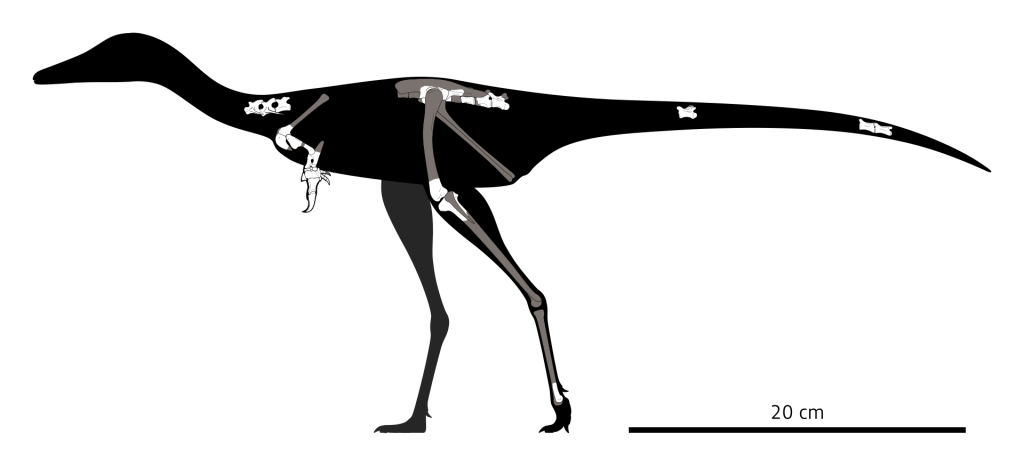

Researchers scanned both hands with a micro-CT scanner—a high-resolution X-ray imaging device—at the Borissiak Institute. In addition, the specimen’s original label records eggshell fragments associated with the skeleton. So far, the holotype is the only known specimen of Manipulonyx.
Manipulonyx Size and Description
With only one partial skeleton, any portrait of Manipulonyx must lean on its own bones and on better-known relatives.
Short description of Manipulonyx
From front to back, the surviving skeleton begins at the rear of the neck. There, the cervical ribs had fused to the vertebrae, and the neck lacked epipophyses—small bony prongs above the joints between vertebrae. By contrast, the sacral vertebrae had only partly fused, with open sutures (seams between bones), and the left scapulocoracoid also remained unfused. The humerus was short and robust, with an enlarged deltopectoral crest (a ridge for the chest muscles) and a single condyle, or rounded joint surface, at the elbow end.
The hand centered on digit 2, a greatly enlarged finger tipped with a very large, strongly curved ungual (claw bone). Digits 3 and 4 were tiny, and digit 4 probably had three phalanges (finger bones) rather than four. Although its own hind limb is fragmentary, the describers characterize parvicursorine legs as long and slender, built for fast running. Skin and feathers are absent from the preserved remains, so any discussion of its outer covering is speculative.
Size and Weight of Type Species
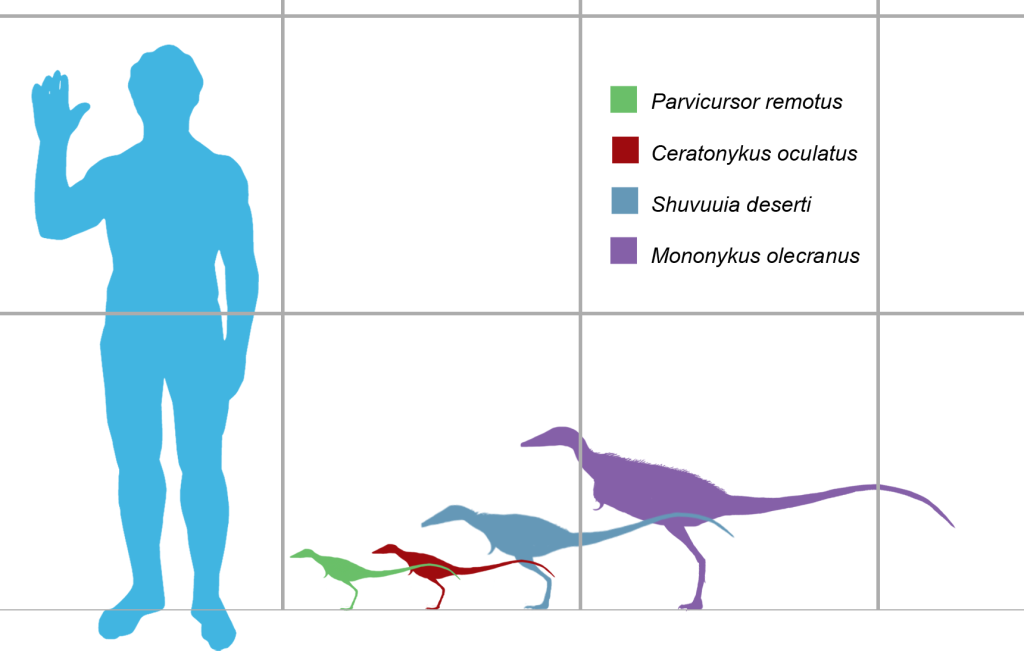
No peer-reviewed study, including the original description, has published a length, height, or weight for Manipulonyx.
The authors’ reconstruction gives one hint of scale. It shows the forelimbs gripping a theropod egg about 2.4 inches (6 centimeters) across, which the authors place within the common size range for oviraptorid eggs. That drawing is an illustration, however, not a measurement of the animal.
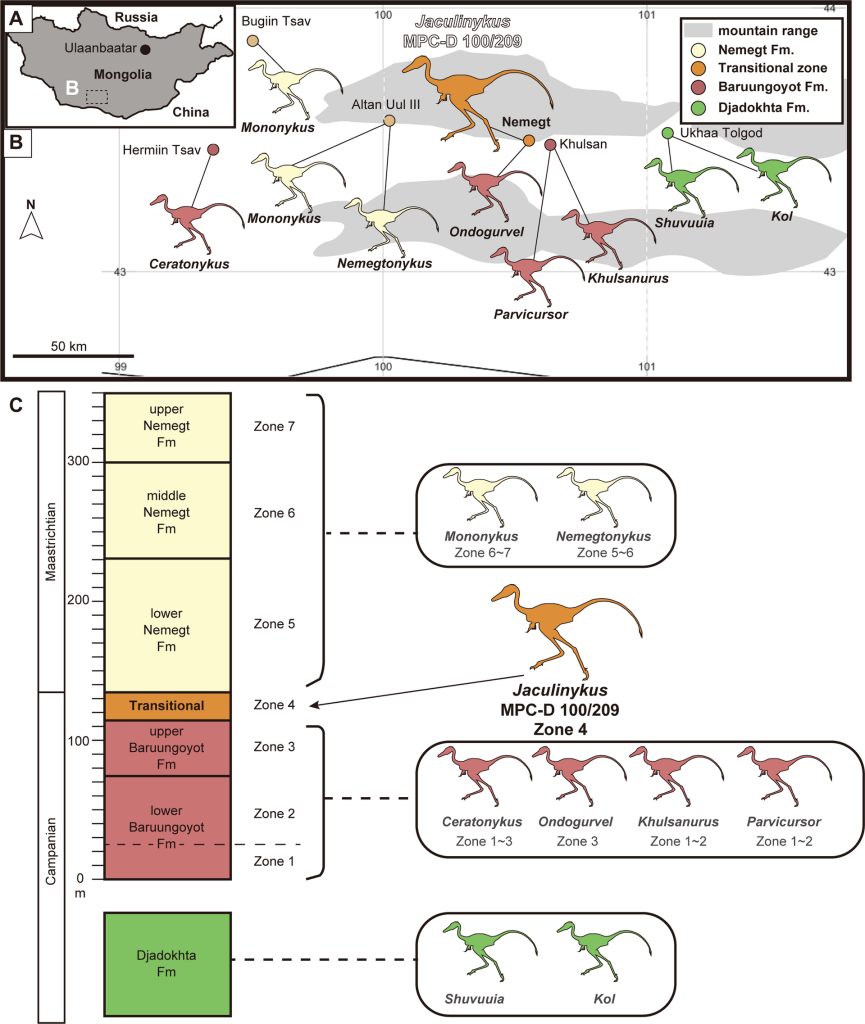
For a sense of scale within the family, consider Nemegtonykus, an alvarezsaurid from the Altan Uul III locality of the same formation. In 2019, a team led by S. Lee estimated its holotype at about 7.5 pounds (3.4 kilograms) from the circumference of its femur, or thigh bone. That figure belongs to a different animal, though. Until more complete remains turn up, its true size remains an open question.

The Dinosaur in Detail
What sets this dinosaur apart is its wrist. Manipulonyx preserves three proximal carpals—the ulnare, intermedium, and radiale, which form the upper row of wrist bones. Until now, such bones were virtually unknown in parvicursorines. Even more surprising are three spike-like dermal ossifications, bones that form within the skin, which the authors document for the first time. Medial and lateral spikes articulate with the carpometacarpus, the fused block of hand bones. Meanwhile, a third, palmar spike attaches to its palm side. The medial spike is about three times as large as the lateral one. The palmar spike might represent a sesamoid (a bone embedded in a tendon) of the muscle that flexed the second finger.
Oddly, the two hands do not match perfectly. On the right, the intermedium has partly fused to the ulnare, whereas the left hand lacks it altogether—a difference the authors interpret as possible individual variation. Before this find, researchers knew of only two parvicursorine specimens that preserve the tiny side fingers. These spikes also prompted a rethink of Dzharaonyx from Uzbekistan. The Manipulonyx team now reads a condyle on its hand, once taken for the joint of the third finger, as the attachment for a lateral spike.
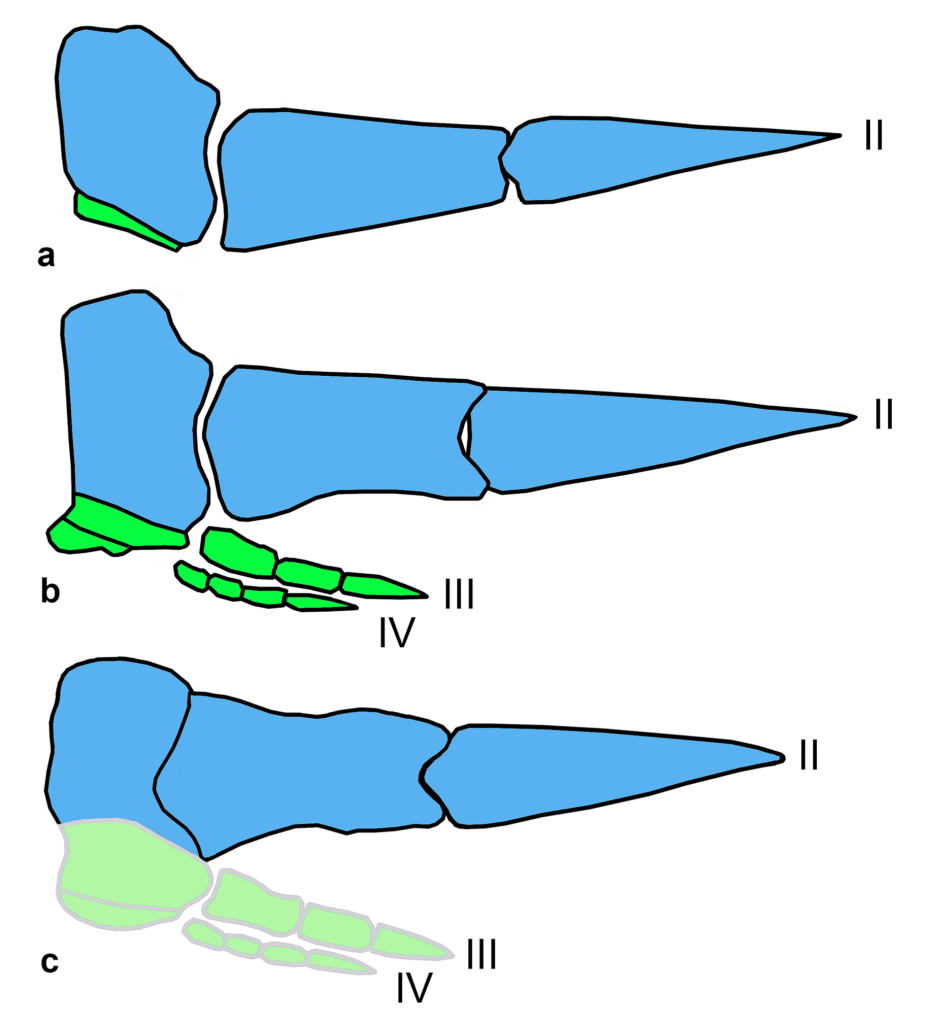

The elbow was unusual too, with a hypertrophied (greatly enlarged) ectepicondyle—a bony knob on the outer side of the lower humerus—projecting toward the hand. Although only partly preserved, the olecranon, the point of the elbow, was also huge, according to the authors. The describers separated Manipulonyx from a dozen alvarezsaurids, including Shuvuuia, Parvicursor, Mononykus, and Nemegtonykus. Taken together, these bones point to a forelimb built around one enormous claw—its supporting fingers reduced almost to nothing.
Interesting Points about Manipulonyx
- The name Manipulonyx means “handling claw,” a reference to the single enlarged claw that dominated each hand.
- Reshetov collected its skeleton in 1979, but scientists did not formally name it until 2025, more than four decades later.
- The wrist preserves three spike-like bones that formed within the skin, a feature its describers report for the first time.
- The specimen’s original label records eggshell fragments found with the skeleton, a clue the authors used in arguing that parvicursorines ate eggs.
- Its describers suggest that a find of dinosaur eggshell with characteristic punctures would test their egg-eating idea.
Dinosaurs from the Same Formation
Also known from the Nemegt Formation (exact level relative to Manipulonyx not known): the tyrannosaurid Tarbosaurus, the therizinosaurid Therizinosaurus, the hadrosaurid Saurolophus, the ankylosaurid Tarchia, the parvicursorine Mononykus, and the giant ornithomimosaur Deinocheirus. The naming paper lists the first four from Khermeen Tsav itself, although the species of Tarchia there is debated. Mononykus comes from Bugin Tsav (also spelled Bügiin Tsav), while Deinocheirus fossils come from Altan Uul and Bugin Tsav. The formation’s age is not precisely known, so these animals may not all have lived at the same time.
Manipulonyx in its Natural Habitat
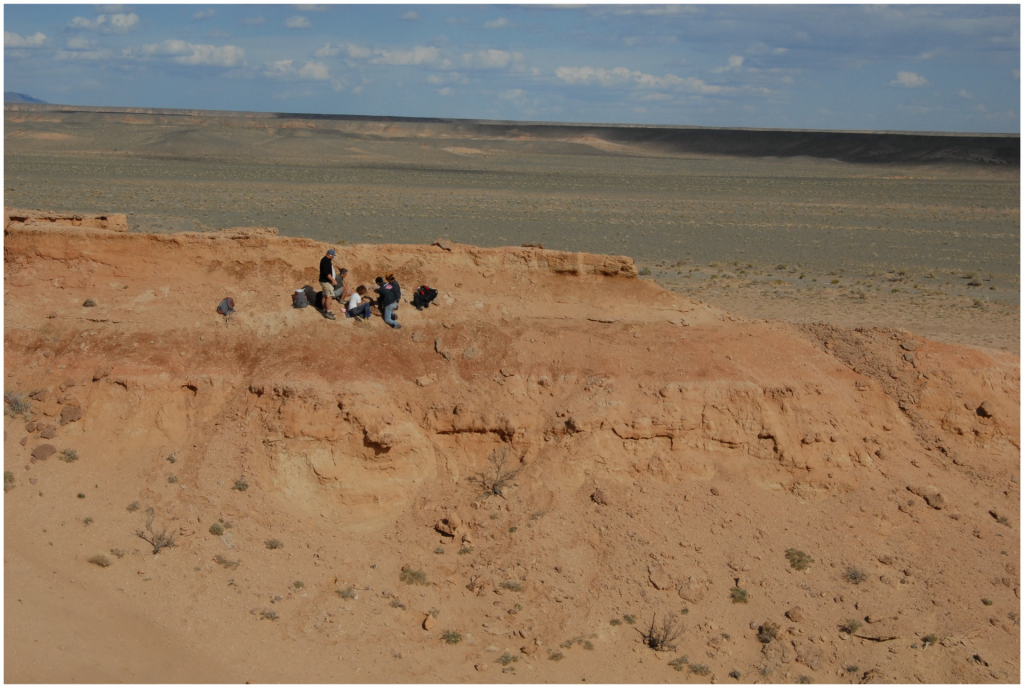
The world Manipulonyx roamed was a land of rivers. Most of the Gobi’s latest Cretaceous diversity comes from the Nemegt Formation’s fluvial (river-laid) deposits, which include meandering channels, soil-rich beds between them, and possibly swampy ground. Field data compiled by Eberth in 2018 point to channels about 250 to 490 feet (75 to 150 meters) wide and up to 49 feet (15 meters) deep.
In 2021, Park and colleagues linked these rocks to a more humid climate than that of the drier Djadokhta and Baruungoyot formations. Those units are usually seen as older, though some researchers argue all three are the same age. Even so, soils with caliche (hardened lime deposits) probably formed in seasonally dry spells, while coarse, sheet-like sands record floods. Researchers have also reported wind-blown dunes where the Baruungoyot and Nemegt formations meet at Khermeen Tsav, and in 2024, Fanti and colleagues described dunes higher in the formation, at Guriliin Tsav.
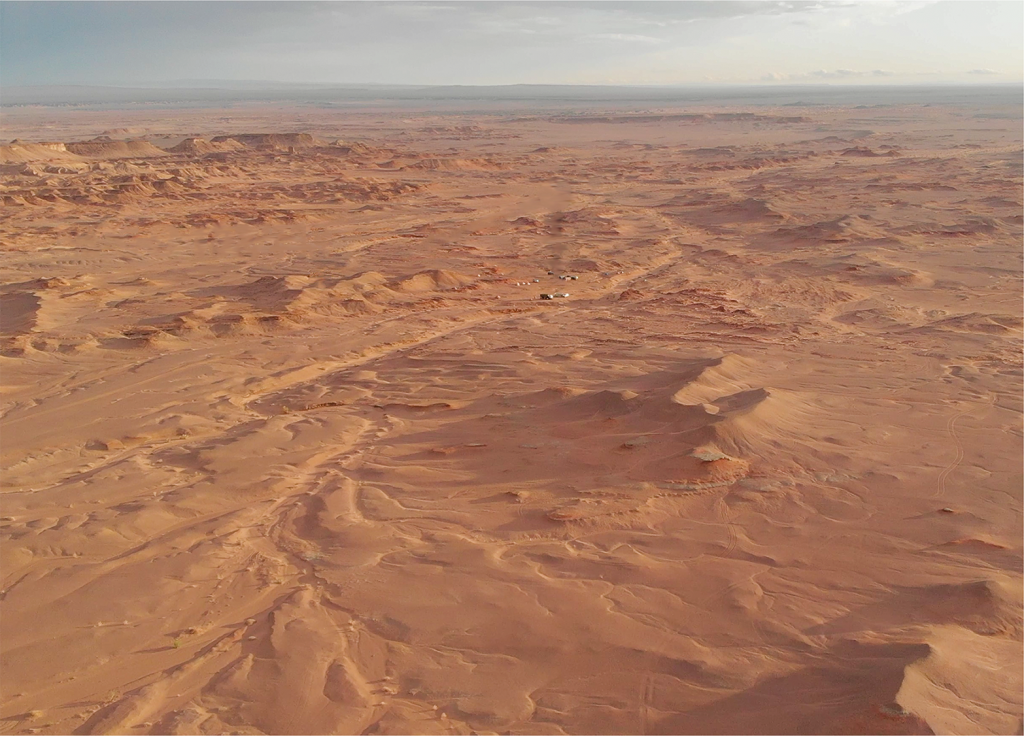

The Nemegt beds at Khermeen Tsav also hold turtles such as Mongolochelys and Gravemys, along with crocodylomorphs and sauropods. Elsewhere in the Nemegt Basin, fish vertebrae are common finds.
Egg Thief or Insect Digger?
The prevailing view, which even the Manipulonyx describers call the current hypothesis, casts parvicursorines as diggers that broke into insect colonies. In 2018, however, Lü and colleagues first proposed egg-eating for Qiupanykus, found with oviraptorid eggshell. Averianov and colleagues revived that idea and added a mechanism—the wrist spikes and tiny side fingers fixed the hand on an egg while the great claw punctured the shell. As support, they cited the large deltopectoral crest, the enlarged elbow, and a claw without a flexor tubercle—a bump where the claw-curling muscles attach. Digging, they argued, seems implausible because the arms could not reach the ground from a standing pose. Co-author Alexey Lopatin told Science News that the limb would have been “completely unsuitable for destroying termite mounds.”
In 2026, Leedham and colleagues disagreed. They built computer models of joint motion and muscle leverage in Mononykus and the less specialized Bannykus. Partly on that basis, they judged a digging function “the most plausible” for alvarezsaurs, consistent with insect-eating. That verdict came after weighing egg predation and the Manipulonyx paper, although they did not study Manipulonyx itself. They also argued that long hind limbs would not rule out digging. Quoted by Science News, Michael Pittman called the egg hypothesis “very interesting” and worth further testing. Denver Fowler agreed but was not yet convinced it beats digging for insects.
The describers went further, picturing parvicursorines as “nocturnal hunters of dinosaur eggs.” In their scenario, an animal grabbed an egg and ran to a secluded place. Thieves caught by “angry parents” died with the stolen egg. They based the night-time habit on a 2021 study of dinosaur vision and hearing by Choiniere and colleagues. While there is no direct evidence of how Manipulonyx fed, it may have used that hand on eggs, insect nests, or both.
Manipulonyx Gallery
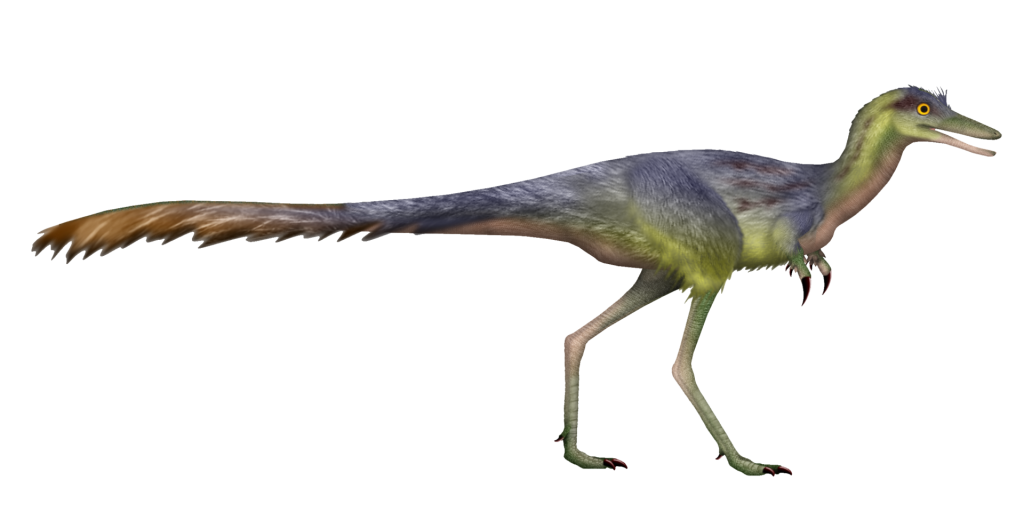
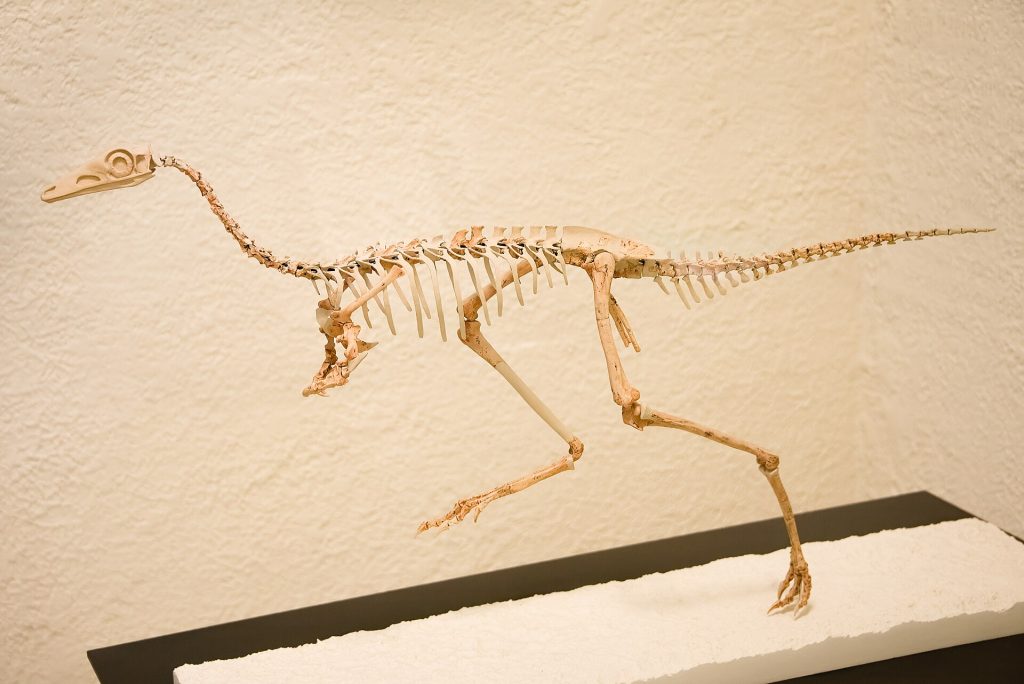
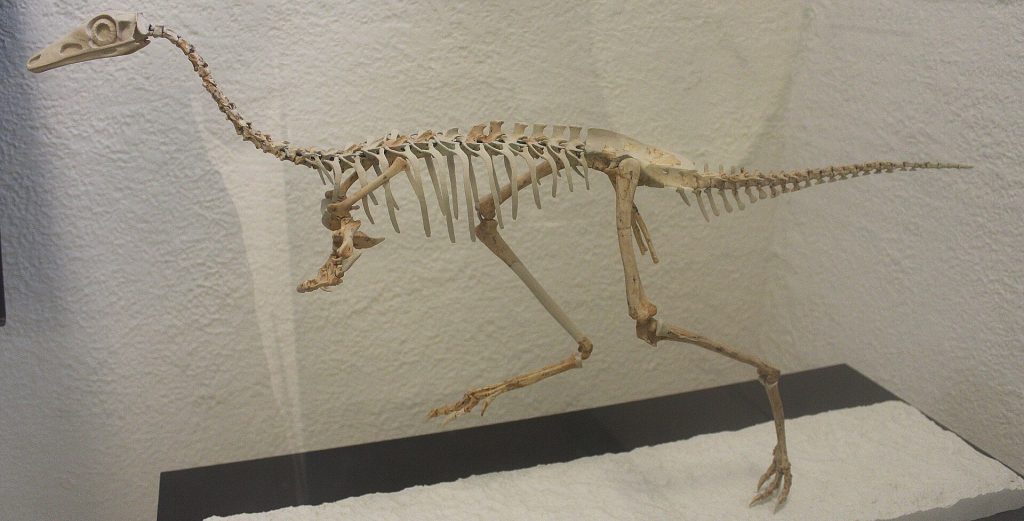
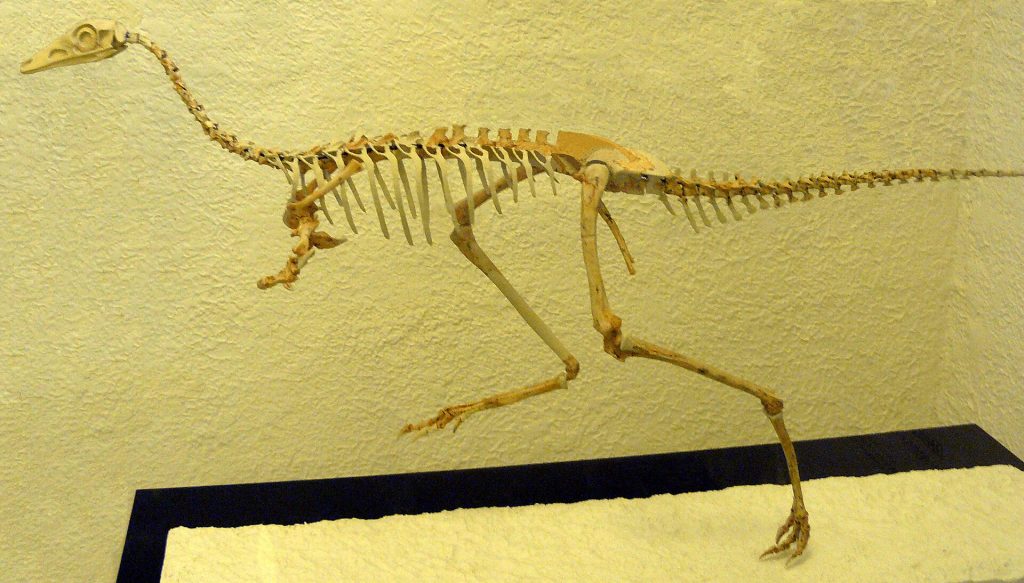
These images show another restoration of Manipulonyx, skeletons of its relative Mononykus, a map of Mongolian alvarezsaurids, and Nemegt Formation rocks at Altan Uul III.






Frequently Asked Questions
It means “handling claw,” from the Latin manipulare and the Greek onyx, and the species name honors V.Yu. Reshetov.
It probably lived in the Maastrichtian stage of the Late Cretaceous, about 72 to 66 million years ago, though its exact age is poorly constrained.
No peer-reviewed study gives a size estimate, so its length, height, and weight remain unknown.
Scientists disagree. Digging for insects is the prevailing view, backed by a 2026 study, while its describers revived a 2018 proposal that parvicursorines ate eggs.
Reshetov found it at the northern outcrops of Khermeen Tsav, in the Nemegt Formation of Mongolia’s Govi-Altai Province.
It has the most completely preserved parvicursorine hand, with three spike-like wrist bones described for the first time.
Sources
The information in this article is based on various sources, drawing on scientific research, fossil evidence, and expert analysis. The aim is to provide a comprehensive and accurate overview of Manipulonyx. However, please be aware that our understanding of dinosaurs and their world is constantly evolving as new discoveries are made.
- https://doi.org/10.31610/trudyzin/2025.329.4.382
- https://www.zin.ru/journals/trudyzin/eng/publication.html?id=612
- https://doi.org/10.1098/rspb.2026.0565
- https://researchonline.ljmu.ac.uk/id/eprint/28670/
- https://doi.org/10.1016/j.cretres.2024.105916
- https://doi.org/10.1038/s41598-021-02273-4
- https://doi.org/10.1038/s41598-019-52021-y
- https://doi.org/10.1038/nature13874
- https://www1.ous.ac.jp/garden/kenkyuhoukoku/28/Naturalistae_No28_p7-13.pdf
- https://stratigraphy.org/ICSchart/ChronostratChart2024-12.pdf
- https://www.sciencenews.org/article/dinosaurs-fossil-claw-snatched-eggs
This article was last fact checked: TheDinosaurs Team, 25-11-2026
Featured Image Credit: Connor Ashbridge, CC BY 4.0, via Wikimedia Commons
