
High on the Kaiparowits Plateau of southern Utah, the gray badlands of the Kaiparowits Formation hold dinosaurs known from nowhere else on Earth. The horned Kosmoceratops and Nasutoceratops came out of these rocks, and so did the tyrannosaur Teratophoneus. For three decades, the land around them was protected as Grand Staircase-Escalante National Monument.
Sadly, most of that land has now lost its monument status. On July 13, 2026, President Donald Trump signed a proclamation that shrank the monument by about 90 percent—from roughly 1.87 million acres to 181,541. In our view, this is a harmful decision for paleontology. Below, we set out what the monument holds, what the proclamation says, who supports and opposes it, and where the court case stands.
Where the Grand Staircase Lies
The monument lies in Kane and Garfield counties in southern Utah, and the Bureau of Land Management (BLM) runs it. President Bill Clinton created it on September 18, 1996, under the Antiquities Act of 1906. His proclamation reserved about 1.7 million acres. Later, Congress adjusted the boundaries and brought the total to roughly 1.87 million.
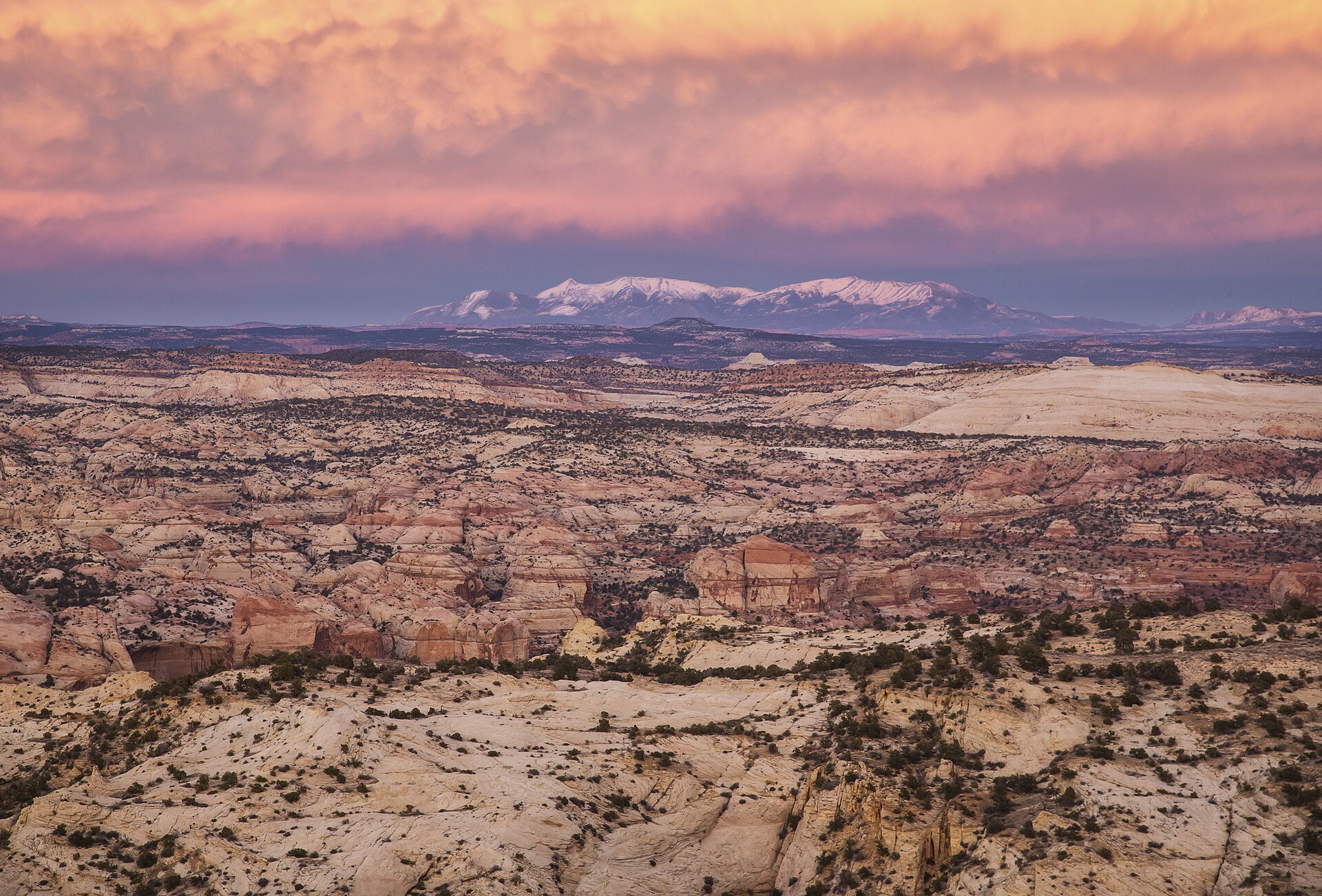
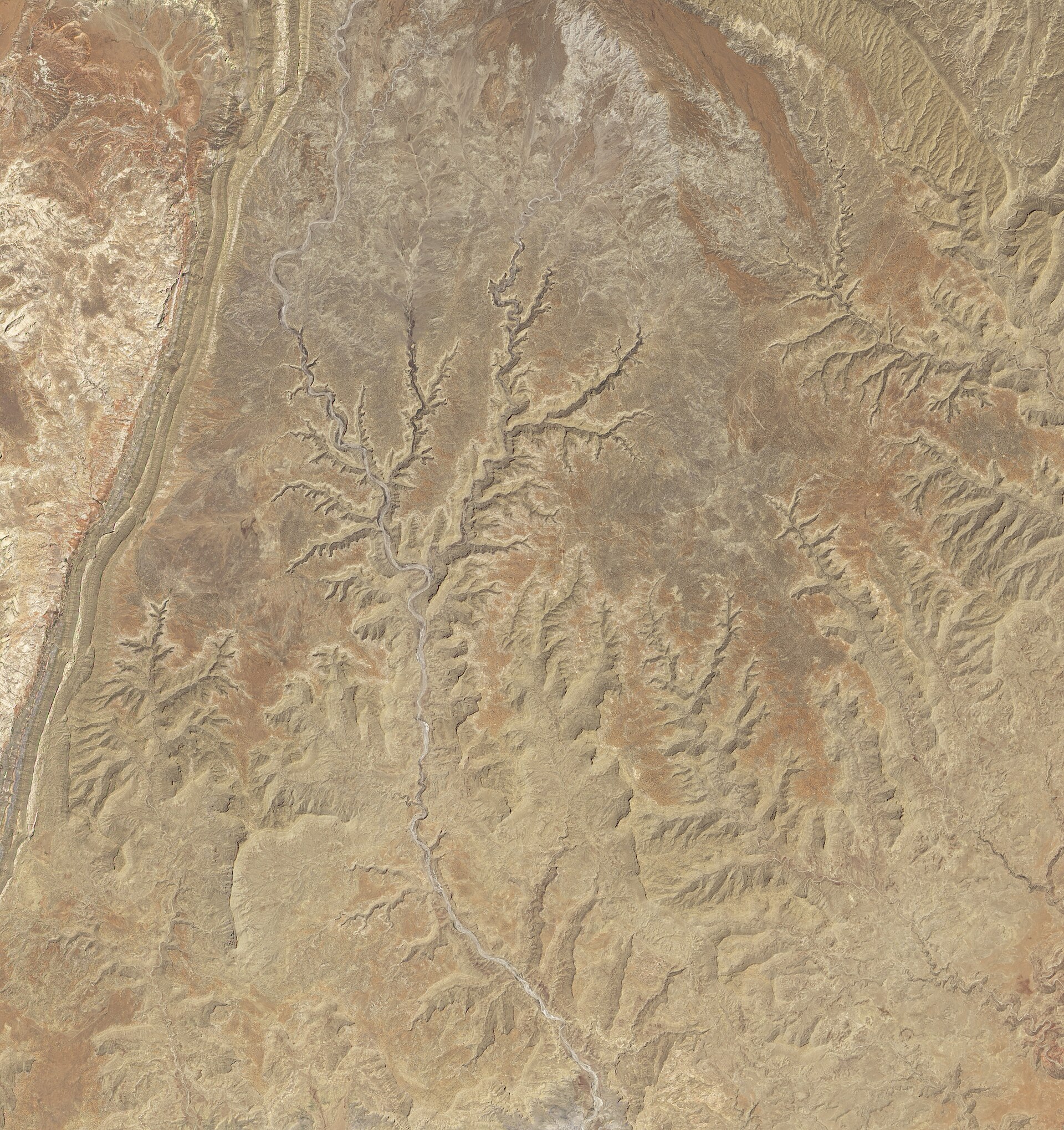
The name comes from a vast geologic stairway. According to the 1996 proclamation, the pioneering geologist Clarence Dutton named it the Grand Staircase. It rises 5,500 feet (about 1,680 meters) to the rim of Bryce Canyon in an unbroken sequence of cliffs and plateaus. At the center stands the Kaiparowits Plateau—roughly 1,600 square miles (4,100 square kilometers) of sedimentary rock. To the east, meanwhile, the Escalante River and its tributaries have carved a maze of canyons.
This was hard country to reach. In fact, paleontologist Scott Sampson and his colleagues called it the last major region in the contiguous United States to be mapped topographically. Its rock layers, however, are easy to read. The 1996 proclamation describes them as relatively undeformed and unobscured by vegetation.

A Window Into the Late Cretaceous
The dinosaur record comes mainly from two rock units on the Kaiparowits Plateau. Both date to the Campanian stage of the Late Cretaceous. The Wahweap Formation is the older of the two—roughly 81 to 77 million years old. Above it lies the Kaiparowits Formation, about 76.6 to 74.5 million years old. Beneath both, the Straight Cliffs Formation preserves early mammals, ammonites and Cretaceous shark teeth.
Back then, the region looked nothing like a desert. Randall Irmis, a curator at the Natural History Museum of Utah (NHMU), describes “a broad, low-gradient floodplain” beside a warm inland sea. That sea split North America in two. Rising mountains to the west supplied sediment, so animals were buried quickly. Today, as a result, the high desert lays those same rocks bare.

Dinosaurs Found Nowhere Else
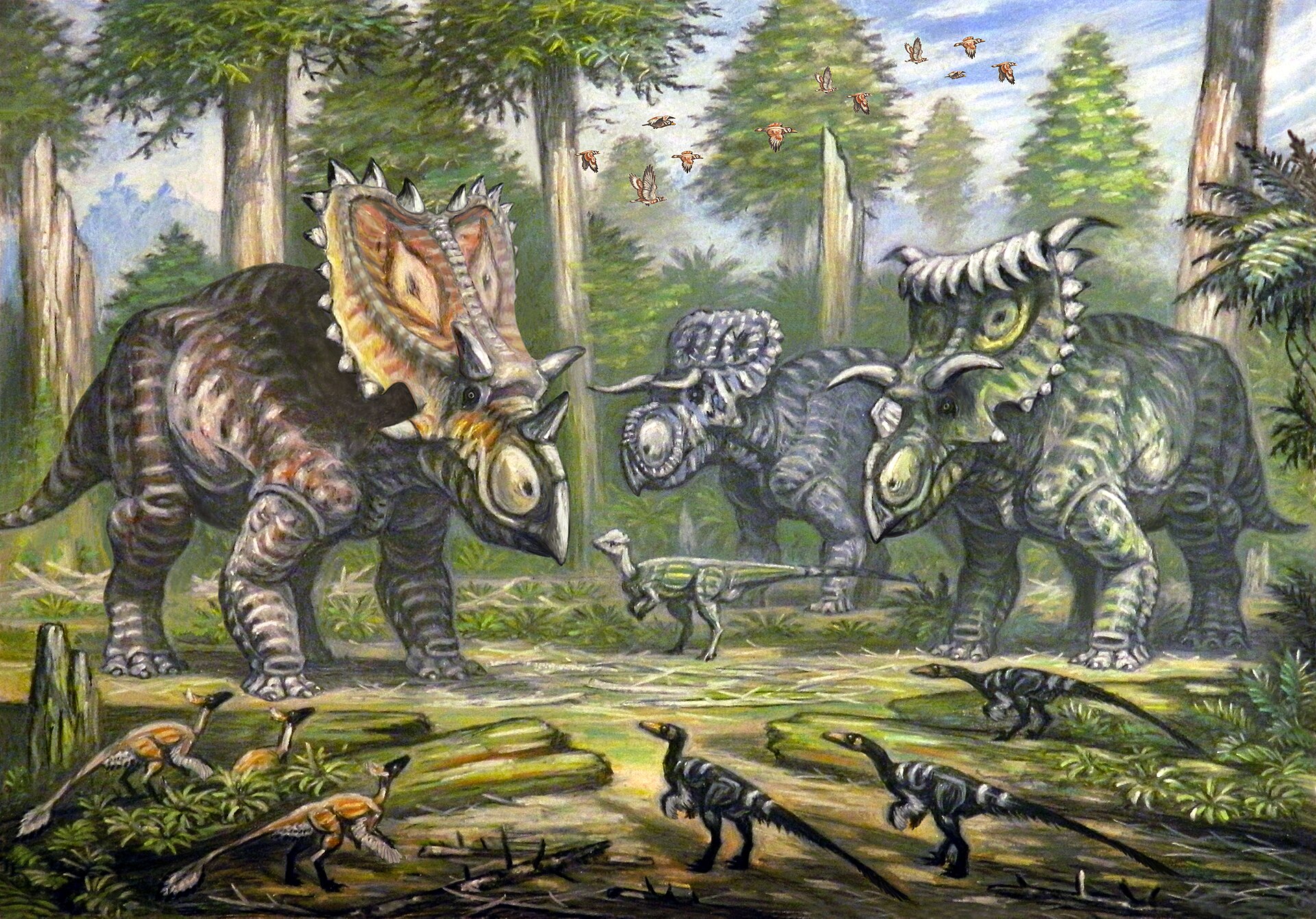
The Kaiparowits Formation has produced a long list of new animals. Besides the three named above, it yielded the horned Utahceratops and the duck-billed Gryposaurus monumentensis. The small theropods Hagryphus and Talos also come from here, as does the armored Akainacephalus. The older Wahweap Formation, meanwhile, gave science the horned Diabloceratops and the tyrannosaur Lythronax, which lived about 80 million years ago.
One quarry stands out. At the Rainbows and Unicorns site, paleontologists found the fairly complete remains of at least four tyrannosaurs, from a juvenile to a large adult. According to the 2021 proclamation that restored the monument, the find suggests that tyrannosaurs may have been social hunters.

Counting the Discoveries
How many new dinosaurs is that? The counts differ by source and by year. In 2010, Sampson’s team recognized 16 kinds of dinosaur in the Kaiparowits Formation. Ten could be identified to species—and every one was new to science. A decade later, NHMU put the total at about 30 species found only in this area, roughly 15 of them dinosaurs. Conservation groups, by comparison, cite 21 previously undiscovered dinosaur species in two decades.
The fieldwork behind those numbers was a joint effort. Museum crews worked with the BLM, and many crew members were volunteers—including Scott Richardson, who found the first Kosmoceratops. Helicopters lifted some of the fossil blocks out of the backcountry. By 2013, according to the publisher of a major scientific volume on the region, the effort had documented more than 2,000 new vertebrate fossil sites.


Three Decades of Shifting Boundaries
The monument’s borders have now moved three times in nine years. First, on December 4, 2017, President Trump removed about 860,000 acres. That proclamation left roughly 1 million acres in three units, named Grand Staircase, Kaiparowits and Escalante Canyons. Conservation groups, scientists and others sued, arguing that the Antiquities Act gives presidents no power to shrink a monument.
Then, on October 8, 2021, President Joe Biden restored the full 1.87 million acres. Because of that, the court put the lawsuits on hold—but never decided them. The legal question at their heart therefore stayed open.
The July 2026 Proclamation
Proclamation 11044 goes much further than the 2017 cut. It excludes about 1.69 million acres and keeps just 181,541, split between two units. The larger one, the Canyons of the Escalante Unit, covers about 172,641 acres along the Escalante River. By contrast, the smaller Kaiparowits Horizon Unit covers about 8,900 acres around a single bonebed.
The proclamation describes that bonebed in strong terms. It says the site has produced “one of the most complete tyrannosaurid specimens in the region” and calls it “a globally important paleontological resource.” The proclamation does not name the site. However, The Washington Sun, in a report republished by The Salt Lake Tribune, identifies it as the Rainbows and Unicorns quarry.
The Stated Reasons
The proclamation gives several reasons for the cut. First, it argues that the 2021 restoration covered “generic topographic and geologic features” that are scenic but are not objects of historic or scientific interest. Second, it says some objects are too common to qualify. Its examples include “cultural, paleontological, and geological resources” that are “found throughout the Four Corners region.”
Third, it points to other federal laws, among them the Paleontological Resources Preservation Act. In its words, these laws let the BLM protect resources “whether they are within or outside a national monument.” It also cites limits on BLM funding and staff. Finally, it names critical minerals such as cobalt, copper and uranium among resources “vital to our economic and national security.” Sixty days after signing—on September 11—the excluded lands opened to mining claims and mineral leasing.
What Supporters Say
Utah’s governor and its whole congressional delegation stood behind the president as he signed. Senator Mike Lee said the president “respects the limits Congress placed on the Antiquities Act.” Governor Spencer Cox, similarly, argued that the new boundaries “don’t diminish protection, they focus it.” Cox also argued, according to the Deseret News, that no resources come with giant monument designations. Local officials make a related point. As Kaden Figgins, Garfield County’s planning and economic development director, put it, “The fossils don’t disappear because the boundaries change.”
Why Paleontologists Object
In our view, the claim that these fossils are common does not match the published record. Paleontologist Joe Sertich told The Washington Sun that nearly all of the region’s dinosaurs and other fossils “have been found nowhere else.” Alan Titus, the monument’s BLM paleontologist until fall 2025, called the claim “an absolute distortion of reality.” Utah’s state paleontologist, James Kirkland, has said that Democrats sometimes went too far in defending the monument’s size. Even so, his verdict on the cut was short. “It’s just sad,” he said.
The Society of Vertebrate Paleontology (SVP) has put a number on the loss. In a joint statement with its co-plaintiffs, SVP’s monument liaison, P. David Polly, said the downsizing “stripped conservation priority from literally 98% of the more than 3,000 fossil sites” in the monument. He counts the discovery sites of Lythronax and Utahceratops among them. Sertich, meanwhile, notes that the most important bones of the one protected bonebed have already been excavated.
Tribal nations object as well. Autumn Gillard, coordinator of the Grand Staircase-Escalante Inter-Tribal Coalition, said the coalition’s perspective “was not included in these decisions.” In addition, the National Congress of American Indians condemned the cut.
What Changes for Fossils
Some protections remain. The excluded land is still federal land for now, and the Paleontological Resources Preservation Act still applies there. Collecting vertebrate fossils, including dinosaur bones, still requires a permit. A BLM spokesperson told The Washington Sun that “vertebrate fossils are protected across all BLM-administered lands, regardless of monument designation.”
Other things do change, however. Mining claims and mineral leasing are now possible on the excluded lands, and the proclamation also opens them to sale or other disposal under the public land laws. Under BLM rules, a claimant may disturb up to five acres after notifying the agency, posting a bond and waiting 15 days, as the plaintiffs’ complaint points out. In addition, federal rules generally allow casual collecting of common invertebrate and plant fossils on ordinary BLM land. Titus fears that thieves will exploit this—they can “just pretend they are looking for clamshells.”
Money and staff matter too. Paleontologists told The Washington Sun that the monument’s name helped them attract scarce research funding. Besides, the monument paleontologist’s post had not been filled as of September. The BLM says it will advertise the job “as opportunity and funds become available.”
The Court Challenge
On September 2, 2026, two groups of plaintiffs asked the U.S. District Court for the District of Columbia to revive their 2017 lawsuits over Grand Staircase-Escalante. Earthjustice represents eight conservation groups, including The Wilderness Society and Grand Canyon Trust. The Natural Resources Defense Council and the Southern Utah Wilderness Alliance (SUWA) are co-plaintiffs with their own lawyers. Separately, Grand Staircase Escalante Partners, the Conservation Lands Foundation and SVP filed together. SVP also sued that day over the neighboring Bears Ears monument.
The conservation groups ask the court to declare both the 2017 and 2026 proclamations void. They also want the agencies to carry out the 2021 protections. Their core argument is that the Antiquities Act lets a president create monuments, not dismantle them. The proclamation, by contrast, states that the act allows a president to alter a predecessor’s monument.
On October 13, Judge Tanya Chutkan lifted the stay and reopened the cases. She also required the government to give the plaintiffs 48 hours’ notice before ground-disturbing activity on the excluded lands. The parties then had until November 17 to propose a briefing schedule. As of November 18, 2026, the court had not ruled on whether the cuts are lawful.
How Readers Can Help
Several groups in the case accept donations through their own websites. None of the pages below is a dedicated fund for this lawsuit—each is the group’s general donation or support page.
- Grand Staircase Escalante Partners, a nonprofit that works on the monument: gsenm.org/get-involved. It says its legal help in the case is provided pro bono.
- Society of Vertebrate Paleontology: vertpaleo.org/donate-to-svp.
- Earthjustice: earthjustice.org/donate.
- Southern Utah Wilderness Alliance: suwa.org/give. SUWA also runs a volunteer campaign for both monuments, Keep Utah Monumental.
- Grand Canyon Trust: grandcanyontrust.org/donate.
- Conservation Lands Foundation: conservationlands.org/donate.
Readers in the United States can also write to their members of Congress, since Congress can set a monument’s boundaries by law. Whatever the court decides, the 2021 proclamation’s point still stands. Paleontologists have likely uncovered “only a fragment” of this fossil story.
Frequently Asked Questions
It lies in Kane and Garfield counties in southern Utah. The Bureau of Land Management has run it since President Clinton created it on September 18, 1996.
The July 2026 proclamation argues that the monument was larger than the “smallest area” the Antiquities Act allows. It also says other laws already protect many resources, and it cites critical minerals.
It covers 181,541 acres in two units, down from roughly 1.87 million acres. That is a cut of about 90 percent.
They include Kosmoceratops, Utahceratops, Nasutoceratops, Teratophoneus, Gryposaurus monumentensis, Hagryphus, Talos and Akainacephalus from the Kaiparowits Formation. Diabloceratops and Lythronax come from the older Wahweap Formation.
Partly. Federal law still requires a permit to collect vertebrate fossils on BLM land. However, the land is now open to mining claims and no longer has monument-level protection.
Not yet. A federal judge in Washington, D.C., reopened the lawsuits on October 13, 2026. As of November 18, 2026, there was no ruling on whether the cut is lawful.
You can donate to groups in the lawsuit, such as Grand Staircase Escalante Partners or the Society of Vertebrate Paleontology. U.S. readers can also contact their members of Congress.
Sources
The information in this article is based on various sources, drawing on scientific research, fossil evidence, and expert analysis. The aim is to provide a comprehensive and accurate overview of Grand Staircase-Escalante. However, please be aware that our understanding of dinosaurs and their world is constantly evolving as new discoveries are made.
- https://www.whitehouse.gov/presidential-actions/2026/07/modifying-the-grand-staircase-escalante-national-monument/
- https://www.govinfo.gov/content/pkg/FR-2026-07-17/pdf/2026-14549.pdf
- https://www.govinfo.gov/content/pkg/FR-2021-10-15/pdf/2021-22673.pdf
- https://www.govinfo.gov/content/pkg/FR-2017-12-08/pdf/2017-26714.pdf
- https://www.govinfo.gov/content/pkg/FR-1996-09-24/pdf/96-24716.pdf
- https://doi.org/10.1371/journal.pone.0012292
- https://doi.org/10.1371/journal.pone.0079420
- https://doi.org/10.1371/journal.pone.0024487
- https://doi.org/10.1371/journal.pone.0154403
- https://iupress.org/9780253008831/at-the-top-of-the-grand-staircase/
- https://nhmu.utah.edu/articles/why-are-there-so-many-unique-fossil-species-grand-staircase-escalante-national
- https://www.blm.gov/programs/national-conservation-lands/utah/grand-staircase-escalante-national-monument
- https://www.blm.gov/programs/paleontology/paleontology-management
- https://www.law.cornell.edu/cfr/text/43/49.805
- https://www.sltrib.com/news/politics/2026/09/10/with-national-monument-change/
- https://www.lee.senate.gov/news/press-releases/lee-applauds-trumps-actions-reining-in-monument-overreach/
- https://www.deseret.com/politics/2026/07/13/trump-sign-order-shrinking-bears-ears-grand-staircase-escalante/
- https://www.deseret.com/politics/2026/07/14/tribal-leaders-say-they-werent-consulted-for-bears-ears-grand-staircase-reduction/
- https://www.kuer.org/politics-government/2026-07-13/trump-shrinks-bears-ears-grand-staircase-escalante-utah
- https://www.ncai.org/news/ncai-and-nathpo-condemn-trump-s-massive-cuts-to-bears-ears-and-grand-staircase-escalante
- https://www.conservationlands.org/conservation-lands-foundation-and-partners-legally-challenge-president-trumps-latest-assault-on-grand-staircase-escalante-national-monument
- https://www.gsenm.org/news/latest-gsep-newsletter
- https://www.gsenm.org/news/october-newsletter
- https://vertpaleo.org/svp-sues-the-trump-administration-for-shrinking-bears-ears-national-monument/
- https://earthjustice.org/press/2026/conservation-groups-challenge-trumps-decimation-of-two-national-monuments-in-utah
- https://biologicaldiversity.org/w/news/press-releases/conservation-groups-challenge-trumps-decimation-of-two-national-monuments-in-utah-2026-09-02/
- https://earthjustice.org/wp-content/uploads/2026/09/gse-amended-and-supplemental-complaint.pdf
- https://earthjustice.org/wp-content/uploads/2026/09/gse-motion-to-reopen-and-lift-stay.pdf
- https://www.ksl.com/article/51637381/judge-reopens-lawsuits-challenging-cuts-of-bears-ears-grand-staircase-escalante
- https://suwa.org/suwa-statement-on-judge-reopening-national-monuments-litigation-10-15-26/
- https://www.knau.org/knau-and-arizona-news/2026-11-13/the-1906-law-at-the-center-of-utahs-national-monuments-fight
- https://www.npca.org/articles/11513-we-toured-grand-staircase-escalante-after-the-boundary-was-shrunk-here-s
This article was last fact checked: TheDinosaurs Team, 18-11-2026
Featured Image Credit: Bureau of Land Management, Public domain, via Wikimedia Commons
