
Near Beipiao City in western Liaoning, China, the Yixian Formation has given up one of the newest dinosaurs of the Jehol Biota. Named Kayrasaurus changliensis in 2026, it is an early-branching therizinosaur—a member of a highly specialized group of maniraptoran theropods. News coverage of its description places it around 125 million years ago, in the Early Cretaceous. According to its describers, it was also notably larger than the other Jehol therizinosaurians of its time.
The animal is known from a single, nearly complete skeleton of a young individual. In September 2026, paleontologist Chun-Chi Liao and colleagues William J. Freimuth, Lindsay E. Zanno, and Xing Xu published its description in the Journal of Systematic Palaeontology. Because the full paper is not openly available, this profile rests on its abstract, the authors’ open data, and news reports. Even so, Kayrasaurus already adds a new piece to the story of how early therizinosaurs may have divided up their world.
Kayrasaurus Key Facts
| Keyword | Fact |
|---|---|
| Pronunciation | Not specified |
| Meaning of name | Kayra’s Lizard (honoring Kayra, a Turkic creator god), as reported in coverage of the 2026 description |
| Group | Theropoda (Therizinosauria) |
| Type Species | Kayrasaurus changliensis |
| Diet | Herbivore (likely), based on the paper’s description of its jaws and teeth as quoted by Popular Science |
| When it Lived | Around 125 MYA, as reported in news coverage of the 2026 description |
| Period | Cretaceous |
| Epoch | Early Cretaceous (Barremian stage) |
| Length | More than 3.6 meters (11.8 feet), as reported in news coverage of the 2026 description |
| Height | Not specified |
| Weight | About 117 to 274 kilograms (258 to 604 pounds), as reported in news coverage of the 2026 description |
| Mobility | Not specified |
| First Discovery | Not specified |
| Described by | 2026 by C.-C. Liao, W.J. Freimuth, L.E. Zanno, and X. Xu |
| Holotype | IVPP V 18957 (printed as V 18597 in the abstract, likely a typo) |
| Location of first find | Dabangou village, Sihetun area, near Beipiao City, Yixian Formation (Jehol Group), Liaoning, China |
Kayrasaurus Origins, Taxonomy and Timeline
The name Kayrasaurus reaches far beyond China for its inspiration. Brazil’s Xataka reports that it honors Kayra, a creator god of Turkic mythology and shamanism. A Dinosaur Mailing List post by Mickey Mortimer, quoting the paper, adds that Kayra fathered Erlik, the god of death—a nod to the therizinosaur Erlikosaurus. The ending “-saurus” means “lizard.” The same passage traces the species name changliensis to Changli, a Three Kingdoms–era place name that refers to where the fossil came from.
Liao and colleagues describe Therizinosauria as a highly specialized clade of maniraptoran theropods. The clade takes its name from its representative genus, the giant-clawed Therizinosaurus. Using an expanded dataset, the describers place Kayrasaurus near the base of this clade. Their published matrix scores 33 taxa for 396 characters—anatomical traits coded for comparison. However, the abstract names no sister taxon, and the Paleobiology Database leaves its family unspecified. Kayrasaurus changliensis is the type and only known species.
News reports date Kayrasaurus to around 125 million years ago. On the current international timescale, the radiometric ages below fall in the Barremian stage. The Paleobiology Database bins it as Late Barremian to Early Aptian, but that range follows an older timescale. In 2021, Zhong and colleagues dated the Yixian Formation in the Jin-Yang basin with high precision. By their dates, it began about 125.76 and ended about 124.12 million years ago—roughly 1.6 million years of the Early Cretaceous.
In 2024, however, MacLennan and colleagues studied the Sihetun area itself. They argue that its fossil-rich lower Yixian built up in less than about 93,000 years, around 125.8 million years ago. That, they write, is “about half as long as recent U-Pb geochronology suggests.” The two teams also disagree on the age of at least one key layer. This profile does not choose between them.
Discovery & Fossil Evidence
The fossil comes from Dabangou village in the Sihetun area near Beipiao City, a site within the Yixian Formation of the Jehol Group. The Paleobiology Database lists it in the same collection as the compsognathid Huaxiagnathus and records the rock there as claystone. Neither the abstract nor the database gives its exact member within the formation. Likewise, no accessible source says who found the skeleton, or in what year.
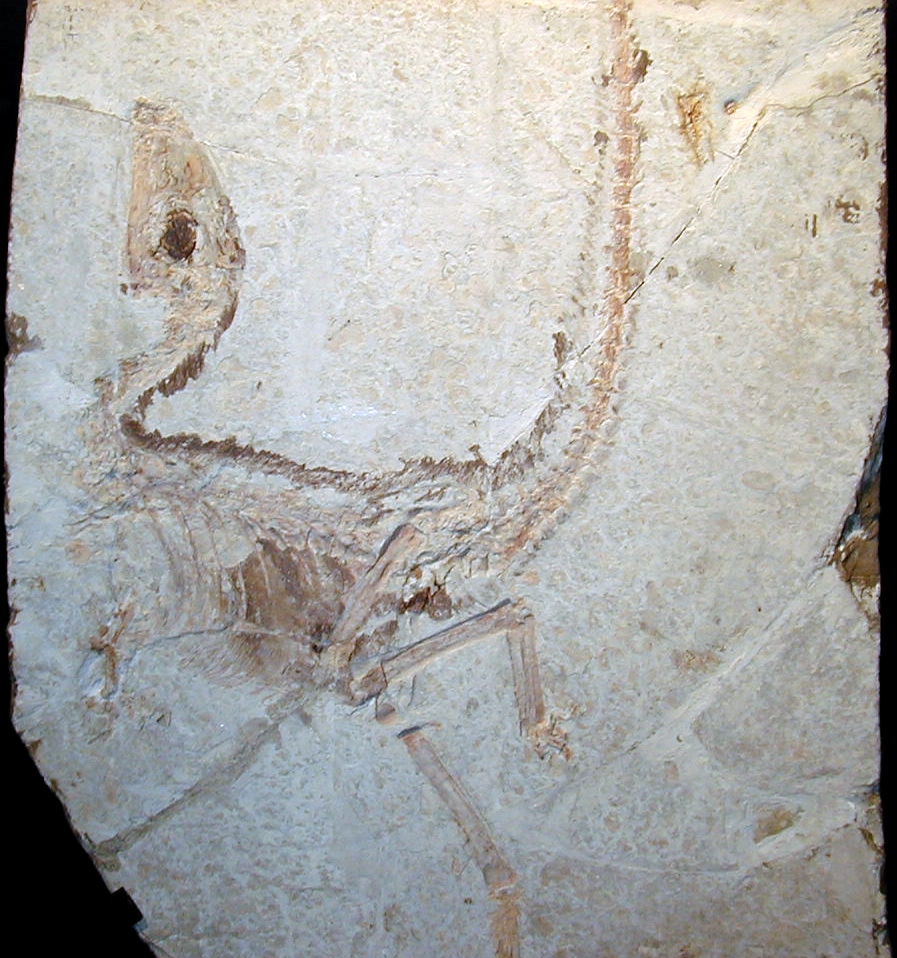
The holotype—the specimen that anchors the name—is housed at the Institute of Vertebrate Paleontology and Paleoanthropology (IVPP) in Beijing. Its number is a small puzzle. The abstract prints IVPP V 18597. However, the paper’s own figures, as reproduced by Xataka, give IVPP V 18957. So do the authors’ CT dataset and phylogenetic matrix. The abstract’s number is therefore likely a typo. According to the abstract, the specimen is a nearly complete skeleton of a skeletally immature animal—one that had not finished growing. SciNews adds that it includes a largely complete skull. CT scans of the skull and left mandible (lower jaw) are archived on MorphoSource.
No additional specimens of Kayrasaurus have been reported, and the Paleobiology Database lists just one occurrence. By late October 2026, no later peer-reviewed study of the animal had been found. For now, everything known about Kayrasaurus rests on that one young skeleton from the Sihetun area.
Kayrasaurus Size and Description
Short description of Kayrasaurus
The skull holds the clearest clues. Its describers list extremely small, densely packed teeth among the features that set the animal apart. SciNews reports more than 45 teeth in the lower jaw—by its account, the most of any known therizinosaur, although outlets report the counts differently. Popular Science adds a pronounced underbite, a triangular opening in the lower jaw, and a large upper-jaw opening near the snout.
Behind the head, the cervical centra (the main bodies of the neck vertebrae) were markedly longer than those of the back. On the hand, manual ungual IV (the claw of the fourth finger) bore a dorsally extended “lip”—an upturned rim along its upper edge. The authors tentatively group it with Beipiaosaurus as sharing a more robust, less cursorial body plan, meaning one built less for running.
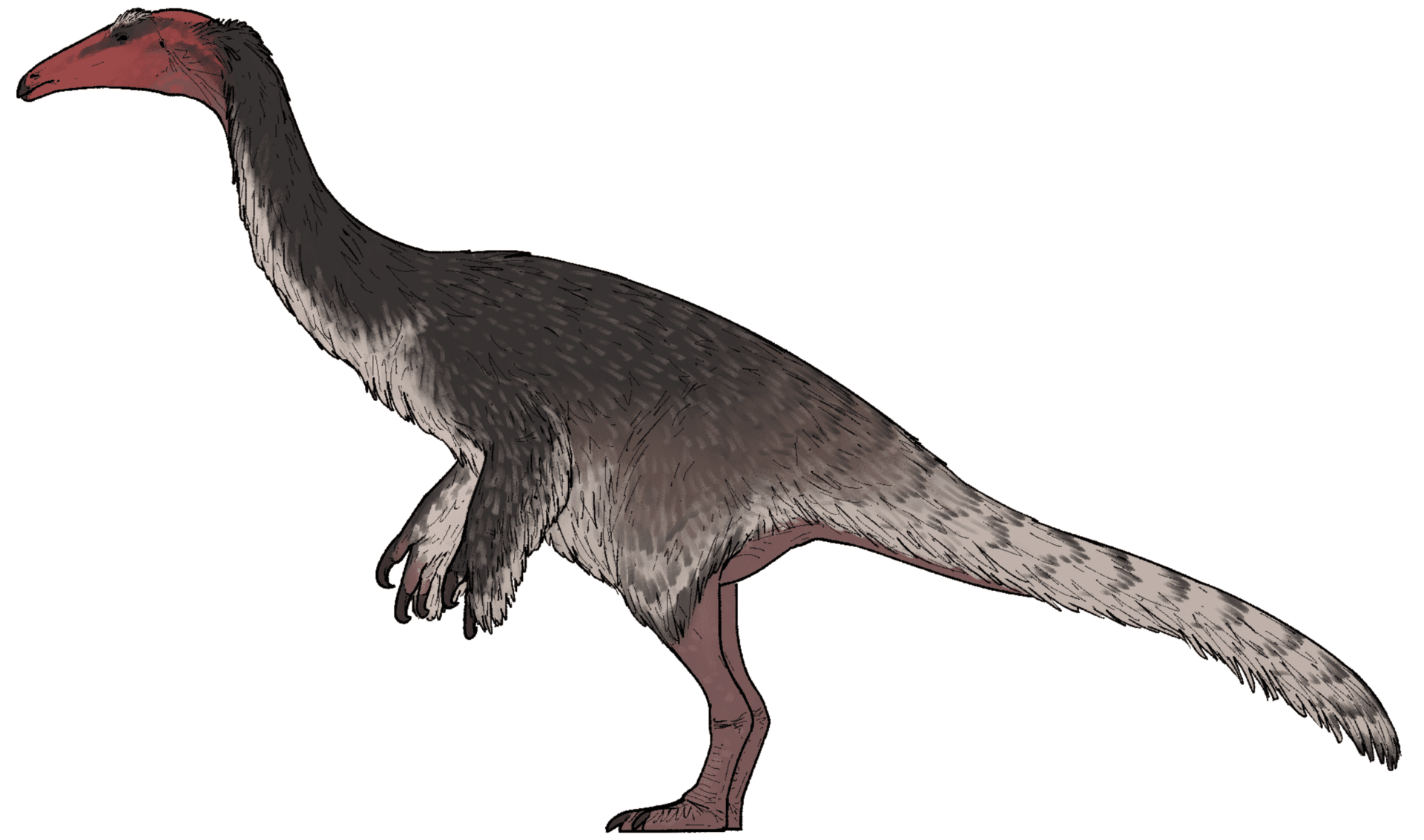
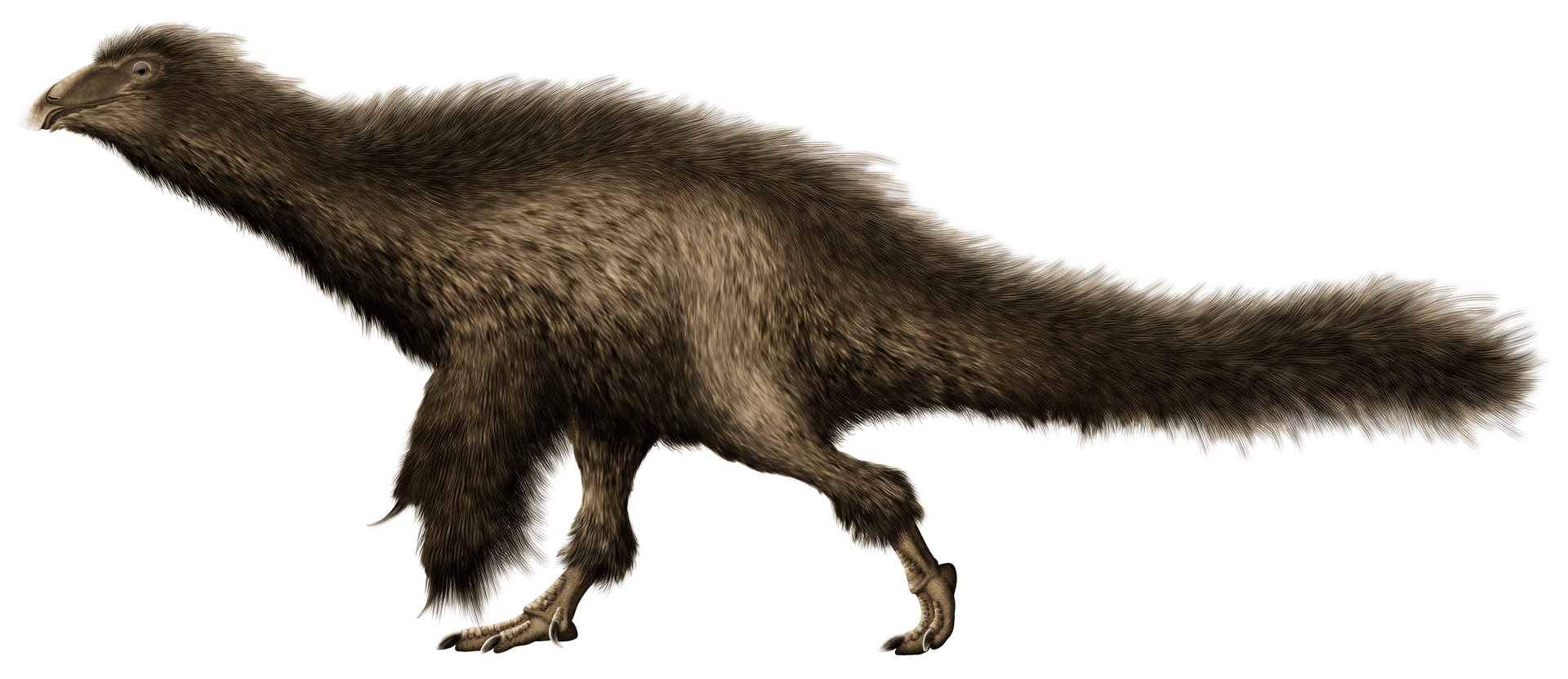
No accessible source reports feathers or other skin coverings for this specimen, so any discussion of integument is speculative. The life restorations made since its naming are artistic interpretations rather than direct evidence.

Size and Weight of Type Species
According to SciNews, the researchers estimated Kayrasaurus at more than 3.6 meters (11 feet) long. The same report gives a body mass of roughly 117 to 274 kilograms (about 260 to 600 pounds). Popular Science likens that weight to an adult male grizzly bear. No height has been published in any source available here.
These figures are estimates rather than measurements, and the method behind them remains unknown without the full text. Because the holotype was not fully grown, SciNews notes that an adult could have been larger.
Even so, the abstract gives a clear comparison. Kayrasaurus was at least 1.6 times larger than the second-largest Jehol therizinosaurian, Beipiaosaurus inexpectus. That makes it the biggest therizinosaurian yet known from the Jehol beds.
The Dinosaur in Detail
What sets this dinosaur apart is a combination of traits rather than any single feature. Its jaws, in particular, may hint at its diet. As quoted by Popular Science, the paper calls the jaw and teeth “more reminiscent of herbivorous dinosaur clades.” The abstract itself does not state diet outright.
The study’s reach extends past the new animal. It revises the diagnosis of Beipiaosaurus inexpectus—the list of traits that defines that species. It also provisionally recovers two subclades within Therizinosauridae, separated by their hand claws. By combining anatomy, body mass estimates and biomechanical data, the authors infer that Jehol therizinosaurians may have filled at least two distinct ecological niches.
Taken together, these results place Kayrasaurus near the base of the therizinosaur family tree—a large, small-toothed early member of the lineage. Its exact branch, however, remains unclear from the accessible sources. So far, the only public critiques found are informal. On the Dinosaur Mailing List, Mickey Mortimer questioned the study’s taxon sampling—for instance, its use of Tyrannosaurus as the outgroup and its lack of paravians (raptors and birds). Tim Williams raised further objections in the same thread.
Interesting Points about Kayrasaurus
- Kayrasaurus honors Kayra, a Turkic creator god whom the paper, as quoted online, calls the father of Erlik—a nod to the therizinosaur Erlikosaurus.
- SciNews reports more than 45 teeth in its lower jaw, which it calls the most of any known therizinosaur.
- Its describers found it at least 1.6 times larger than Beipiaosaurus inexpectus, the next-largest Jehol therizinosaurian.
- Because the only known specimen was not fully grown, an adult Kayrasaurus may have been even bigger than current estimates.
- Its abstract prints the specimen number as V 18597, likely a typo for the V 18957 used everywhere else.
Contemporary Dinosaurs
Because the member of Kayrasaurus is unknown, its neighbors below are matched by formation and, where possible, by locality. None has any recorded interaction with it.
The Paleobiology Database places Huaxiagnathus orientalis in the same collection as Kayrasaurus, at Dabangou village. It was a large compsognathid theropod named in 2004 from the Yixian Formation. Even so, nothing links the two directly.
Adding further diversity was Sinornithosaurus millenii, a dromaeosaurid described in 1999 with a filamentous integument—a covering of fine, hair-like fibers. It came from Sihetun, a famous fish–dinosaur–bird locality, and the database places it in the Jianshangou Member of the Yixian. Whether it lived in the same layers as Kayrasaurus is unproven.
Also named in 2004 was Dilong paradoxus, a small basal tyrannosauroid with filamentous “protofeathers” from the Yixian Formation of western Liaoning. However, the database assigns it to the lower Lujiatun Member. The two have not been found in the same beds. Still, MacLennan and colleagues argue that this whole lower sequence spans less than about 93,000 years.
The closest relative among these neighbors was Beipiaosaurus inexpectus, a therizinosauroid named in 1999 from the Yixian Formation. Liao and colleagues call the Jehol therizinosaurians penecontemporaneous—living at roughly the same time—and compare the two directly. They tentatively place Kayrasaurus with Beipiaosaurus in one ecological group, while noting the link is possible rather than certain.

Kayrasaurus in its Natural Habitat
The world Kayrasaurus roamed was part of the Jehol Biota—an exceptionally well-preserved, volcano-influenced ecosystem buried in lake and occasionally river sediments. Feathered theropods, early birds, primitive mammals, and possible early flowering plants all belong to this famous biota. Its fossils formed in two styles—flattened skeletons with feathers and even color in laminated lake beds, or three-dimensional skeletons in more massive deposits. In 2024, MacLennan and colleagues argued that the Yixian records “a brief snapshot of normal life and death,” not a string of sudden catastrophes. In the area they studied, the richest fossil layers match periods of high rainfall.

While there is no direct evidence of what Kayrasaurus ate, its describers say its jaws and teeth recall plant-eating dinosaur groups. A reconstruction by Kōhei Futaka, shown by SciNews, has it browsing on higher vegetation. The caption ties that pose to “its larger body size and inferred feeding strategy.” Even so, no direct evidence for the habit has been reported. The abstract, meanwhile, points to enhanced bite force in the ecological group it may have belonged to.
Liao and colleagues suggest that Jehol therizinosaurians split into at least two ecological niches. In their view, Jianchangosaurus yixianensis and Lingyuanosaurus sihedangensis display traits associated with greater cursoriality—adaptation for running—and a reliance on forelimb-based foraging. By contrast, Beipiaosaurus, and possibly Kayrasaurus, fit a sturdier body plan less suited to running. Nothing in the accessible sources reveals whether it lived alone or in groups. Moreover, the authors stress that more complete specimens are essential to rigorously test and refine these hypotheses.
Frequently Asked Questions
According to coverage of its description, it honors Kayra, a creator god of Turkic mythology, while changliensis refers to Changli, a historical place name.
It lived in the Early Cretaceous, around 125 million years ago according to news reports of its description.
News coverage reports a length of more than 3.6 meters (11 feet) and a weight of about 117 to 274 kilograms (260 to 600 pounds). Its only specimen was not fully grown.
It was an early-branching therizinosaur, part of a highly specialized group of maniraptoran theropods.
Its fossil comes from the Yixian Formation at Dabangou village, in the Sihetun area near Beipiao City, Liaoning, China.
Its features include extremely small, densely packed teeth, long neck vertebrae, and a lipped hand claw, and it is the largest known Jehol therizinosaurian.
Sources
The information in this article is based on various sources, drawing on scientific research, fossil evidence, and expert analysis. The aim is to provide a comprehensive and accurate overview of Kayrasaurus. However, please be aware that our understanding of dinosaurs and their world is constantly evolving as new discoveries are made.
- https://doi.org/10.1080/14772019.2026.2710287
- https://api.openalex.org/works/doi:10.1080/14772019.2026.2710287
- https://doi.org/10.5281/zenodo.21875897
- https://doi.org/10.17602/M2/M888152
- https://paleobiodb.org/classic/basicTaxonInfo?taxon_no=526106
- https://paleobiodb.org/classic/displayCollResults?collection_no=55425
- https://doi.org/10.1093/nsr/nwab063
- https://doi.org/10.1073/pnas.2322875121
- https://europepmc.org/article/PMC/PMC11588062
- https://doi.org/10.1038/nature01420
- https://doi.org/10.1017/S1477201903001081
- https://doi.org/10.1038/45769
- https://doi.org/10.1038/nature02855
- https://doi.org/10.1038/20670
- https://www.sci.news/paleontology/kayrasaurus-changliensis-15082.html
- https://popsci.com/science/new-dinosaur-big-claws-therizinosaurus
- https://www.xataka.com.br/ciencia/garras-afiadas-dentes-minusculos-e-mitologia-turca-cientistas-descobrem-novo-dinossauro-125-milhoes-anos-na-china
- https://groups.google.com/g/DinosaurMailingGroup/c/FC5XG3FipDo
- https://theropoddatabase.com/Therizinosauroidea.htm
- https://stratigraphy.org/ICSchart/ChronostratChart2024-12.pdf
This article was last fact checked: TheDinosaurs Team, 29-10-2026
Featured Image Credit: TotalDino, CC BY 4.0, via Wikimedia Commons
