
Near Brighstone, on the southwest coast of the Isle of Wight, lie the sandstones and mudstones of the Wessex Formation. They hold one of England’s more surprising armored dinosaurs—a spiky animal that spent decades in the shadow of another name. Named Vectipelta barretti in 2023, this ankylosaur lived in the Early Cretaceous, most likely during the Barremian stage. London’s Natural History Museum (NHM) puts it at around 125 million years ago. For virtually 142 years, says lead author Stuart Pond, every island ankylosaur had been assigned to Polacanthus foxii. Vectipelta broke that pattern, and its closest relatives in its describers’ analysis lived in China.
The excavation at Chilton Chine took place in 1994, led by Lin and Dick Spearpoint with Martin Simpson. A 2015 preprint provisionally referred the skeleton to Polacanthus foxii, though it already suggested the animal was likely something new. In 2023, Pond and five colleagues, Simpson among them, named it in honor of Professor Paul Barrett of the NHM. Their paper also carried a warning. Filing every Wessex ankylosaur bone under one name may have hidden other species.
Vectipelta Key Facts
| Keyword | Fact |
|---|---|
| Pronunciation | Not specified |
| Meaning of name | Not specified |
| Group | Ankylosauria |
| Type Species | Vectipelta barretti |
| Diet | Herbivore |
| When it Lived | Roughly 127 to 122 MYA (approximate) |
| Period | Cretaceous |
| Epoch | Early Cretaceous (probably Barremian, possibly late Hauterivian) |
| Length | Not specified |
| Height | Not specified |
| Weight | Not specified |
| Mobility | Not specified |
| First Discovery | 1994, excavated by Lin and Dick Spearpoint with Martin Simpson |
| Described by | 2023 by S. Pond, S.-J. Strachan, T.J. Raven, M.I. Simpson, K. Morgan, and S.C.R. Maidment |
| Holotype | IWCMS 1996.153 and IWCMS 2021.75 (Dinosaur Isle Museum), a partial skeleton |
| Location of first find | Chilton Chine, near Brighstone, Wessex Formation, Isle of Wight, England, UK |
Vectipelta Origins, Taxonomy and Timeline
The species name barretti honors Paul Barrett, a professor at the Natural History Museum in London. Senior author Susannah Maidment explained that the team wanted to thank him for years of mentorship. As she put it, they “decided to name a small, slow-moving, spikey organism after him.” The name thus works as both a scientific label and a thank-you to a colleague.
Vectipelta belongs to Ankylosauria, the armored, plant-eating dinosaurs. Pond and colleagues described it as a new genus and species, diagnosed by “numerous postcranial autapomorphies”—unique traits found behind the skull. In their analysis, it fell in a clade with two Chinese ankylosaurs, Dongyangopelta and Zhejiangosaurus. That trio, in turn, sits beside a clade of “ankylosaurid” ankylosaurs that includes Euoplocephalus and Ankylosaurus. Some popular sources call Vectipelta a nodosaurid, but the original analysis placed it outside a traditional Nodosauridae. Meanwhile, a broader May 2023 study by Thomas Raven and colleagues found the traditional Nodosauridae paraphyletic—not a single natural group.
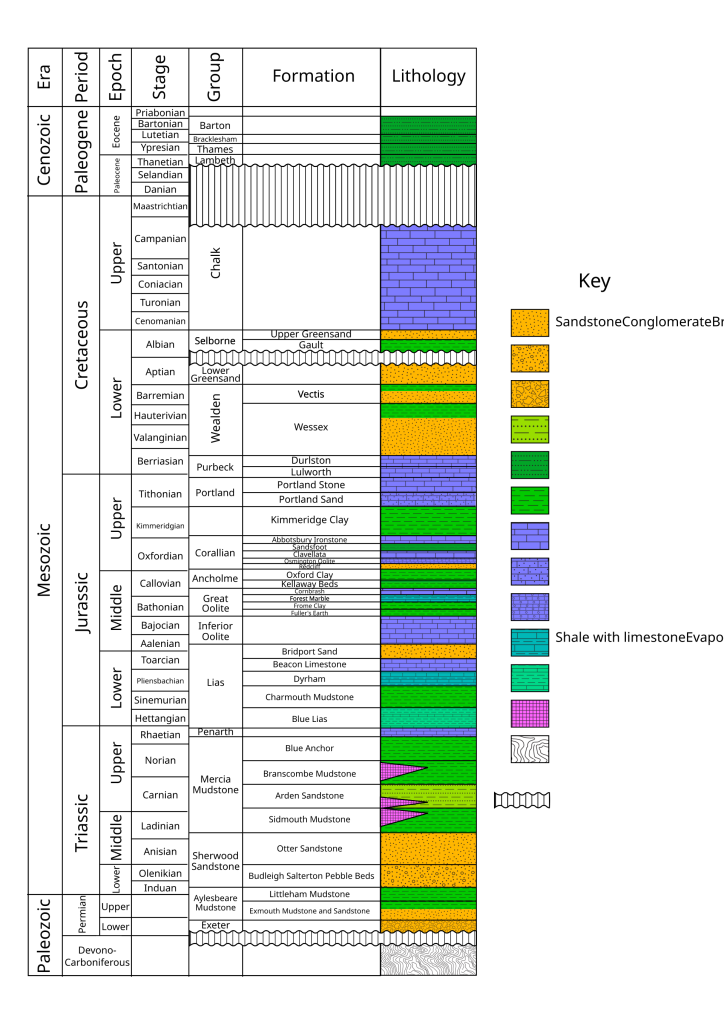

The age of the rocks is still debated. In 2021, Chris Barker and colleagues described the Wessex Formation as entirely Barremian. The international chart dates that stage to roughly 125.8 to 121.4 million years ago. A 1991 magnetostratigraphy thesis, however, concluded that the formation spans both the Barremian and the upper Hauterivian. In 2026, Morrison and colleagues went further and wrote that it spans 15 million years.
The describers’ own dating of Vectipelta is relative—6–8 million years older than Polacanthus and at least 3 million years younger than Hylaeosaurus. Those gaps, they suggested, point to “a more complicated pattern of faunal turnover in the Wealden Group than previously realized.” Polacanthus foxii also comes from the Wessex Formation, from higher beds. A gap of 6–8 million years inside one formation therefore implies that it spans more than the Barremian alone.
Discovery & Fossil Evidence
Lin and Dick Spearpoint excavated the skeleton with Simpson in 1994 at Chilton Chine, near Brighstone. Afterward, Lin Spearpoint carried out an initial preparation and appraisal with Simpson. Though not peer reviewed, the 2015 preprint called it one of the most complete ankylosaurs ever found in the UK. As Pond later recalled, it “was eventually accessioned to the Dinosaur Isle Museum, which is where we started working on it.”
The holotype is a partial skeleton held at Dinosaur Isle Museum in Sandown, cataloged as IWCMS 1996.153 and IWCMS 2021.75. The supplement lists the axis (second neck vertebra), three more neck vertebrae, eleven dorsals (back vertebrae), and a sacrum (hip vertebrae). Thirteen caudals (tail vertebrae) follow, plus fragments of several more. Limb material includes part of the left scapula (shoulder blade), the ends of the left humerus, a second metatarsal, and a possible ulna and fibula. The hips include both ilia (upper hip bones), both pubes, and the ischia. Finally, the sacral shield and a wide range of osteoderms—bony armor plates and spines—complete the inventory, though no skull is known.
At Dinosaur Isle, Gary Blackwell and Simon Penn carried out further preparation, while staff and volunteers cleaned the bones from their surrounding rock. Parts of the skeleton then went on public display there from 16 June 2023. The team also recorded the holotype by photogrammetry and built a 3D skeletal reconstruction. For missing bones, they drew partly on the Polacanthus foxii holotype—NHMUK PV R175. Island ankylosaur bones had long been cataloged as Polacanthus, so the describers urged museums to re-examine them.
Vectipelta Size and Description
Without a skull, much of what we know about Vectipelta comes from its spine, hips, and armor.
Short description of Vectipelta
Any picture of the head is a reconstruction—the team’s 3D model, for example, based its skull on CT data of Panoplosaurus. Along the back, the dorsal centra (vertebral bodies) measure about 2.5 to 3.3 inches (64 to 83 millimeters) long. In the authors’ analysis, five or more back vertebrae fused to the hips, forming a sacral rod. Over the hips, meanwhile, lay pelvic osteoderms co-ossified into rosettes.
The middle and rear tail vertebrae carry a lengthwise ridge at about mid-height of each centrum. Its armor came in several forms—recurved spines, flattened blade-like spines, a plate, small spines, peaked scutes, and a keeled osteoderm. The NHM describes ankylosaurs in general as large plant-eaters with short legs and wide, flat bodies. Its describers assembled the 3D skeleton in a neutral, four-legged standing pose. However, how it moved has not been studied in detail.
Size and Weight of Type Species
Figures for its length and weight circulate online. However, none traces to a peer-reviewed source, so its length, height, and weight remain unspecified here.
Bone sizes still offer a sense of scale. For example, the left ilium measures about 34.4 inches (875 millimeters), while the sacrum is about 12.4 inches (315 millimeters) long. The largest blade-like spine reaches about 15.7 inches (400 millimeters), and others measure 330, 300, and 240 millimeters.
Maidment’s “small, slow-moving” line was a naming joke—not a measurement. Until a published estimate appears, these bones remain the best guide to its size.
The Dinosaur in Detail
What sets this dinosaur apart is how different it proved from Polacanthus, whose name it had carried in the catalogs. The press summary lists differences in the neck and back vertebrae, a very different pelvis, and armor with more blade-like spikes. Maidment called the spikes “more blade-like and recurved.” The two, she said, “are really quite far apart in terms of ankylosaur evolution.”
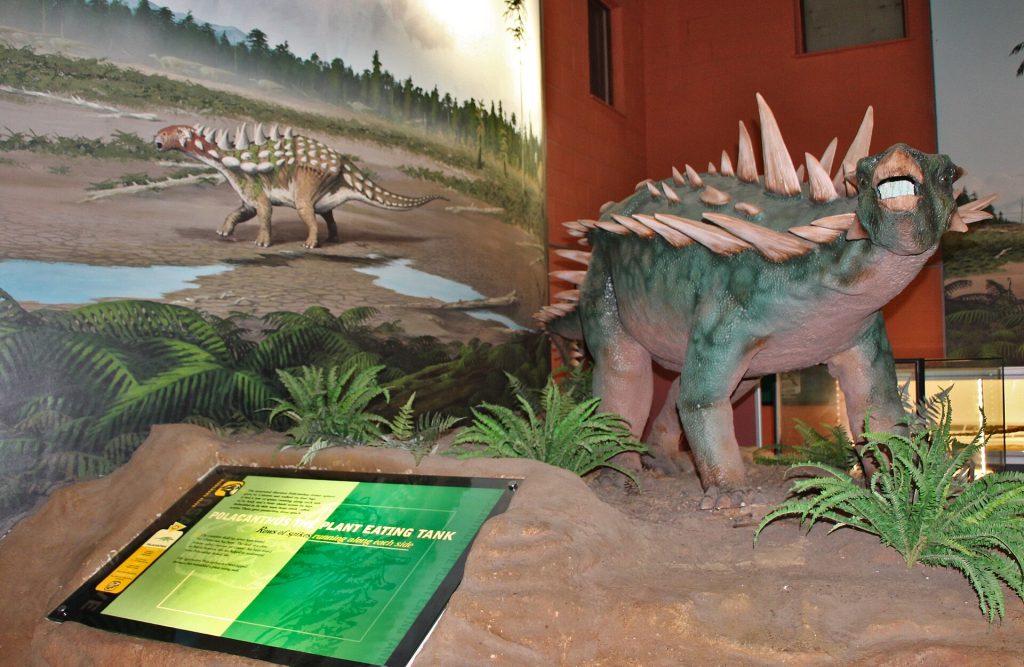

Instead of grouping with Polacanthus or Hylaeosaurus, the other Wealden ankylosaurs, Vectipelta grouped with Dongyangopelta and Zhejiangosaurus. Seven characters support that clade in the authors’ analysis. These include the sacral rod of five or more vertebrae, the mid-height tail ridge, and the rosettes of pelvic armor.
From this result, Pond and colleagues suggested a complex pattern of dispersal to and from Europe, North America, and Asia. Maidment, however, urged caution, because the relationships may shift as better data emerge from China. Later work has kept the genus in use. In 2026, Morrison and colleagues included it by name in their chart of Wessex Formation dinosaurs. Vectipelta suggests an island ankylosaur story with more branches than one famous name implied.
Interesting Points about Vectipelta
- Raven and colleagues’ May 2023 study already included the skeleton in its data matrix under the placeholder “Polywotsit.”
- The same study’s specimen table calls it the “Spearpoint ankylosaur”—Lin and Dick Spearpoint dug it out with Martin Simpson in 1994.
- Its largest flattened, blade-like spine measures about 15.7 inches (400 millimeters) along its longest dimension.
- The 2015 preprint reported a plywood-like internal structure in its sacral shield, found through bone histology—the study of bone tissue under the microscope.
- To fill gaps in the 3D skeleton, the team borrowed bones partly from the Polacanthus holotype, which the describers place 6–8 million years later.
Dinosaurs from the Same Formation
Morrison and colleagues’ 2026 chart places Vectipelta at plant debris bed L5, low in the Wessex Formation. Also known from the Wessex Formation (exact level relative to Vectipelta not known, or in higher beds): the spinosaurids Ceratosuchops (original level uncertain) and Riparovenator (between the Chilton Chine and Brighstone sandstones), the megaraptoran Invictibellatrix (probably beds L1 to L5), Neovenator and the iguanodontian Brighstoneus (both L9), and Eotyrannus (L11). Sources disagree on how long the formation lasted. Barker and colleagues treated it as entirely Barremian, whereas Morrison and colleagues wrote that it spans 15 million years. As a result, these animals may not all have lived at the same time.
Vectipelta in its Natural Habitat
The world Vectipelta inhabited was an island landscape. According to the NHM, Europe was then a series of islands scattered across a subtropical sea. One of them took in southern England and the Isle of Wight. The island’s climate likely resembled the modern Mediterranean, with humid forests of conifers and ferns. Pond describes a floodplain crossed by a meandering river. In his words, “away to the north, around about where Cornwall is, was a range of mountains which fed all this.” That floodplain also saw occasional wildfires and “quite large, catastrophic flood events.”
Since no skull or teeth are known, Vectipelta‘s diet can only be inferred from its group. Like other ankylosaurs, it is classed as a herbivore. The NHM also notes that ankylosaur armor likely helped defend them from hungry predators. According to the museum, frogs, fish, turtles, and crocodiles would have lived in the waterways. Small lizards and mammals probably scurried along the banks, while pterosaurs flitted around the canopy.
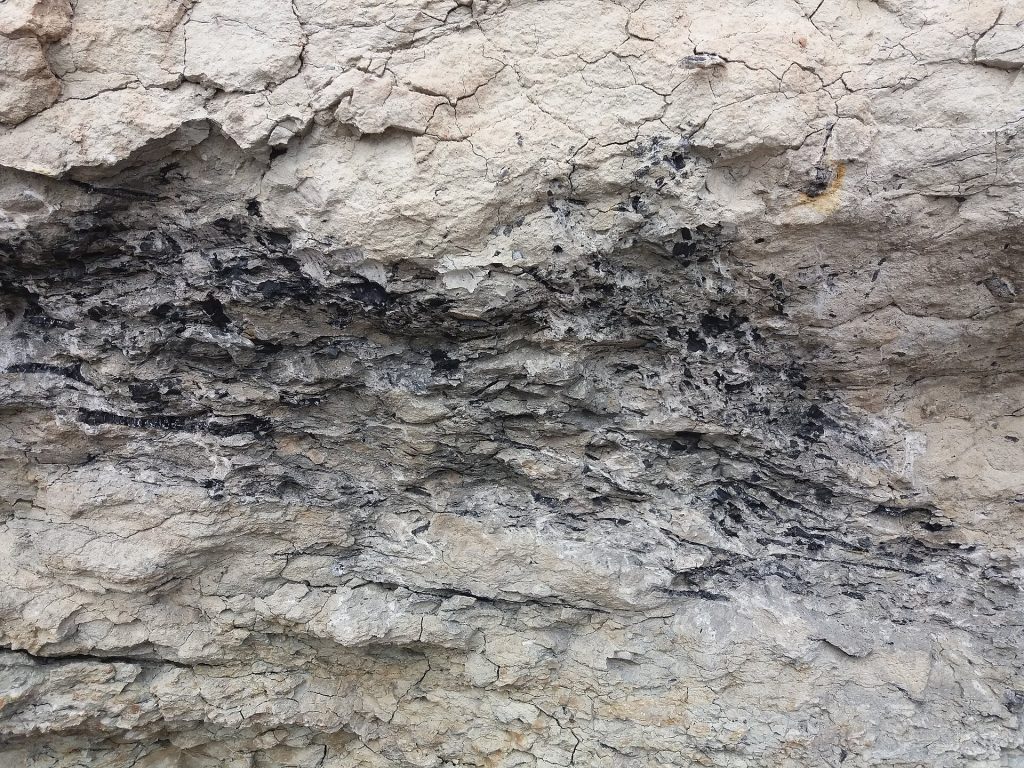

Its bones survived thanks to those floods. Surging water swept vegetation and animals into short-lived pools, which became debris beds of organic matter—Vectipelta came from one of these. The plant debris beds also hold amber. Morrison and colleagues link the lower beds, L1 to L8, with lowland or coastal habitats. They also found observed theropod diversity highest in these oldest levels.
From the base of the formation, meanwhile, comes the small ornithopod Vectidromeus, according to a 2025 review by Alex Peaker. Vectipelta‘s own story rests on one partial skeleton, so there is no direct evidence of whether it lived alone or in groups.
Vectipelta Gallery
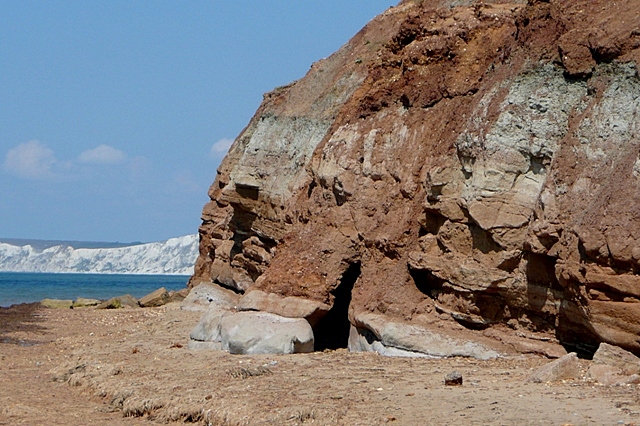
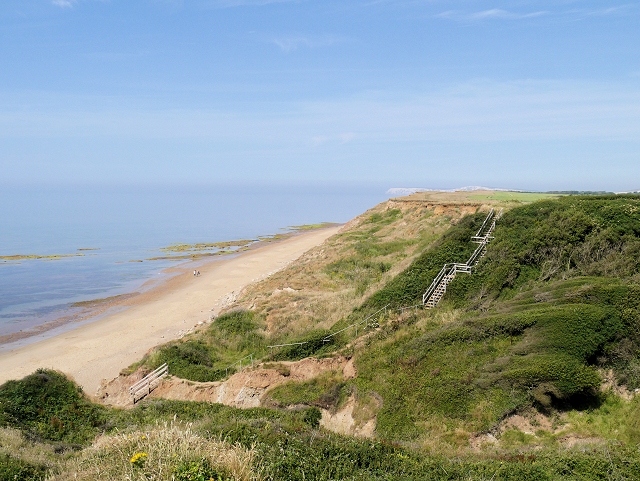
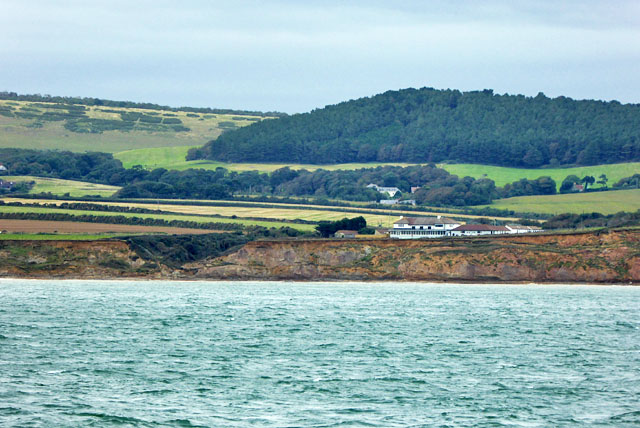
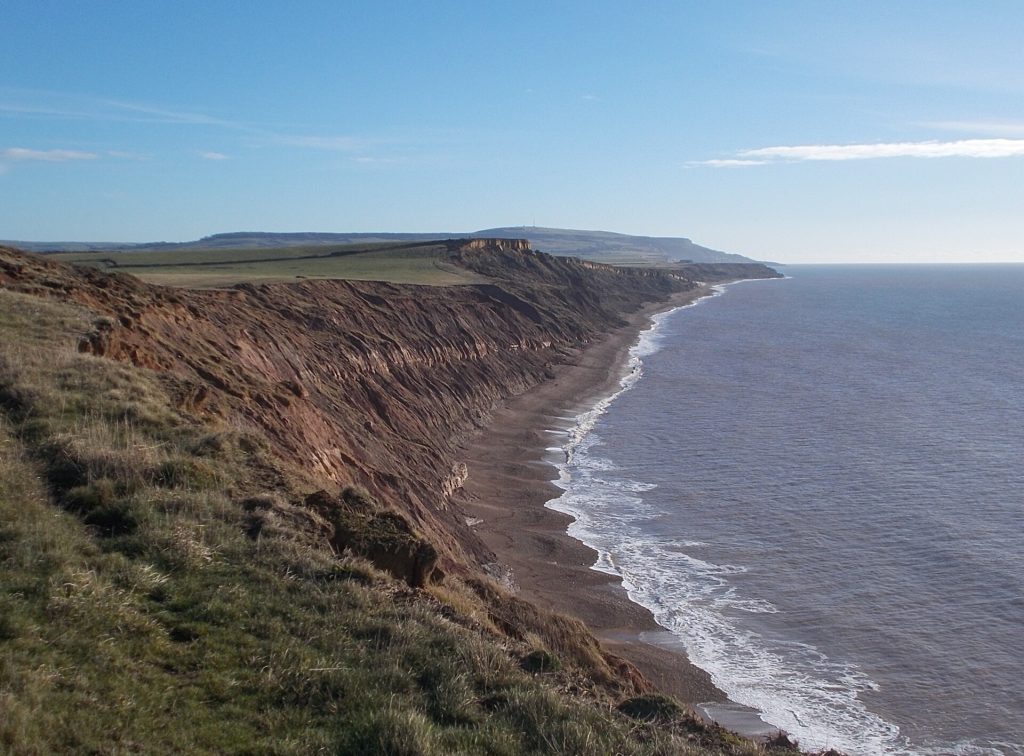
The coast around Chilton Chine and Brighstone Bay still exposes the Wessex Formation rocks that yielded Vectipelta.




Frequently Asked Questions
The species name barretti honors Professor Paul Barrett of the Natural History Museum in London.
It lived in the Early Cretaceous, probably in the Barremian stage, roughly 127 to 122 million years ago, though it may date to the late Hauterivian.
No peer-reviewed size estimate is available, but its left ilium is about 34.4 inches long and its largest spine about 15.7 inches.
It was an ankylosaur, an armored herbivore, grouped by its describers with the Chinese Dongyangopelta and Zhejiangosaurus.
It was excavated in 1994 at Chilton Chine, near Brighstone, in the Wessex Formation of the Isle of Wight.
It differs in its neck and back vertebrae, its pelvis, and its more blade-like spikes, and it is also 6–8 million years older.
Sources
The information in this article is based on various sources, drawing on scientific research, fossil evidence, and expert analysis. The aim is to provide a comprehensive and accurate overview of Vectipelta. However, please be aware that our understanding of dinosaurs and their world is constantly evolving as new discoveries are made.
- https://doi.org/10.1080/14772019.2023.2210577
- https://tandf.figshare.com/articles/journal_contribution/_i_Vectipelta_barretti_i_a_new_ankylosaurian_dinosaur_from_the_Lower_Cretaceous_Wessex_Formation_of_the_Isle_of_Wight_UK/23528329
- https://ndownloader.figshare.com/files/41260159
- https://informahealthcare.com/doi/abs/10.1080/14772019.2023.2210577
- https://peerj.com/preprints/1399.pdf
- https://doi.org/10.1080/14772019.2023.2205433
- https://ndownloader.figshare.com/files/40661118
- https://ndownloader.figshare.com/files/40661115
- https://pmc.ncbi.nlm.nih.gov/articles/PMC13682568/
- https://www.nature.com/articles/s41598-021-97870-8
- https://doi.org/10.1080/14772019.2021.1978005
- https://doi.org/10.1080/25761900.2008.12452864
- https://doi.org/10.7717/peerj.12727
- https://stratigraphy.org/ICSchart/ChronostratChart2024-12.pdf
- https://eprints.soton.ac.uk/460657/
- https://iwnhas.org/wp-content/uploads/2026/07/Peaker-Dinosaur-Museum-Isle-of-Wight-Wight-Studies-Vol-39-2025.pdf
- https://www.nhm.ac.uk/discover/news/2023/june/new-species-of-dinosaur-named-after-museum-scientist-paul-barrett.html
- https://www.eurekalert.org/news-releases/992373
- https://www.iow.gov.uk/news/fossilised-remains-of-new-armoured-dinosaur-discovered-on-the-iw
This article was last fact checked: TheDinosaurs Team, 25-11-2026
Featured Image Credit: TotalDino, CC BY-SA 4.0, via Wikimedia Commons
