
On England’s Isle of Wight, the river-laid rocks of the Wessex Formation hold one of the richest non-marine vertebrate fossil records of their time. Among its newest names is Istiorachis macarthurae, a plant-eating iguanodontian described in 2025. Its home rocks are mostly Barremian in age, a stage of the Early Cretaceous that ran from about 126 to 121 million years ago. Press releases put the fossil at around 125 million years old. Its back and tail vertebrae carried unusually tall spines—tall enough, its describers suggest, to support a possible sail. That makes it a fresh test case for an old puzzle—why some iguanodontians grew such towering backbones.
Its identification as something new, however, happened not in the field but in a museum collection. Jeremy Lockwood, a retired family doctor, recognized it while re-examining bones held at the Dinosaur Isle museum. He did so as part of his PhD with the University of Portsmouth and the Natural History Museum, London. In 2025, Lockwood and paleontologists David Martill and Susannah Maidment named the animal in Papers in Palaeontology. In short, its story is a reminder that collections already on the shelf can still hold new species.
Istiorachis Key Facts
| Keyword | Fact |
|---|---|
| Pronunciation | Not specified |
| Meaning of name | Sail Spine |
| Group | Ornithischia (Iguanodontia, Styracosterna) |
| Type Species | Istiorachis macarthurae |
| Diet | Herbivore |
| When it Lived | About 126 to 122 MYA (approximate) |
| Period | Cretaceous |
| Epoch | Early Cretaceous (Barremian stage, possibly latest Hauterivian) |
| Length | Not specified |
| Height | About 6.6 feet (2 meters), Natural History Museum estimate |
| Weight | About 2,200 pounds (1 metric ton), Natural History Museum estimate |
| Mobility | Not specified |
| First Discovery | Year not specified, recognized as new by Jeremy Lockwood at the Dinosaur Isle museum. Other fossils were stolen from a dig site over 50 years ago, per the NHM |
| Described by | 2025 by J.A.F. Lockwood, D.M. Martill, and S.C.R. Maidment |
| Holotype | Partial skeleton (catalog number not specified), Dinosaur Isle museum, Isle of Wight |
| Location of first find | Wessex Formation, Wealden Group, Isle of Wight, England, United Kingdom |
Istiorachis Origins, Taxonomy and Timeline
The name Istiorachis means “sail spine,” a direct nod to the animal’s tall vertebral spines. Its species name, macarthurae, honors Dame Ellen MacArthur, an English sailor and Isle of Wight resident. In 2005, she set the record for the fastest solo non-stop voyage around the world. Together, the name links a sail-backed dinosaur to a record-breaking sailor who lives on the same island.
Istiorachis is an ornithischian dinosaur and a member of Iguanodontia, a species-rich group of plant-eaters. More precisely, its describers called it a styracosternan—part of a subgroup nested within the iguanodontian lineage Ankylopollexia. Their original analysis recovered it as the sister taxon of Ouranosaurus, as Rotatori and colleagues later reported. In 2026, those authors named a new clade, Ouranosauria, for the largest group containing Ouranosaurus but not Iguanodon or Hadrosaurus. In all their analyses, the clade holds Ouranosaurus and Morelladon, and in most it also includes Brighstoneus. However, Istiorachis was not included in their own analysis, and they say its membership still needs testing. Even so, they note that the original result would place it in the clade by definition. In their view, Ouranosauria was a high-sailed group of iguanodontians that lived across western Europe and Gondwana during the Early Cretaceous.
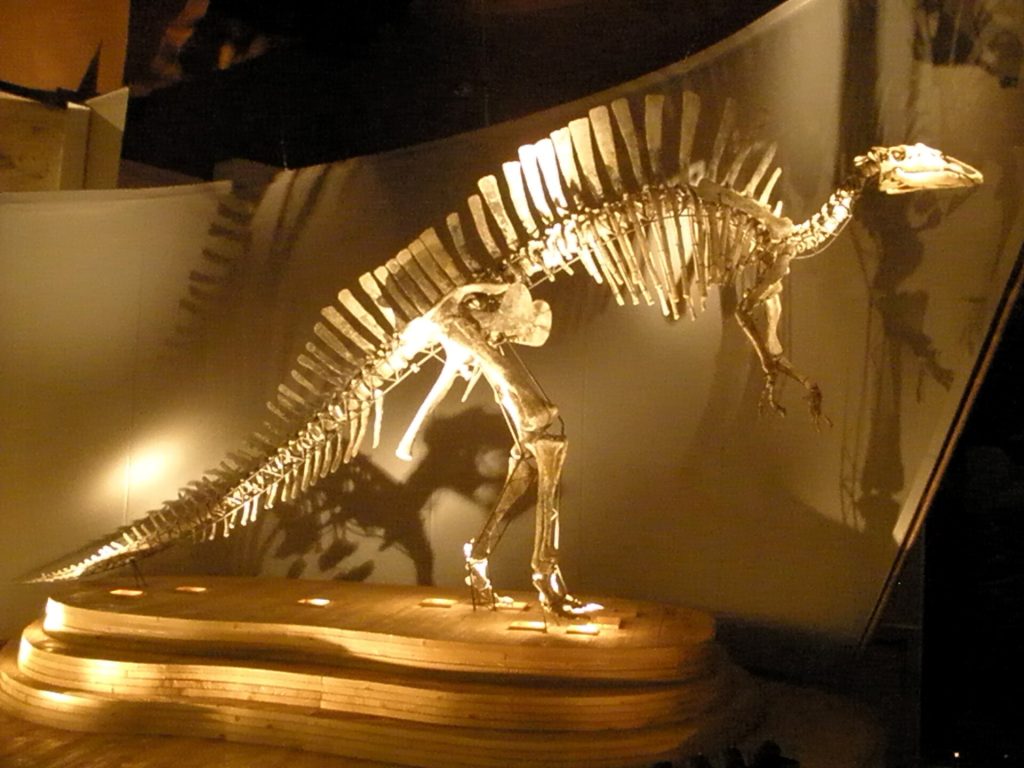

In 2021, Barker and colleagues described the Wessex Formation as entirely Barremian. On the current international timescale, that stage runs from about 125.8 to 121.4 million years ago. Yet the overlying Vectis Formation begins in the late Barremian, so the Wessex beds probably end before the stage does. Lockwood’s 2024 thesis, meanwhile, dates the island’s iguanodontian-rich exposures from as early as the latest Hauterivian. The wider Wealden Group spans the late Berriasian to the early Aptian—a key interval, the describers note, for rising iguanodontian diversity.
Discovery & Fossil Evidence
Lockwood’s team named Istiorachis in 2025 from a partial skeleton from the Wessex Formation of the Isle of Wight. Today the bones sit in the Dinosaur Isle museum, where Lockwood recognized them as a new species while re-examining material already on its shelves. Not every bone made it that far, however. According to the Natural History Museum, other Istiorachis fossils were stolen from a dig site more than 50 years ago.
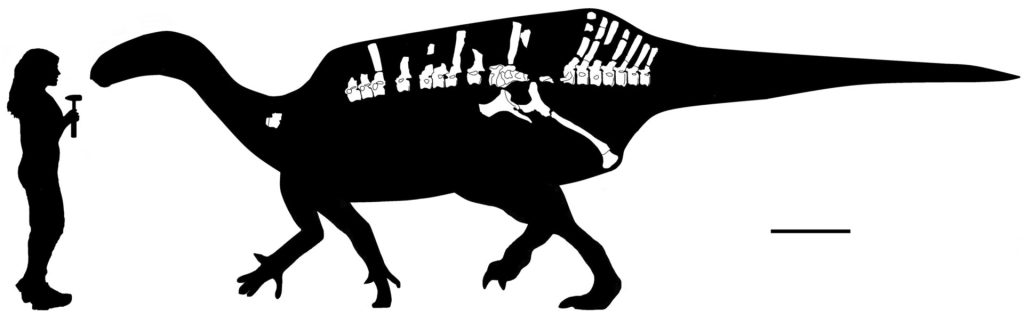
The holotype—the name-bearing specimen—is this partial skeleton. According to the University of Portsmouth, it was not as complete as some other Isle of Wight iguanodontian skeletons. Even so, photographs released with the study show part of the spinal column and a cervical (neck) vertebra. They also show pelvic bones, including a pubis and the head of an ischium—two of the bones of the hip.
The study also reached well beyond this one animal. Lockwood’s team compiled a database of dorsal neural-spine heights for 50 ornithopod taxa. They then ran an ancestral-state reconstruction—a method that estimates the traits of ancestors from a family tree. In this way, one partial skeleton became the starting point for a much wider look at how tall spines evolved.
Istiorachis Size and Description
Known only from a partial skeleton, Istiorachis is best understood through its remarkable backbone.
Short description of Istiorachis
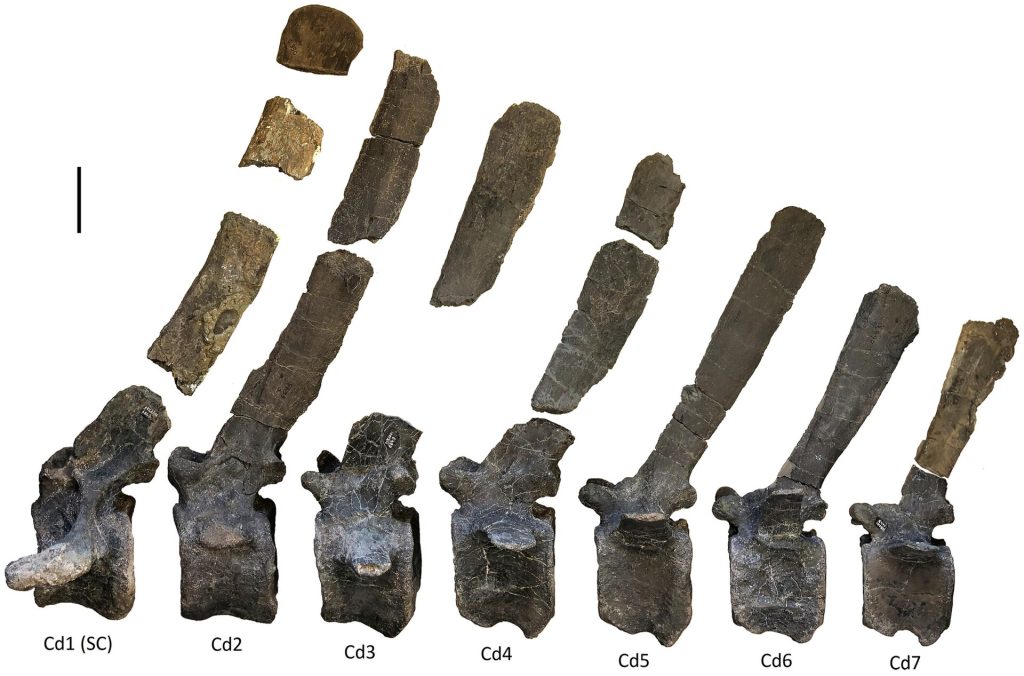
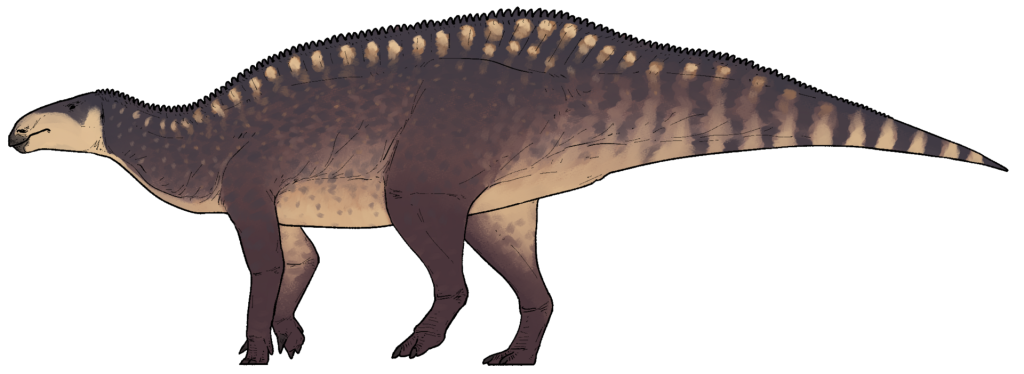
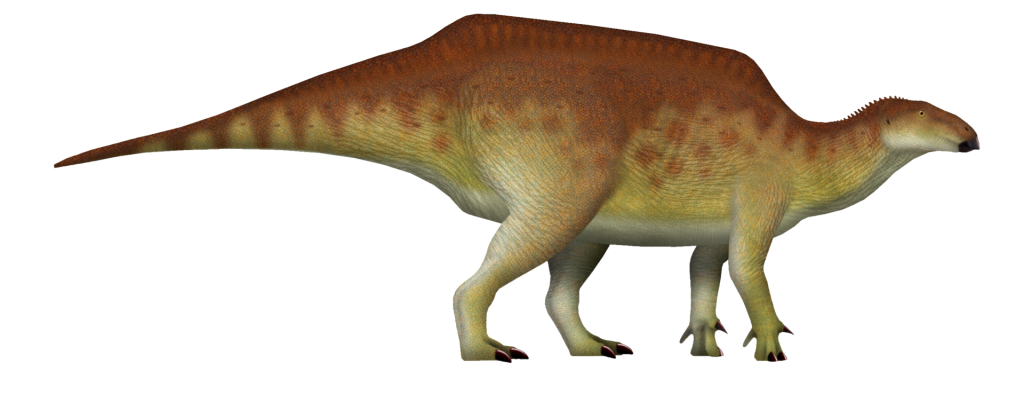
The standout feature of Istiorachis is its spine. Its neural spines—the bony blades rising from the top of each vertebra—were hyperelongated on the dorsal (back) and caudal (tail) vertebrae. According to its describers, this suggests that the animal possessed a possible sail. According to the study’s press release, true hyperelongation means spines more than four times the height of the vertebral body. Without any known soft tissue, any picture of the sail’s skin covering remains speculative.
How it carried its body is less certain. Whether Istiorachis walked mainly on two legs or on all four remains unclear. However, the describers offer one possible explanation for longer spines in its wider group. These may reflect greater mass and perhaps a shift toward walking on all fours.
Size and Weight of Type Species
The Natural History Museum, London, offers the clearest public guide to its size. It describes Istiorachis as standing around 6.6 feet (2 meters) tall. The museum also puts its weight at about 2,200 pounds (1 metric ton)—roughly the size of an American bison.
However, the museum gives no method for either figure, so both are best treated as rough guides. The study’s published dataset does include femur-based body-mass estimates, but the museum does not say whether its figure comes from them. Its body length, meanwhile, remains unspecified.
In 2026, Rotatori and colleagues noted that sails in ouranosaurs appear together with larger body size and with skeletal signs of a four-legged stance. Istiorachis was not part of that study, so how well it fits the pattern is still open.

The Dinosaur in Detail
Above all, its spines outstrip those of most relatives. The University of Portsmouth describes them as more exaggerated than is usual in Iguanodon-like dinosaurs. Rotatori and colleagues note that they match the spines of Morelladon beltrani and Ouranosaurus. The likeness holds in shape and in the ratio of spine height to centrum (vertebral body) height. Its describers also documented a notochordal boss—a raised knob on the articular face of a vertebral body. In 2026, Guo and colleagues noted that a comparable feature appears in other early hadrosauriforms, such as Brighstoneus and Iguanodon.

According to the ancestral-state reconstruction, modest elongation began with Ankylopollexia in the Late Jurassic and became established in the Berriasian. Hyperelongation, by contrast, appeared only sporadically—most often in the Barremian and early Aptian, a window that includes Istiorachis.
As for function, the describers weigh two broad explanations for elongated spines in Ankylopollexia. The first is biomechanical, linked to mass and posture. The second is visual signaling, driven by sexual selection, species recognition, or both. In the end, they conclude that the function was probably pluralistic, differing between taxa.
For Istiorachis itself, the team’s press releases favor visual signaling, possibly as part of a sexual display. The researchers also doubt that the sail mainly controlled body temperature. In modern reptiles, Lockwood noted, sails are often more prominent in males. The Natural History Museum suggests other roles as well, such as helping individuals recognize each other or deterring predators by making the animal look bigger. Meanwhile, Rotatori and colleagues read the 2025 paper as linking hyperelongated spines most closely to four-legged walking. That fits Lockwood’s account to the museum, in which the general trend toward taller spines reflects muscle support for bigger, more four-legged bodies. The extra height in Istiorachis, by contrast, points to signaling.
Interesting Points about Istiorachis
- The genus name means “sail spine,” and the species name honors record-breaking sailor Dame Ellen MacArthur, an Isle of Wight resident.
- Rather than turning up in a new dig, Istiorachis was recognized as a new species by re-examining bones already held at the Dinosaur Isle museum.
- Jeremy Lockwood, the retired doctor who identified it, described it as one of three new Isle of Wight iguanodontians from his doctoral research, alongside Brighstoneus and Comptonatus.
- According to the study’s press release, a hyperelongated spine stands more than four times the height of the vertebral body beneath it.
- Its original analysis placed it as the sister taxon of Ouranosaurus, a result that would put it inside Ouranosauria, the high-sailed clade named by Rotatori and colleagues.
Dinosaurs from the Same Formation
Also known from the Wessex Formation (exact level relative to Istiorachis not known): the 4–5 meter tyrannosauroid Eotyrannus, the 7–8 meter allosauroid Neovenator, the spinosaurids Ceratosuchops and Riparovenator, and the iguanodontians Brighstoneus and Comptonatus. Barker and colleagues date the formation to the Barremian, a stage of about 4.4 million years. Some place its lowest beds in the latest Hauterivian, though. As a result, these animals may not all have lived at the same time.
Istiorachis in its Natural Habitat
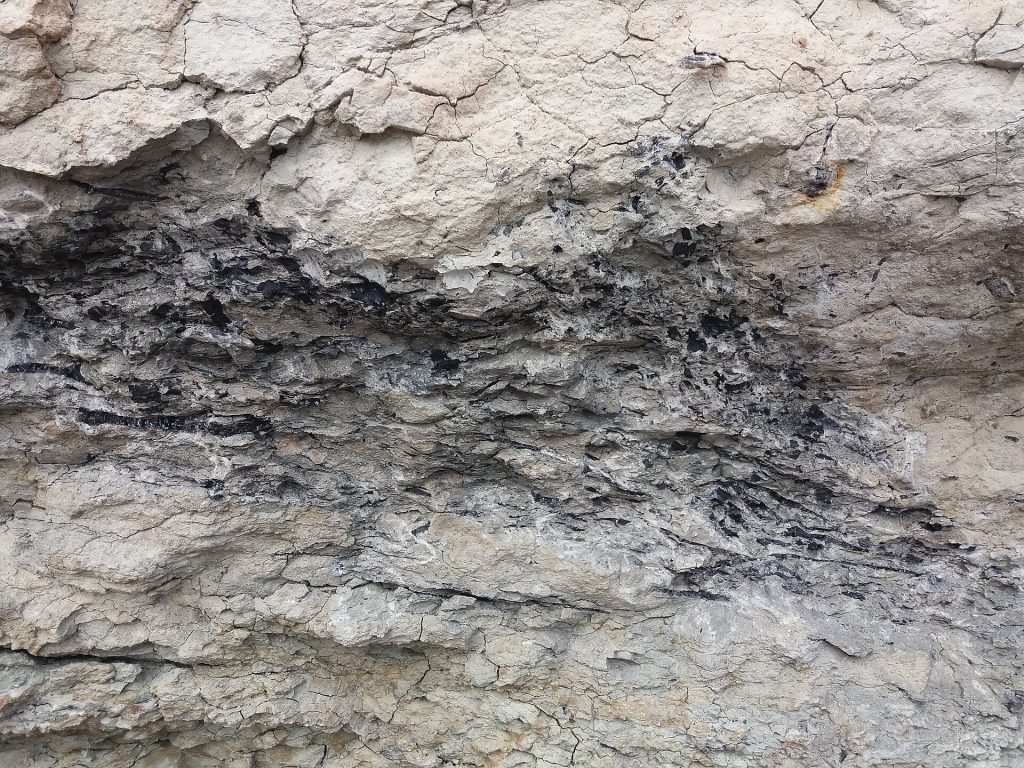
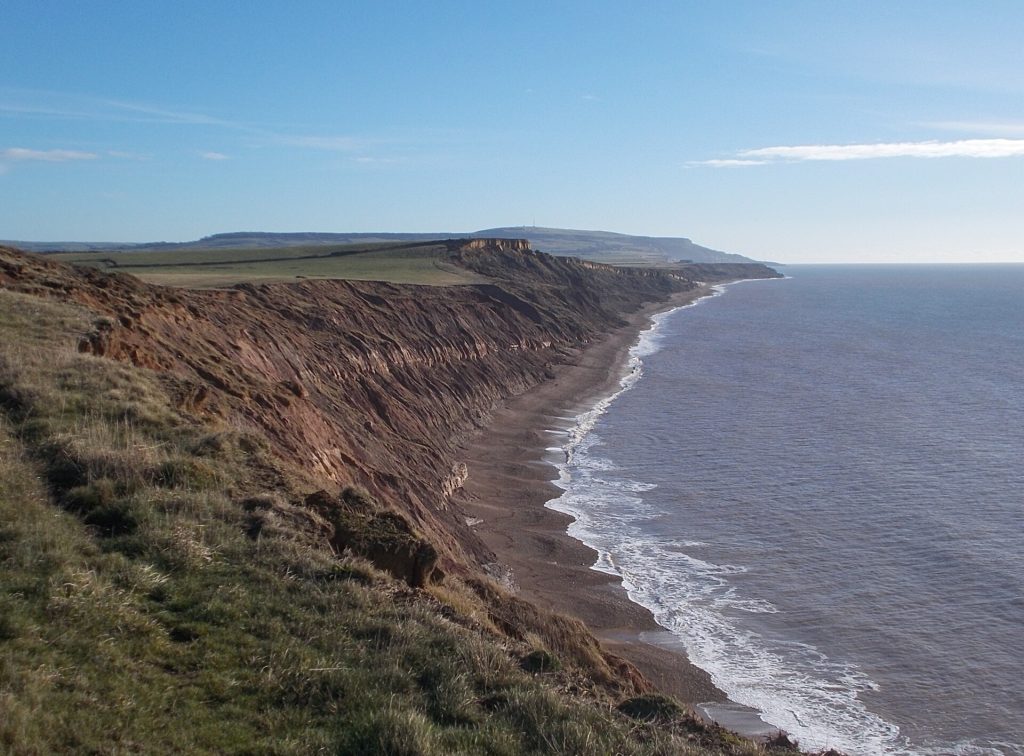
The Natural History Museum describes the Wessex Formation landscape as a seasonally wet-to-dry floodplain. Across it, Barker and colleagues describe a perennial, moderately sized, highly sinuous river flowing from west to east, with some lake deposits as well. The formation’s sandstones and varicolored mudstones are threaded with plant debris beds—layers packed with plant remains. In 2010, Sweetman and Insole linked many of the island’s jumbled dinosaur skeletons to these beds. In time, these rocks were overlain by the Vectis Formation, of late Barremian to early Aptian age.

Like other iguanodontians, Istiorachis was a herbivore. However, no study has looked at its own diet directly, so the plants it ate remain unknown.
While there is no direct evidence of whether Istiorachis lived alone or in groups, its describers’ press releases point to visual signaling as the sail’s most likely role. Even so, its social life remains unknown. What is certain is that it belonged to a dynamic ecosystem, preserved in one of the richest non-marine fossil deposits of its age.
Istiorachis Gallery
These further images show how artists and the Isle of Wight coast bring Istiorachis and its world to life.



Frequently Asked Questions
It means “sail spine,” and the species name macarthurae honors sailor Dame Ellen MacArthur.
It lived in the Early Cretaceous, in rocks that are mostly Barremian in age. Press releases put the fossil at around 125 million years old.
The Natural History Museum estimates it stood about 6.6 feet (2 meters) tall and weighed about 2,200 pounds (1 metric ton). However, its length remains unspecified.
It was a herbivore, like other iguanodontians, although no study has examined its own diet directly.
Its bones come from the Wessex Formation of the Isle of Wight and were recognized in the Dinosaur Isle museum collections.
Its back and tail vertebrae carried hyperelongated spines that its describers suggest formed a possible sail.
Sources
The information in this article is based on various sources, drawing on scientific research, fossil evidence, and expert analysis. The aim is to provide a comprehensive and accurate overview of Istiorachis. However, please be aware that our understanding of dinosaurs and their world is constantly evolving as new discoveries are made.
- https://doi.org/10.1002/spp2.70034
- https://doi.org/10.5061/dryad.v6wwpzh78
- https://doi.org/10.1111/pala.70057
- https://zaguan.unizar.es/record/170991/files/texto_completo.pdf
- https://doi.org/10.3897/fr.29.208273
- https://doi.org/10.1038/s41598-021-97870-8
- https://doi.org/10.7717/peerj.12727
- https://doi.org/10.1080/14772019.2021.1978005
- https://doi.org/10.1080/14772019.2024.2346573
- https://researchportal.port.ac.uk/en/studentTheses/evidence-for-diversity-and-variation-in-the-early-cretaceous-igua/
- https://stratigraphy.org/ICSchart/ChronostratChart2024-12.pdf
- https://www.nhm.ac.uk/press-office/press-releases/-striking-sail–may-have-helped-dinosaurs-find-mates–new-fossil.html
- https://www.nhm.ac.uk/discover/news/2025/august/new-sail-backed-dinosaur-species-unearthed-isle-of-wight.html
- https://www.port.ac.uk/news-events-and-blogs/news/striking-sail-may-have-helped-dinosaurs-find-mates-new-fossil-suggests
- https://www.eurekalert.org/news-releases/1095659
- https://doi.org/10.1016/j.palaeo.2010.03.055
- https://www.nhm.ac.uk/press-office/press-releases/uk-dinosaur-fossil-identified-as-new-long-clawed-predator.html
This article was last fact checked: TheDinosaurs Team, 25-11-2026
Featured Image Credit: James Brown, CC BY 4.0, via Wikimedia Commons
