
In Neuquén Province, Argentina, the river-laid rocks of the Portezuelo Formation hold one of Patagonia’s most puzzling predators. Named Megaraptor namunhuaiquii in 1998 by paleontologist Fernando E. Novas, this large theropod lived during the Turonian and Coniacian stages of the Late Cretaceous. Its best-known bone is a huge, blade-like claw—first thought to arm the foot and later shown to belong to the hand. Despite a long argument over its family tree, it has become the namesake of an entire group of enigmatic hunters.
Novas announced the find in December 1997 at a museum in Houston before describing it formally the following year. His holotype was fragmentary—an arm bone, a finger bone, a giant claw, and part of a foot bone. Then, in June 2002, a National University of Comahue team found a far more complete individual with an articulated hand. A juvenile skeleton, reported in 2014, later added the first glimpse of its skull. Piece by piece, these finds turned a single claw into a recognizable animal.
Megaraptor Key Facts
| Keyword | Fact |
|---|---|
| Pronunciation | Not specified |
| Meaning of name | Large Thief with a Dagger on the Foot |
| Group | Theropoda |
| Type Species | Megaraptor namunhuaiquii |
| Diet | Carnivore |
| When it Lived | Not specified (no absolute dating for the Portezuelo Formation) |
| Period | Cretaceous |
| Epoch | Late Cretaceous (Turonian to Coniacian stages) |
| Length | About 29.5 to 32.8 feet (9 to 10 meters), estimate credited to Novas (1998) |
| Height | Not specified |
| Weight | Not specified |
| Mobility | Moved on two legs (bipedal) |
| First Discovery | Year not specified (find announced by Fernando E. Novas in December 1997) |
| Described by | 1998 by F.E. Novas |
| Holotype | MCF-PVPH 79 |
| Location of first find | Sierra del Portezuelo, near Plaza Huincul, Portezuelo Formation, Neuquén Province, Argentina |
Megaraptor Origins, Taxonomy and Timeline
Paleontologist Juan D. Porfiri and Domenica Diniz dos Santos translate the full name as “large thief with a dagger on the foot”—in a 2014 university outreach article. A 1997 news report offered a looser “large thief with lance feet.” Together, the name preserves the old idea of a foot claw—a reading that later fossils would overturn.
Megaraptor is a theropod, and M. namunhuaiquii is its type and only known species. Its place on the theropod tree, however, has wandered for decades. According to Calvo and colleagues’ 2004 summary, Novas saw it as a possible basal coelurosaur—an early relative of tyrannosaurs and birds. In that view, it had evolved its large foot claw independently of dromaeosaurids and troodontids. Novas and colleagues later traced that choice to a slender finger bone and foot bone. In the same 2004 paper, however, Calvo’s team—with Novas himself as a co-author—called it a basal tetanuran outside Coelurosauria. In their words, it represented “a theropod clade not identified before.” Other teams later argued for allosauroid or spinosauroid ties.
Rock-sequence studies once dated the Portezuelo Formation to the Turonian through Santonian stages. In 2004, Calvo and colleagues instead followed a 2001 study by Leanza and Hugo, using a narrower late Turonian to early Coniacian age. Novas and colleagues adopted the same span in 2013. In 2024, however, Meso and colleagues allowed a broader middle Turonian to late Coniacian window. They also noted that the formation has no absolute dating. The Paleobiology Database files the finds between 93.9 and 85.7 million years ago—a database bin, not a measured age. Every estimate falls within the Late Cretaceous.
Discovery & Fossil Evidence
The first bones came from Sierra del Portezuelo, near the town of Plaza Huincul. According to Calvo and colleagues, Novas read the huge claw as that of the second toe—where dromaeosaurids such as Deinonychus carry their sickle claw. The reading cast Megaraptor as a giant raptor-like hunter and shaped its name.
The holotype, MCF-PVPH 79, is housed at the Museo Carmen Funes in Plaza Huincul. It consists of a right ulna (forearm bone) and the first phalanx (finger bone) of the left first finger. Completing the list are the giant ungual (claw bone) of the first finger and half of the right third metatarsal (a long foot bone).
The turning point came in June 2002, when a Comahue team recovered specimen MUCPv 341 at the Futalognko quarry, on the north shore of Lake Los Barreales. Its articulated forearm and hand lay below a sauropod femur, with other bones up to 3.5 meters (11.5 feet) away in the same thin layer. In 2004, Calvo and colleagues showed that the giant claw belonged to the first finger. Its new counterpart was “almost identical” to the holotype’s claw. More than 80 vertebrate teeth also turned up in the dig, and about ten were large enough to fit Megaraptor. Even so, the authors kept those apart until a skull could confirm the match.
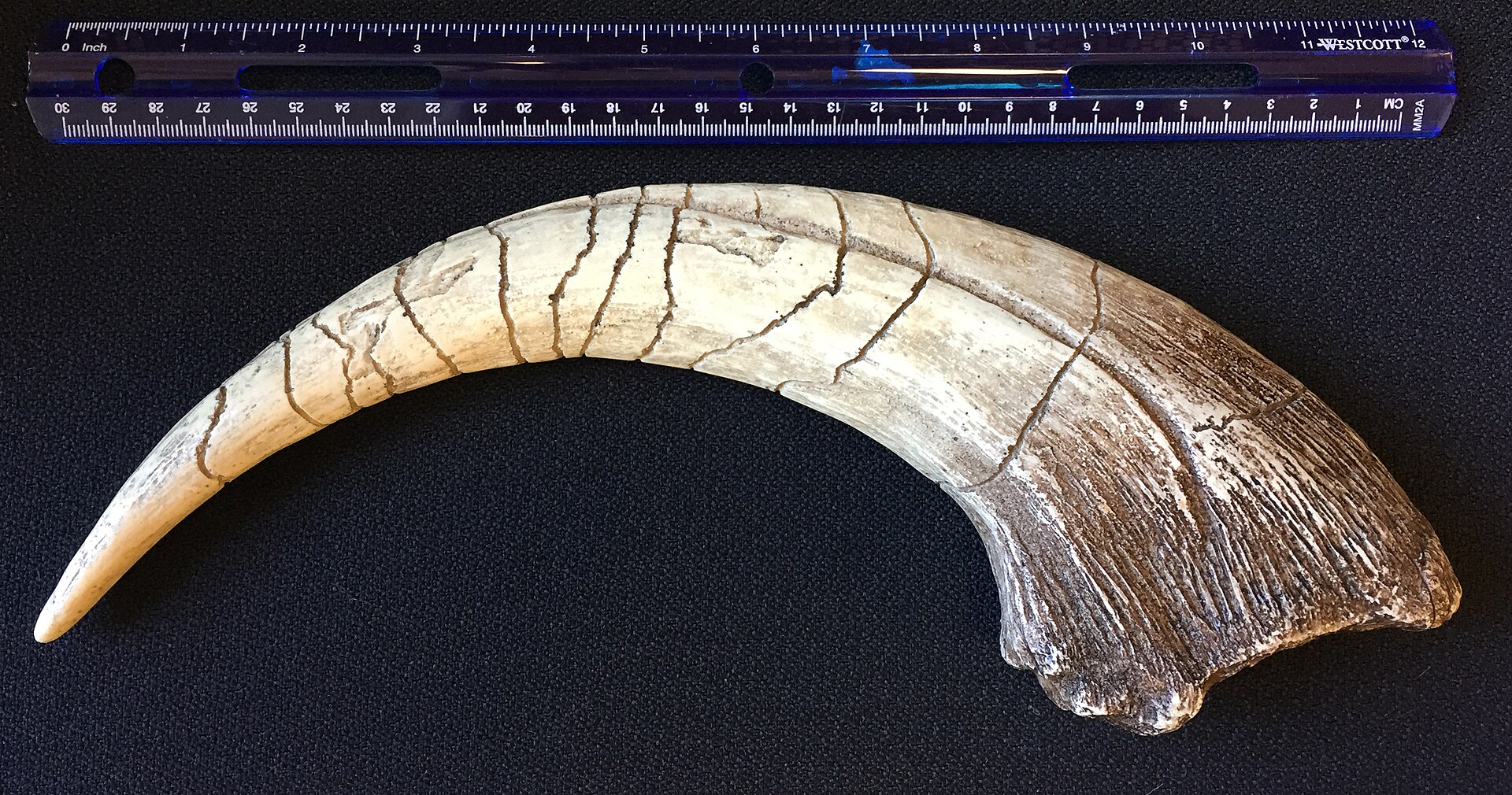

Later finds widened the picture. A juvenile, MUCPv 595, came from the Baal quarry, also on Lake Los Barreales. It preserves parts of the snout, braincase, spine, and both upper arm bones. In 2025, Calvo’s team referred to Megaraptor the first adult humerus (upper arm bone) documented for any South American megaraptoran. According to Porfiri’s outreach article, five specimens are known from the Los Barreales coast.
Megaraptor Size and Description
Its build is known from the fragmentary holotype, one partial adult skeleton, isolated adult bones, and a juvenile with part of the skull.
Short description of Megaraptor
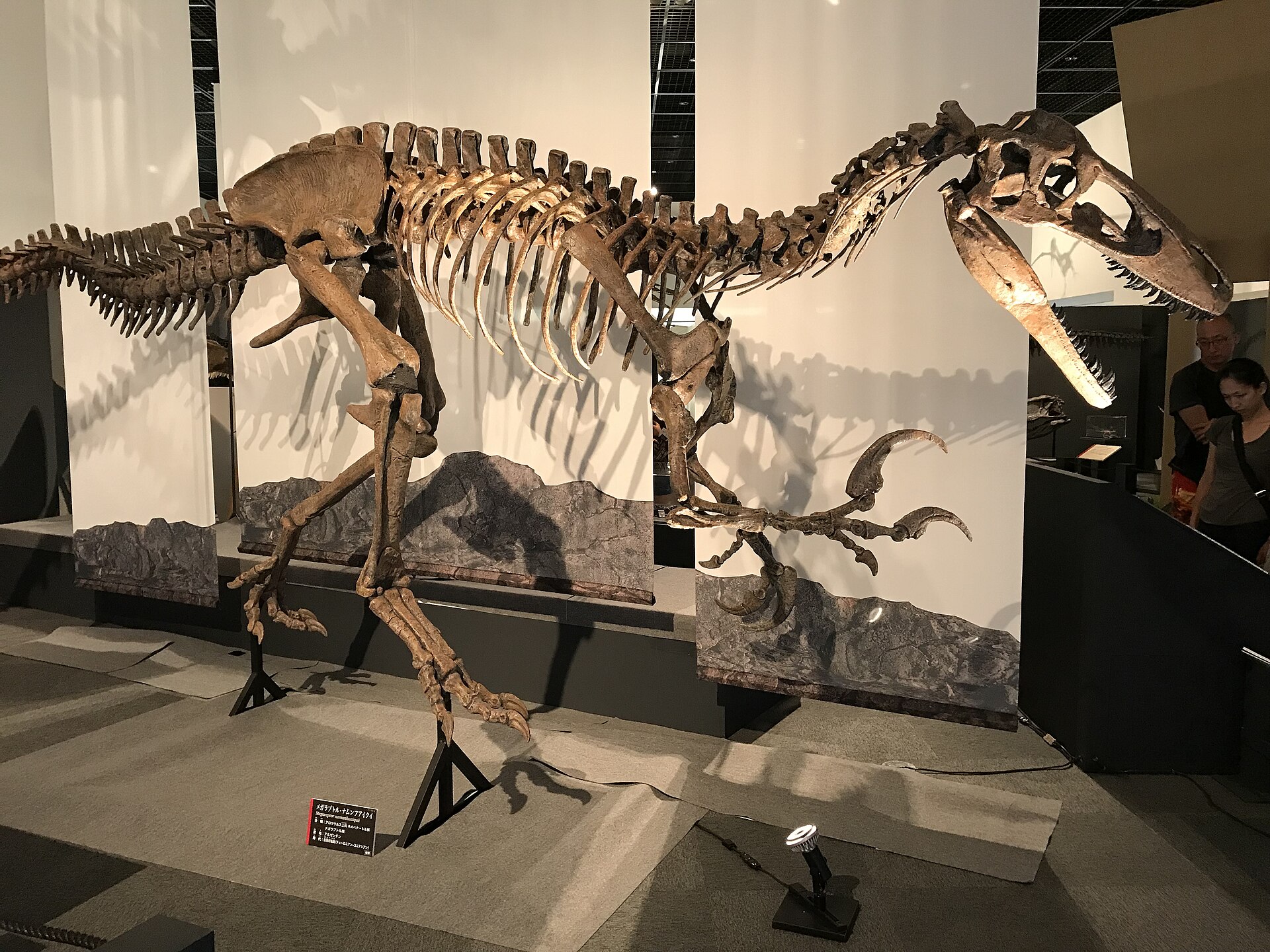
With no sufficiently complete megaraptoran skull known, the head of Megaraptor is reconstructed largely from the juvenile. Its premaxilla (front upper jaw bone) was small and pitted with large openings. The front teeth were D-shaped in cross-section, with crowns about 10 millimeters tall against 17 millimeters for the cheek teeth. Drawing mainly on this juvenile, Porfiri and colleagues reconstructed a megaraptorid with a long skull, a slender snout, and a gracile S-shaped neck. In contrast, Calvo’s team had read one adult neck vertebra in 2004 as a sign of “a thick and powerful neck.”
Porfiri’s reconstruction also shows a very wide, deep chest and robust arms, with large claws on the first two fingers. The hind limbs, by contrast, were slender. It walked on two legs, and a 2025 braincase study suggested it was more agile than abelisaurids and other non-coelurosaur predators of its time. In 2025, Ciaffi and colleagues noted that shifting interpretations have brought “drastic changes” to how it looks in restorations.

Size and Weight of Type Species
For the holotype, Porfiri and colleagues cite a length of about 29.5 to 32.8 feet (9 to 10 meters). They credit the figure to Novas’s 1998 paper but do not state the method. Meanwhile, Porfiri’s 2014 outreach article gives about 26 feet (8 meters), also without a method.
No hip height or body mass appears in the peer-reviewed studies used here. The bones themselves offer firmer numbers. In MUCPv 341, the forearm and hand measure 93.8 centimeters (36.9 inches) from the upper end of the radius to the claw tip. The hand alone is 70 centimeters (27.6 inches) long.
The juvenile MUCPv 595 was far smaller. It died at about six years old and was an estimated 9.8 feet (3 meters) long—a figure scaled from Allosaurus proportions.
The Dinosaur in Detail
What sets this dinosaur apart is its forelimb. In 2004, Calvo and colleagues wrote that no other known predatory dinosaur had such long yet powerful hands—hands tipped with enlarged, blade-like claws. The first-finger claw measures 35 centimeters (13.8 inches) as preserved and an estimated 42 centimeters (16.5 inches) when complete. The hand carried three main fingers plus a reduced fourth metacarpal (palm bone). According to Calvo’s team, lopsided joints at the end of the first metacarpal let that finger rotate as it flexed. Later finds showed that derived megaraptorids such as Australovenator and Joaquinraptor shared this hand plan. Even so, Aranciaga Rolando’s team found many forelimb muscle attachments especially well developed in Megaraptor.
Calvo’s team also revised the diagnosis—the traits that define the species—in 2004. It includes long, elliptical openings in the neck vertebrae and a blade-like olecranon (elbow process), which they credit to Novas’s original description. In 2025, an X-ray study found the juvenile’s braincase highly pneumatic (filled with air spaces), with a relatively large floccular lobe (part of the cerebellum). That same year, Calvo’s team judged that the adult humerus shows Megaraptor and Gualicho “are not closely related.”
In 2010, Benson and colleagues grouped it with Aerosteon, Australovenator, Fukuiraptor, and Orkoraptor in a new allosauroid clade, Megaraptora. Novas and colleagues instead coined Megaraptoridae in 2013 and nested the group within Tyrannosauroidea. In 2014, Porfiri’s team said the juvenile skull “bolsters” a place in Coelurosauria and possibly Tyrannosauroidea. If so, they argued, forelimbs took opposite paths—large-clawed arms in megaraptorids, reduced arms in tyrannosaurids such as Tyrannosaurus. In 2025, Ibiricu and colleagues made megaraptorans the sister group of tyrannosauroids, while Kellermann’s team found them inside that group. As the 2026 study naming Invictibellatrix concludes, the question remains unresolved.
Interesting Points about Megaraptor
- Its name, roughly “large thief with a dagger on the foot,” preserves the original belief that the giant claw belonged on the foot rather than the hand.
- The articulated arm and hand of the 2002 specimen lay beneath a sauropod thigh bone in the Futalognko quarry.
- Growth marks suggest the juvenile died at about six years old, while two larger specimens show at least seven and 12 growth marks.
- Calvo and colleagues kept about ten large teeth from the 2002 excavation separate from Megaraptor because no skull tied them to it.
- Although Megaraptor gave its name to Megaraptora, researchers still disagree whether that group sits within or beside the tyrannosaur lineage, or among the allosauroids.
Contemporary Dinosaurs
Towering over the river plains was Futalognkosaurus, a giant titanosaur. In their 2007 anatomy paper, Calvo and colleagues called it “the most complete giant sauropod ever found.” It comes from the same Futalognko quarry that yielded Megaraptor specimen MUCPv 341. The femur lying over the 2002 arm was never identified as Futalognkosaurus, and no bite marks have been described. Porfiri’s outreach article calls the giant possible prey for megaraptorids. In the 2007 paper naming it, Calvo and colleagues also suggested its carcass was possibly dismembered in part by theropods such as Megaraptor. Both ideas remain speculative.
Much smaller was Unenlagia, a paravian theropod whose position closer to birds or to dromaeosaurids is still debated. Two species lived in the Portezuelo Formation, and U. paynemili comes from the Futalognko site itself. In fact, its bones were the only other theropod bones in the same level as MUCPv 341. Calvo’s 2007 anatomy paper, however, lists shed quarry teeth assigned to dromaeosaurids and carcharodontosaurids.
Also prowling these plains was Neuquenraptor argentinus, a small unenlagiid paravian from Sierra del Portezuelo. Some researchers suspect it is the same animal as Unenlagia comahuensis. In 2017, Brissón Egli and colleagues could neither support nor dismiss that idea. In 2007, Porfiri and colleagues compared its foot claw with the hand claw of Megaraptor, but that link is purely anatomical.
Rounding out the group was Patagonykus puertai, an alvarezsaurid theropod also first found at Sierra del Portezuelo. Shed teeth from the formation confirm alvarezsaurids and abelisaurids, already known from bones, and hint at a second megaraptorid.
Megaraptor in its Natural Habitat
The world Megaraptor roamed was a nearly flat region crossed by meandering rivers. Yellowish channel sandstones alternate with red and green floodplain mudstones, some holding ancient soils. At the Futalognko site, flooded areas with standing bodies of water formed near the top of the sequence. Fish, pterosaurs, turtles, and crocodiles lived there too. Fossil leaves show angiosperms (flowering plants) outnumbering gymnosperms. In 2004, Calvo and colleagues described a humid climate that allowed exuberant vegetation, a point Calvo and Porfiri repeated in 2010.
Megaraptor was a predator, and its arms seem built for the job. Calvo’s team linked its bulky body with “exceptional raptorial abilities in the hands.” In 2007, Porfiri and colleagues argued that a massive triceps and strong claw ligament would have made it efficient at seizing prey. They also floated an alternative—the skull did the killing while the arms mainly opened carcasses. However, they found too little data to support scavenging or fish-eating habits. Aranciaga Rolando’s team later judged that the forelimbs’ wide range of motion very probably aided prey capture.
While there is no direct evidence of its social life, remains of more than one individual come from Lake Los Barreales. From this, Porfiri and colleagues proposed group hunting as a possibility, though the idea remains speculative. On a wider scale, Novas and colleagues argue that megaraptorans shared the top-predator role in Gondwana with abelisauroids and carcharodontosauroids. The 2025 braincase study adds that its brain and senses may have let it compete with coelurosaurs, perhaps unenlagiines.
Frequently Asked Questions
A 2014 outreach article translates the full name as “large thief with a dagger on the foot,” after the claw once placed on the foot.
It lived during the Turonian to Coniacian stages of the Late Cretaceous, though its rock formation has no absolute date.
Porfiri and colleagues credit Novas’s 1998 description with a length of about 29.5 to 32.8 feet (9 to 10 meters). No height or weight appears in the peer-reviewed studies used here.
It was a carnivore, and researchers suggest its huge, blade-like hand claws helped it seize prey.
The holotype comes from Sierra del Portezuelo, near Plaza Huincul in Neuquén Province, Argentina, in the Portezuelo Formation.
Its long but powerful hands carried enlarged, flattened claws, the first reaching an estimated 42 centimeters (16.5 inches) when complete. Related megaraptorids shared this hand plan, but a 2023 study found many of its forelimb muscle attachments especially well developed.
Sources
The information in this article is based on various sources, drawing on scientific research, fossil evidence, and expert analysis. The aim is to provide a comprehensive and accurate overview of Megaraptor. However, please be aware that our understanding of dinosaurs and their world is constantly evolving as new discoveries are made.
- https://doi.org/10.1080/02724634.1998.10011030
- https://ameghiniana.org.ar/index.php/ameghiniana/article/view/853
- https://doi.org/10.1016/j.cretres.2014.04.007
- https://doi.org/10.1016/j.cretres.2013.04.001
- https://archive.org/download/biostor-248730/biostor-248730.pdf
- https://archive.org/download/biostor-248728/biostor-248728.pdf
- https://doi.org/10.1590/S0001-37652007000300013
- https://archive.org/download/biostor-248684/biostor-248684.pdf
- https://doi.org/10.1186/s12862-024-02249-8
- https://doi.org/10.1007/s00114-009-0614-x
- https://doi.org/10.1098/rspb.2008.0504
- https://doi.org/10.1002/ar.25128
- https://doi.org/10.5710/AMGH.18.10.2025.3657
- https://doi.org/10.2992/007.090.0301
- https://doi.org/10.1038/s41467-025-63793-5
- https://doi.org/10.1371/journal.pone.0311096
- https://doi.org/10.1098/rsos.260937
- https://doi.org/10.3301/IJG.2025.20
- https://dialnet.unirioja.es/descarga/articulo/5059264.pdf
- https://revele.uncoma.edu.ar/index.php/desdelapatagonia/article/download/3811/60838/64735
- https://paleobiodb.org/classic/checkTaxonInfo?taxon_no=65424
- https://www.csmonitor.com/1997/1203/120397.us.us.3.html
- https://doi.org/10.4202/app.00348.2017
This article was last fact checked: TheDinosaurs Team, 30-10-2026
Featured Image Credit: TotalDino, CC BY 4.0, via Wikimedia Commons
